PodParley PodParley

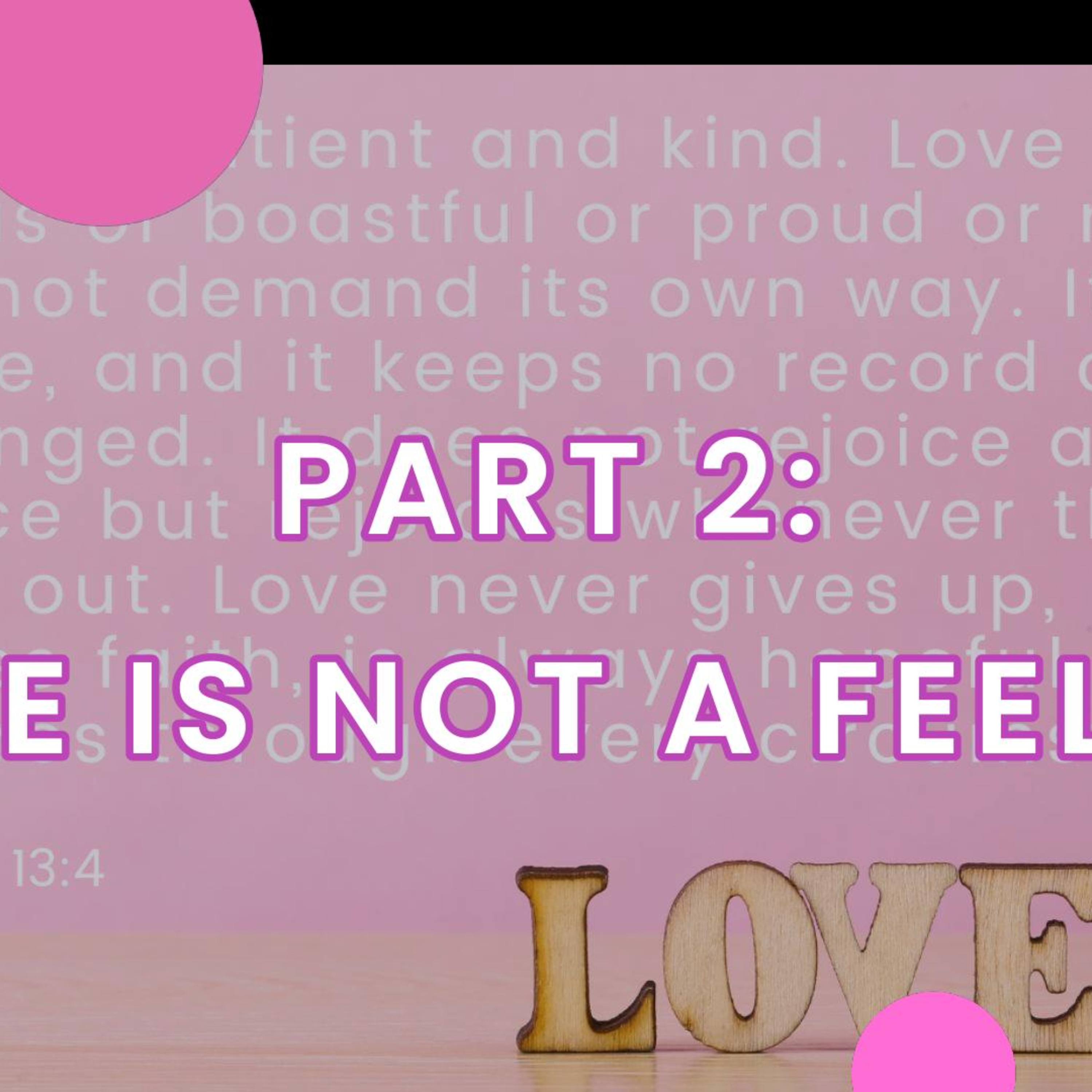
PART 2: Love is "NOT" a Feeling

Episode 62 of the "Lady Up" America with Diane Canada podcast, hosted by Diane Canada - Lady Up America, titled "PART 2: Love is "NOT" a Feeling" was published on April 15, 2024 and runs 24 minutes.

April 15, 2024 ·24m · "Lady Up" America with Diane Canada

0:00 / 0:00

The Biblical definition of love has very little to do with our feelings. The world's definition of love has EVERYTHING to do with feelings. If we hope to influence others, we need to understand both and then respond accordingly. Let's break it down on today's episode with Diane Canada, founder of Lady Up America. Learn more at ⁠ladyupamerica.com⁠ and download the Lady Up America APP to go deeper.

The Biblical definition of love has very little to do with our feelings. The world's definition of love has EVERYTHING to do with feelings. If we hope to influence others, we need to understand both and then respond accordingly. Let's break it down on today's episode with Diane Canada, founder of Lady Up America. Learn more at ⁠ladyupamerica.com⁠ and download the Lady Up America APP to go deeper.

Lady Barbarina Henry James Rich and beautiful American girls heading to England to find themselves noble titles through marriage, and using their New World wealth to prop up the waning strength of the aristocracy, was almost a staple of late Victorian literature. "The Buccaneers," Edith Wharton called them, and their day is not over yet (think of Downton Abbey's Earl of Grantham, and his American heiress countess). In Lady Barbarina, however, Henry James explores the obverse of this old tale: what if the wealth is in the hands of an American man, in love with the beautiful daughter of an old and titled (but no longer so very rich) family? Legal marital settlements, common in England, less so in America, can be a problem. Think of them as the Victorian equivalent of modern pre-nuptial contracts, introducing a note, not of suspicion perhaps, but of cautious prudence in what otherwise might be seen as a match of pure love. For all their similarities, Britain and the United States remain divided by three thousand mi Lady Barbarina by Henry James (1843 - 1916) LibriVox Rich and beautiful American girls heading to England to find themselves noble titles through marriage, and using their New World wealth to prop up the waning strength of the aristocracy, was almost a staple of late Victorian literature. "The Buccaneers," Edith Wharton called them, and their day is not over yet (think of Downton Abbey's Earl of Grantham, and his American heiress countess). In Lady Barbarina, however, Henry James explores the obverse of this old tale: what if the wealth is in the hands of an American man, in love with the beautiful daughter of an old and titled (but no longer so very rich) family? Legal marital settlements, common in England, less so in America, can be a problem. Think of them as the Victorian equivalent of modern pre-nuptial contracts, introducing a note, not of suspicion perhaps, but of cautious prudence in what otherwise might be seen as a match of pure love. For all their similarities, Britain and the United States remain divided by three thousand mi That Loan Signing Lady D Pitcher Come along on the road with this notary signing agent, hear stories, be entertained and no guarantees but you may learn something new about the whole loan signing process. A Lady's Life in the Rocky Mountains by Isabella L. Bird Loyal Books Isabella Bird began travelling while in her early twenties to help alleviate illness that had plagued her since childhood. She was a single woman in her early forties when she made her treck through the Rocky Mountains. A Lady’s Life in the Rocky Mountains details this fascinating account of her travels through a series of letters written to her sister, Henrietta. These letters are filled with beautiful, vivid descriptions of the scenery, the people she encountered, the way of life, and a mountain man named Jim Nugent, that was as rough as they come, but a complete gentleman with Ms. Bird. She has the distinction of being the first woman to become a member of the Royal Geographical Society in 1892.
URL copied to clipboard!