
EPISODE · Jun 3, 2026 · 4 MIN
Paul Beaudoin - 1st Cultivation
from audiobulb · host Audiobulb
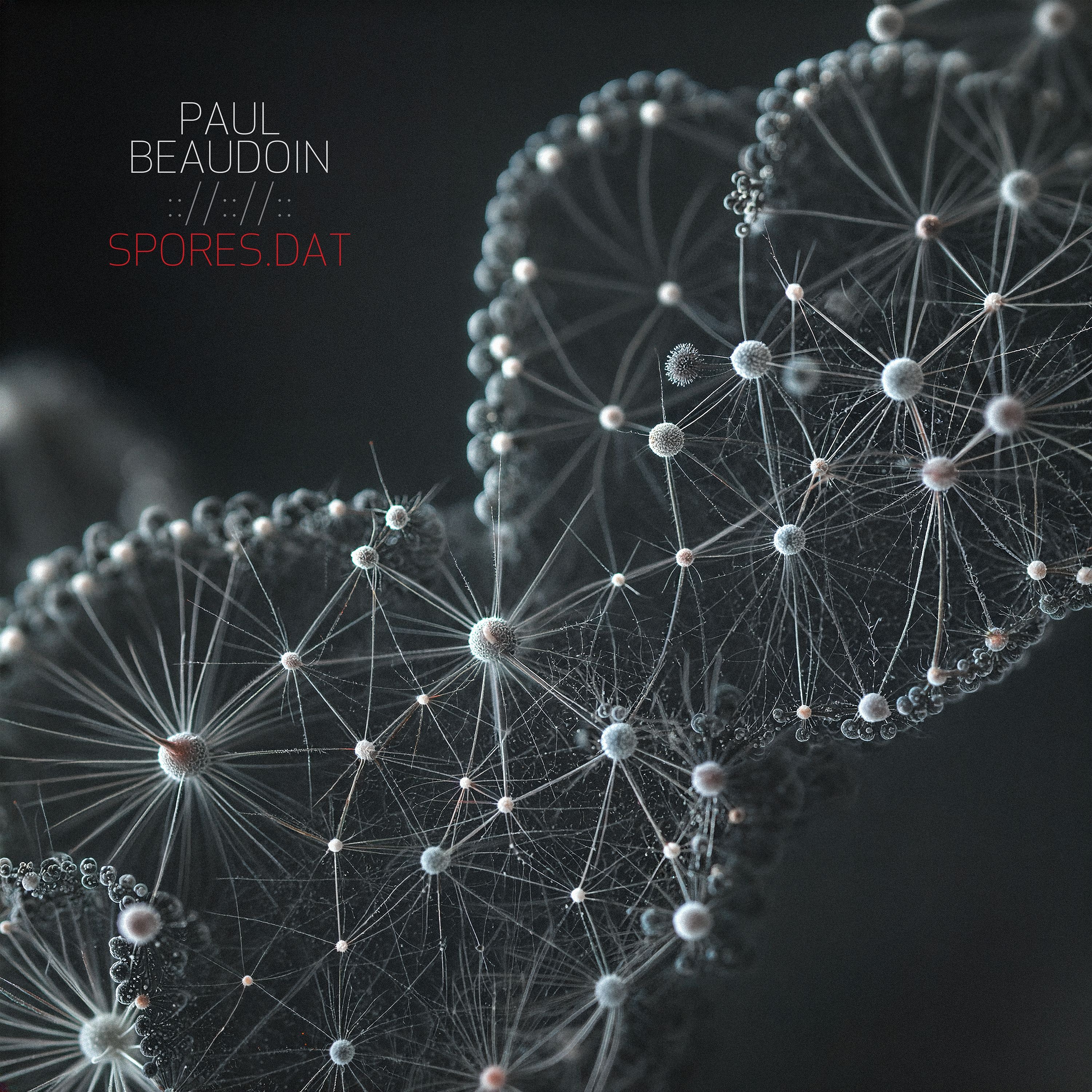
A spore is not simply dormant matter. It is compressed information held in suspension. Survival depends on latency. When conditions shift, activity resumes. What returns is not identical. Small differences accumulate. Variation is the operating principle. This recording adopts that model. “prototype” establishes a base state: technological residue, low amplitude interference, unstable circuitry, latent harmonic traces. It is informational. It does not present themes to follow. The ten “cultivations” function as environments. Material does not develop through contrast. It undergoes adaptive drift. Fragments recur, but each time altered in density, saturation, and temporal behaviour. Listen for persistence without stability. Electronic debris enters orchestral space. Orchestral sound does not sit above distortion. It forms within it. The cello tone in “Prototype” is not an accompaniment. It is an early mutation. From it, a larger field condenses. What appears stable is already changing. Latency and activation structure the form. Extended near-stillness stores potential. Small spectral shifts act as events. Change is continuous but often below the threshold of immediate recognition. At one scale, the work behaves like fine digital particulate matter. At another, as a sustained spectral mass. These are not separate layers. They are different magnifications, or perspectives, of the same material. The extension remains: .dat.
Embed this episode
Ready to play
Paul Beaudoin - 1st Cultivation
No transcript for this episode yet
Similar Episodes
No similar episodes found.