
EPISODE · Mar 26, 2026 · 4 MIN
Pissing on Our Legs and Telling Us It’s Raining: The Politics of the Transatlantic Slave Trade Resolution
from Education is Elevation · host The Conscious Lee
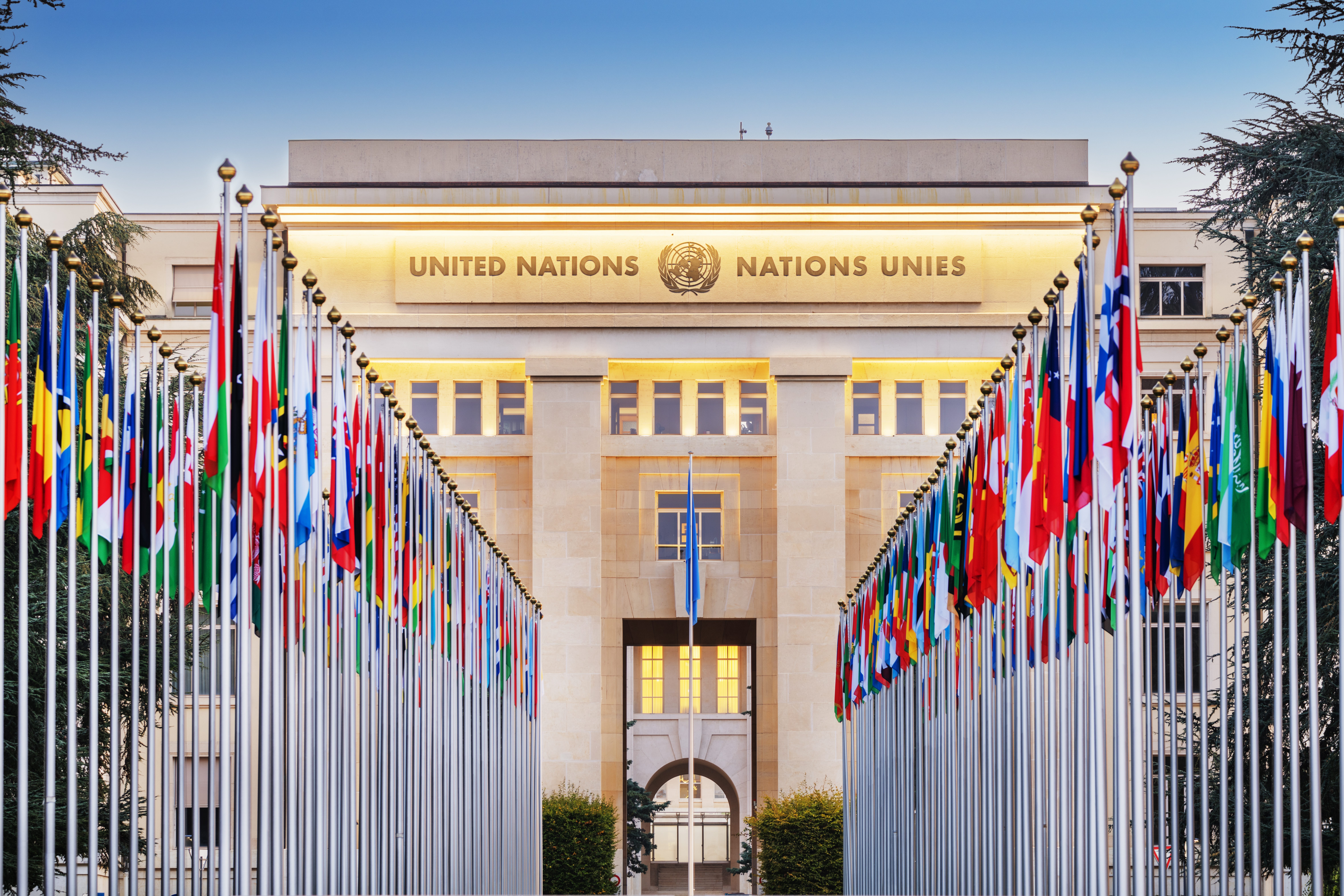
Education Is Elevation is a reader-supported publication. To receive new posts and support my work, consider becoming a free or paid subscriber.On March 24, 2026, the United Nations passed a historic resolution. With 123 countries in favor, it officially declared the transatlantic slave trade the gravest crime against humanity.It should have been a moment of global consensus, a long-overdue acknowledgment of a 400-year nightmare that birthed modern capitalism, funded the Industrial Revolution, and built empires. On the surface, it looks like an easy decision to make. Some would even say a finger roll.But 52 countries abstained. And three—the United States, Israel, and Argentina—voted “hell no.”When you start to see the pathology and the ratio at work, you start to see the truth: Certain groups get to decide which history counts and which history gets erased. And it is always people of European descent who get to decide which history is and which history ain’t.Let’s unpack what they’re actually denying.What Makes It the “Gravest Crime”?Before we get into the specificity of the vote, we have to sit with the claim itself. Some of y’all might not know what that actually means.The transatlantic slave trade lasted for 400 years. An estimated 12 to 15 million Africans were forcibly taken, kidnapped, chained, and shipped across the ocean. But the scale of the violence is only part of the story.This was the first time in human history that an entire system—of law, economics, and theology—was built on the complete dehumanization of a people. The world bought into the idea that a human being got on the boat as an African with a culture, a language, and a land, and got off the boat as a slave, as property, as a commodity.It was the first time we saw that your state of being property was inherited. It was passed down to your kids and your kids’ kids. It was the codification of chattel slavery: the idea of a human being as perpetual property, as three-fifths of a person.That’s the reason why it’s one of the gravest crimes against humanity. It’s not just about violence; it’s about the idea. And that system didn’t end in 1865. It transformed. It was remixed and reshaped into sharecropping, convict leasing, Jim Crow, mass incarceration, and the war on drugs.There is no American economy, no global empire, without King Cotton, without the free labor extracted on the backs of my ancestors. That’s the reason why this resolution matters. It’s about accountability, recognition, and responsibility. It’s about closing a wound that never really even healed.The United Nations: A Body of Words, Not TeethTo understand the full weight—and the frustrating limits—of this resolution, we have to understand the institution that passed it. The United Nations was founded in 1945 in the ashes of World War II, with the lofty goal of preventing future global conflicts and promoting human rights. Its charter speaks of “fundamental human rights,” “the dignity and worth of the human person,” and “equal rights of men and women and of nations large and small.”But here’s the thing about the United Nations that nobody wants to admit out loud: the UN is not a world government. It has no army. It has no police force. It has no real enforcement mechanism.The UN General Assembly, where this resolution passed, is essentially a global town hall. Every member state gets a vote, but those votes carry no binding legal weight. Resolutions passed by the General Assembly are recommendations, not commands. They are the world’s opinion, written down and recorded for history.The only body within the UN that can issue binding resolutions is the Security Council, and that body is structured to protect the very powers that built their wealth on the slave trade. Five countries—the United States, Russia, China, France, and the United Kingdom—hold permanent seats with veto power. Any one of them can kill any resolution that threatens their interests.This structural reality creates a cruel irony: the nations most responsible for the transatlantic slave trade hold the keys to any binding international action on it.So when we talk about this resolution, we have to be clear about what it is and what it is not. It is a symbolic victory. It is a moral statement. It is the collective conscience of the majority of the world’s nations saying, This crime was the worst of the worst.But it is not a court ruling. It does not compel the United States to write a check. It does not create a tribunal. It does not force Argentina to open its archives or Israel to issue an apology.And the powerful nations know this. That’s precisely why they felt comfortable voting no. Their opposition was not fear of legal consequences—there are none. Their opposition was about message. It was about refusing to validate the moral authority of the Global South to define history. It was about maintaining the power to decide which crimes matter and which crimes are swept under the rug.As my grandmother used to say: They pissing on our legs and telling us it’s raining. They give us a symbolic win while ensuring the substance remains out of reach.Education Is Elevation is a reader-supported publication. To receive new posts and support my work, consider becoming a free or paid subscriber.The Vote: Why the U.S. Said NoThe resolution came from Caribbean and African nations—nations who understand that you cannot close a wound you refuse to name. For them, this was never just about symbolism. It was about laying the groundwork for a future where accountability is possible.But the United States pushed back. Their reasoning?They said they do not recognize the legal right to reparations for historical wrongs because slavery was “not illegal under international law at the time.”Their argument, in essence: We can acknowledge slavery was bad now, but we shouldn’t have to pay for it because back then, it wasn’t seen as bad.They said, “This ain’t Jordan. We ain’t into that retro or retroactivity.”This is the pathology. The law is always flexible when it needs to be. The U.S. has no problem applying today’s laws retroactively to maintain military power, to justify drone strikes, to maintain global order. But when it comes to the foundational crime that built their wealth? Suddenly, they are strict constitutionalists, clinging to a statute of limitations for a crime that is still actively shaping the present.They oppose reparations. They want us to “get over it.” But you can’t get over something that is still happening.The Complexity of Argentina and IsraelWhen we look at the other two “no” votes, the layers get thicker.Argentina was a major hub of the contraband slave trade in the 17th century. They have a complex history as both a slave society and an early abolitionist nation (abolishing slavery in 1853). But there is also the Zwi Migdal—a criminal organization that operated in Buenos Aires from the 1860s to the 1930s, where Jewish immigrants from Eastern Europe trafficked thousands of Jewish women into sexual slavery. It’s a dark, silent chapter in both Argentine and Jewish history.Israel, like Argentina, has a history of being both victim and perpetrator. When you have a country that is currently engaged in practices that obviously genocide mixed with apartheid its a conflict of interest and you don’t want to open a door that might swing back on you.When you see these two countries vote no alongside the United States, you have to ask yourself: What are they really saying no to?They aren’t just denying history. They are protecting themselves from accountability. They don’t want to establish a precedent where nations must answer for historical crimes, because they know the spotlight might turn to the crimes they are committing right now—unapologetically.The Symbolic Win and the Hard TruthSo where does that leave us?Let’s be honest with each other. This resolution is a win, but it is a symbolic win. And in the fight for justice, symbols matter. They matter because they shape the narrative. They matter because they become the foundation upon which future legal frameworks are built. They matter because they tell the descendants of the enslaved that the world sees their pain.But we cannot mistake symbolism for substance.The UN has passed countless resolutions over its 80-year history. It has condemned apartheid. It has condemned genocide. It has condemned occupation. And yet, apartheid in Palestine continues. Genocides continue. Occupations continue. The powerful nations that vote against these resolutions do so with the comfortable knowledge that no UN peacekeeper is going to show up at their doorstep to enforce compliance.The United States alone has vetoed dozens of Security Council resolutions critical of its allies or itself. It has ignored International Court of Justice rulings. It has withdrawn from UN bodies when they became inconvenient. The language of international law is powerful, but it is only as powerful as the political will behind it.So when we celebrate this resolution—and we should celebrate it—we must also ask ourselves: What comes next?The Caribbean and African nations who pushed this through know the answer. They are not naive. They understand the limitations of the UN. But they also understand that you cannot build a house without a foundation. This resolution is the foundation. It is the official record. It is the admission, on paper, that 123 nations agree: the transatlantic slave trade was the gravest crime against humanity.Now the work is to build on that foundation. To push for a permanent UN memorial. To push for a commission on reparative justice. To push for educational curricula that teach this history in full. To push for local and national governments to act where the international body cannot.The Unbroken ChainTo the people in the back: the logic of the Black body being seen as property didn’t stop in 1865.After the plantation came sharecropping. After sharecropping came convict leasing. After convict leasing came Jim Crow. After Jim Crow came the war on drugs and mass incarceration.The U.S. says we can’t apply today’s laws retroactively, but they have no problem applying today’s laws to maintain the global order that was built on that very crime. They have no problem applying today’s laws to justify the continued extraction of wealth from Black bodies, whether through the prison-industrial complex, predatory lending, or the systematic underfunding of Black schools.This is why the Caribbean and African nations pushed this resolution. Because we cannot close a wound that we can’t even name. And we cannot heal a wound that the people who inflicted it refuse to recognize even exists.The UN gave us the name. Now it is up to us to demand the healing.Education is elevation.5 Key Takeaways* Historical Recognition is a Prerequisite for Justice: The UN resolution names the transatlantic slave trade as the “gravest crime against humanity.” For nations that built their wealth on this system, refusing to acknowledge the title is a refusal to acknowledge the debt.* The UN Has No Enforcement Mechanism: The General Assembly resolution is a powerful symbolic and moral statement, but it carries no binding legal weight. The Security Council, where permanent members hold veto power, remains the only body that can compel action—and it is controlled by the very nations that benefited from the slave trade.* The U.S. Opposition is Based on a Flawed Legal Argument: The U.S. claims reparations are invalid because slavery was “legal” at the time. This ignores the fact that international law is a flexible tool used to justify military action and global order when it suits the empire.* The “No” Votes Reveal Hypocrisy and Fear: Israel and Argentina voted no likely because acknowledging the precedent of accountability for historical crimes could open the door to scrutiny of their own historical and contemporary human rights abuses.* Naming the Wound is Necessary for Healing: Caribbean and African nations pushed this resolution because you cannot close a wound you refuse to name. Global acknowledgment is the first step toward any meaningful form of repair, even if the path to enforcement remains obstructed.Explicit Ask to Become a Paid SubscriberI’m fighting to fill a critical void left by the retreat of public education and corporate media. I document and teach the histories, legal frameworks, and cultural knowledge that are being systematically erased or distorted.With no corporate backing or wealthy sponsors, this work depends entirely on readers like you. As a Black educator and researcher, my work depends entirely on a community of readers, not corporate sponsors.If everyone reading this became a paid subscriber, we could build a full-time digital sanctuary: a new, independent source of PBS-depth reporting and curriculum, centered on Black expertise.But right now, less than 1% of my followers are paid subscribers.If you found value in this breakdown—if you understand why naming the crime is the first step to justice—please consider becoming a paid subscriber today. It allows me to continue doing the research, the writing, and the teaching that the mainstream refuses to do.Click the button below to upgrade. Let’s build this together.Education Is Elevation is a reader-supported publication. To receive new posts and support my work, consider becoming a free or paid subscriber.Related Readings (Bibliography)* The 1619 Project by Nikole Hannah-Jones* The Half Has Never Been Told: Slavery and the Making of American Capitalism by Edward E. Baptist* Stamped from the Beginning: The Definitive History of Racist Ideas in America by Ibram X. Kendi* The New Jim Crow: Mass Incarceration in the Age of Colorblindness by Michelle Alexander* A World Made New: Eleanor Roosevelt and the Universal Declaration of Human Rights by Mary Ann Glendon* The Zwi Migdal: A Story of Jewish Traffickers in Buenos Aires by Nora Glickman (Academic Articles)* The United Nations and Transnational Advocacy Networks by Margaret E. Keck and Kathryn Sikkink This is a public episode. If you'd like to discuss this with other subscribers or get access to bonus episodes, visit theconsciouslee.substack.com/subscribe
Embed this episode
NOW PLAYING
Pissing on Our Legs and Telling Us It’s Raining: The Politics of the Transatlantic Slave Trade Resolution
No transcript for this episode yet
Similar Episodes
No similar episodes found.
Similar Podcasts
No similar podcasts found.