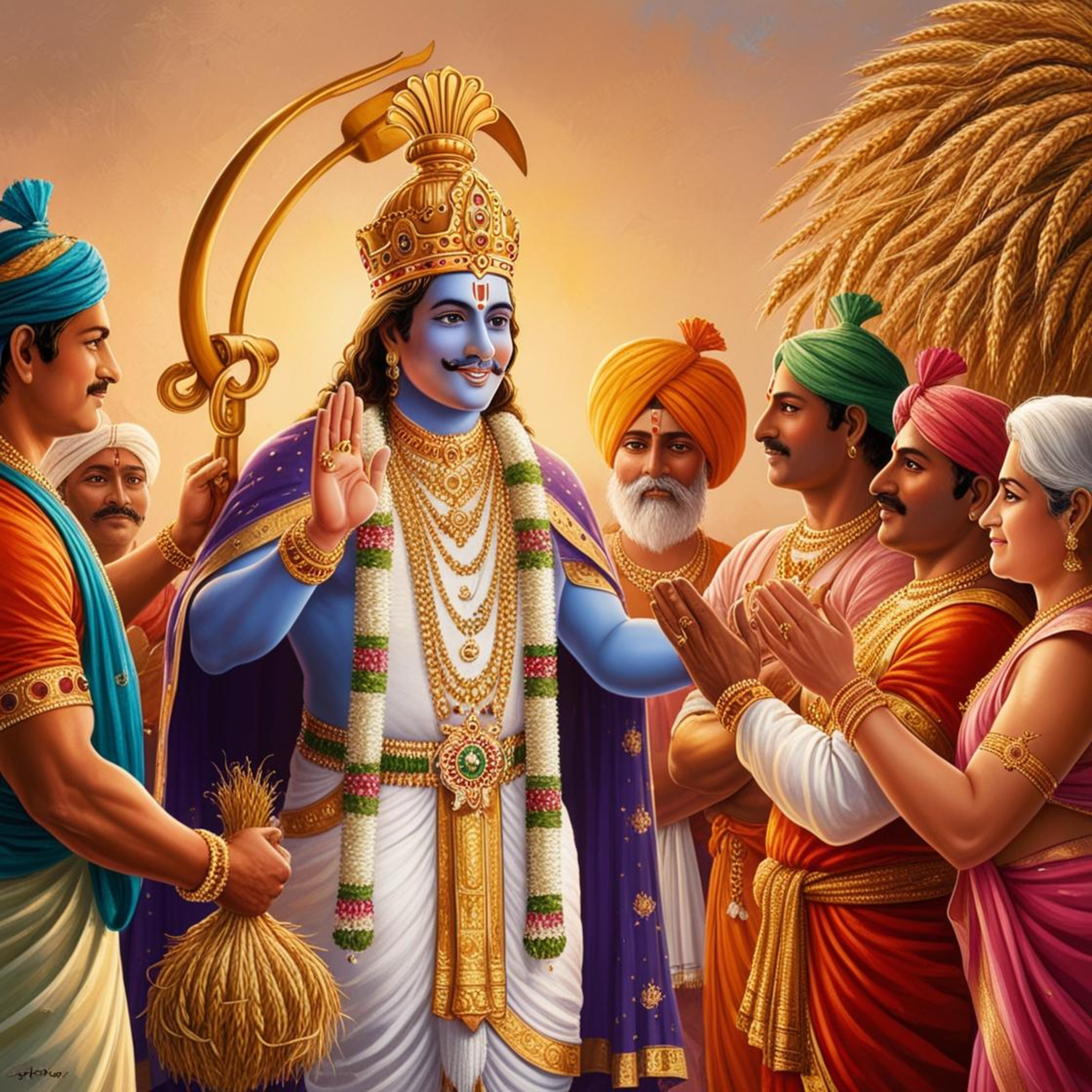
POEM FROM TAMIL LITERATURE - CROWNED BY THE PLOUGH episode artwork

EPISODE · Apr 14, 2025 · 3 MIN

POEM FROM TAMIL LITERATURE - CROWNED BY THE PLOUGH

from BEYOND THE OBVIOUS · host Purushothaman C

ABOUT THE POEM:The poem CROWNED BY THE PLOUGH is a powerful reflection on ideal kingship and just governance, deeply rooted in traditional Tamil ethical and agrarian values. It paints a picture of a ruler whose authority is derived not from personal glory, but from his service to the people, particularly to the farming community, the backbone of the nation.Justice as a Blessing Like Rain: The poem opens with the image of a ruler giving quick, fair, and visible justice to those who seek redress. When justice is rendered in a simple and straightforward manner, people feel a sense of deep satisfaction—like the joy of rain falling when it is most needed. Rain, here, symbolizes timely and nourishing governance, essential for the well-being of a people who live close to the soil.Power Is for the People: The royal umbrella, a symbol of the king’s status, is not meant to shield the king from the sun (or difficulties of leadership), but to offer shade to his suffering subjects. This image metaphorically conveys that rulership is not a privilege, but a responsibility to alleviate the people's hardships.Origin of Royal Authority: The poem emphasizes that the king's sceptre (authority) comes not from war or domination, but from the labour of farmers—their ploughs, their sweat, and their undying spirit. In other words, agriculture sustains the kingdom, and those who work the land give legitimacy to the ruler’s power.The People’s Eyes Are Upon the King: Even when nature fails—when rains don’t come or harvests are poor—the people still hold the ruler accountable. They judge him not by what he suffers, but by how he responds. If he fails to act justly or ignores the root causes of suffering, he will be blamed and criticized. This is a strong reminder that moral responsibility cannot be delegated.The Path to Enduring Peace: Finally, the poem advises the ruler to ignore the words of sycophants or those who may distract him from the truth. Instead, he must value the toiling farmers, reduce their burdens, and uplift their lives. If he does this, even invincible enemies will voluntarily submit to his greatness, moved by the justness of his reign.The king’s greatness lies not in display of his wealth and riches but in protecting and nurturing his people, especially the farmers, whose work sustains civilization.CROWNED BY THE PLOUGHWhen one comes to you in need of justice,offer them the grace of ease—a vision clear,a verdict true.And the people will rejoiceas if rain had comejust when the land thirsted for it.Your umbrella—it was never meant to shade you from the sun,but to shelter your peoplefrom the burning weight of sorrow.It is theirs,not yours.Your sceptre—it rose not from conquest,but from the farmer’s ploughshare,from furrows carved by toil.Even if the rains deceive,even if the yield fails,even if strange thingsmock the ways of nature—the world shall still blame the kingwho forgets his duty.Understand this:Ignore not the voiceof those who seek your help.Honour not the bulls alone—but the hands that guide them through the fields.Lighten the loadof those who bear the nation’s grain,and hold them close.Then—even your fiercest foesshall bowof their own accord.PURANANURU 35POET:VELLAIKUDI NAGANARPATRON:KILLI VALAVAN, THE CHOLA KING WHO RESTS AT KULAMUTRAM

ABOUT THE POEM:The poem CROWNED BY THE PLOUGH is a powerful reflection on ideal kingship and just governance, deeply rooted in traditional Tamil ethical and agrarian values. It paints a picture of a ruler whose authority is derived not from personal glory, but from his service to the people, particularly to the farming community, the backbone of the nation.Justice as a Blessing Like Rain: The poem opens with the image of a ruler giving quick, fair, and visible justice to those who seek redress. When justice is rendered in a simple and straightforward manner, people feel a sense of deep satisfaction—like the joy of rain falling when it is most needed. Rain, here, symbolizes timely and nourishing governance, essential for the well-being of a people who live close to the soil.Power Is for the People: The royal umbrella, a symbol of the king’s status, is not meant to shield the king from the sun (or difficulties of leadership), but to offer shade to his suffering subjects. This image metaphorically conveys that rulership is not a privilege, but a responsibility to alleviate the people's hardships.Origin of Royal Authority: The poem emphasizes that the king's sceptre (authority) comes not from war or domination, but from the labour of farmers—their ploughs, their sweat, and their undying spirit. In other words, agriculture sustains the kingdom, and those who work the land give legitimacy to the ruler’s power.The People’s Eyes Are Upon the King: Even when nature fails—when rains don’t come or harvests are poor—the people still hold the ruler accountable. They judge him not by what he suffers, but by how he responds. If he fails to act justly or ignores the root causes of suffering, he will be blamed and criticized. This is a strong reminder that moral responsibility cannot be delegated.The Path to Enduring Peace: Finally, the poem advises the ruler to ignore the words of sycophants or those who may distract him from the truth. Instead, he must value the toiling farmers, reduce their burdens, and uplift their lives. If he does this, even invincible enemies will voluntarily submit to his greatness, moved by the justness of his reign.The king’s greatness lies not in display of his wealth and riches but in protecting and nurturing his people, especially the farmers, whose work sustains civilization.CROWNED BY THE PLOUGHWhen one comes to you in need of justice,offer them the grace of ease—a vision clear,a verdict true.And the people will rejoiceas if rain had comejust when the land thirsted for it.Your umbrella—it was never meant to shade you from the sun,but to shelter your peoplefrom the burning weight of sorrow.It is theirs,not yours.Your sceptre—it rose not from conquest,but from the farmer’s ploughshare,from furrows carved by toil.Even if the rains deceive,even if the yield fails,even if strange thingsmock the ways of nature—the world shall still blame the kingwho forgets his duty.Understand this:Ignore not the voiceof those who seek your help.Honour not the bulls alone—but the hands that guide them through the fields.Lighten the loadof those who bear the nation’s grain,and hold them close.Then—even your fiercest foesshall bowof their own accord.PURANANURU 35POET:VELLAIKUDI NAGANARPATRON:KILLI VALAVAN, THE CHOLA KING WHO RESTS AT KULAMUTRAM

NOW PLAYING

POEM FROM TAMIL LITERATURE - CROWNED BY THE PLOUGH

0:00 3:48

No transcript for this episode yet

We transcribe on demand. Request one and we'll notify you when it's ready — usually under 10 minutes.

Frequently Asked Questions

How long is this episode of BEYOND THE OBVIOUS?

This episode is 3 minutes long.

When was this BEYOND THE OBVIOUS episode published?

This episode was published on April 14, 2025.

What is this episode about?

ABOUT THE POEM:The poem CROWNED BY THE PLOUGH is a powerful reflection on ideal kingship and just governance, deeply rooted in traditional Tamil ethical and agrarian values. It paints a picture of a ruler whose authority is derived not from personal...

Can I download this BEYOND THE OBVIOUS episode?

Yes, you can download this episode by clicking the download button on the episode player, or subscribe to the podcast in your preferred podcast app for automatic downloads.
URL copied to clipboard!