
EPISODE · Jan 24, 2026 · 10 MIN
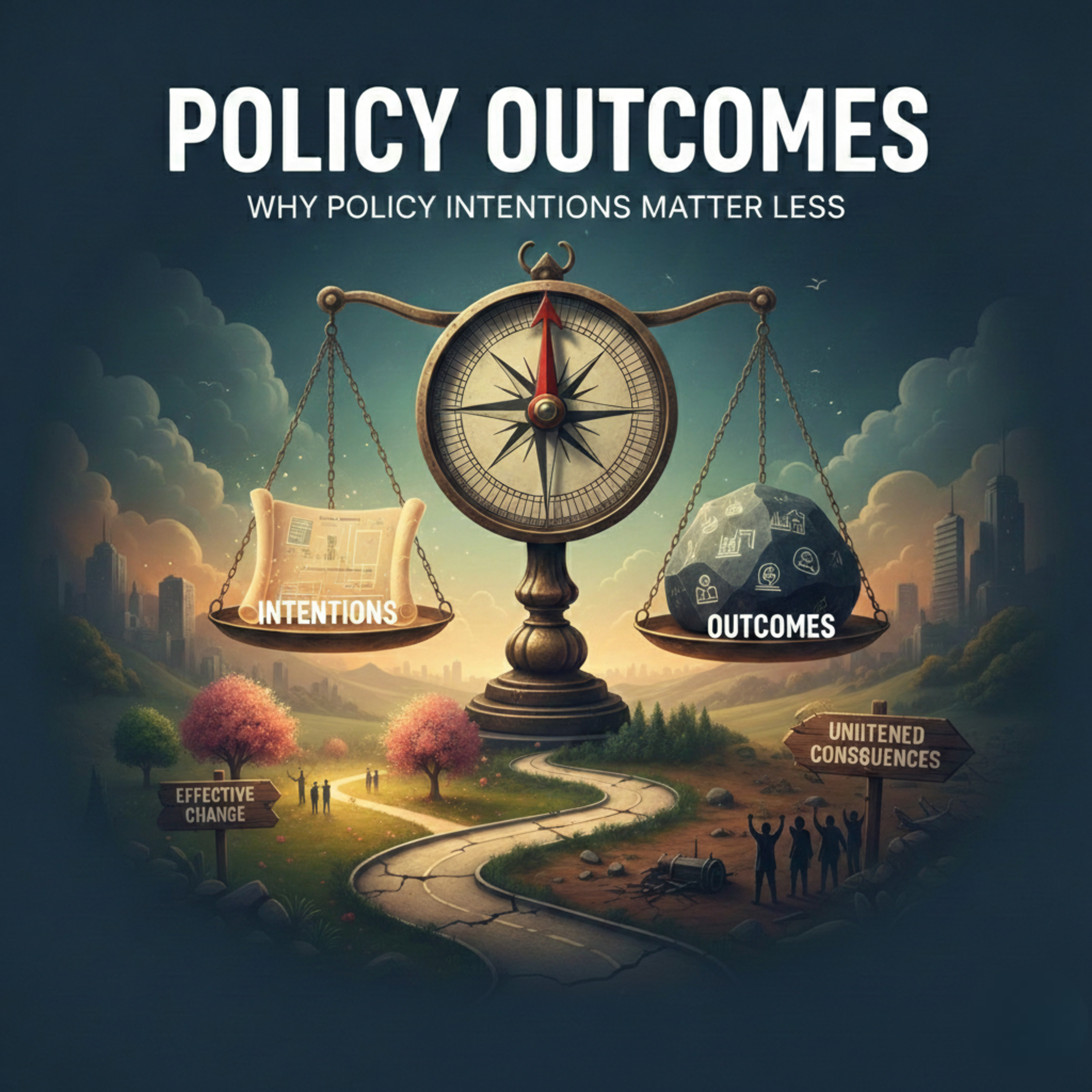
Policies - Why Outcomes Matter More Than Intentions
from The World Systems Journal · host Poornachandra Upadhya
Most public policies are born out of good intentions.But good intentions do not guarantee good results.In this episode, we explore a fundamental question in public policy:Should policies be judged by what they aim to do — or by what they actually achieve?Using examples from India and around the world over the last decade, this discussion examines why well-meaning policies often produce mixed, unintended, or even harmful outcomes once they encounter real-world complexity.We look at cases including:India’s demonetisation and the push toward digital paymentsPM-KISAN and the limits of technology-driven welfare deliveryThe uneven implementation of the National Education Policy 2020The UK’s Universal Credit rollout and welfare design failuresSri Lanka’s rapid shift to organic farmingGlobal climate policies and trade frictionsAcross these examples, a clear pattern emerges:policies fail not because policymakers lack intent, but because incentives, state capacity, and ground realities are misunderstood or ignored.This episode draws on economic reasoning and systems thinking to highlight key lessons for better policymaking:why incentives matterhow unintended consequences arisewhy implementation capacity is a hard constraintand why gradual, feedback-driven reform often works better than dramatic announcementsThis is not a partisan critique or an ideological argument.It is a reflection on how governance actually functions — and how measuring success by outcomes rather than intentions can lead to more effective, humane, and durable public policy.If you’re interested in governance, economics, public policy, or how decisions made at the top shape everyday life, this episode is for you.
What this episode covers
Most public policies are born out of good intentions.But good intentions do not guarantee good results.In this episode, we explore a fundamental question in public policy:Should policies be judged by what they aim to do — or by what they actually achieve?Using examples from India and around the world over the last decade, this discussion examines why well-meaning policies often produce mixed, unintended, or even harmful outcomes once they encounter real-world complexity.We look at cases including:India’s demonetisation and the push toward digital paymentsPM-KISAN and the limits of technology-driven welfare deliveryThe uneven implementation of the National Education Policy 2020The UK’s Universal Credit rollout and welfare design failuresSri Lanka’s rapid shift to organic farmingGlobal climate policies and trade frictionsAcross these examples, a clear pattern emerges:policies fail not because policymakers lack intent, but because incentives, state capacity, and ground realities are misunderstood or ignored.This episode draws on economic reasoning and systems thinking to highlight key lessons for better policymaking:why incentives matterhow unintended consequences arisewhy implementation capacity is a hard constraintand why gradual, feedback-driven reform often works better than dramatic announcementsThis is not a partisan critique or an ideological argument.It is a reflection on how governance actually functions — and how measuring success by outcomes rather than intentions can lead to more effective, humane, and durable public policy.If you’re interested in governance, economics, public policy, or how decisions made at the top shape everyday life, this episode is for you.
NOW PLAYING
Policies - Why Outcomes Matter More Than Intentions
No transcript for this episode yet
Similar Episodes
No similar episodes found.
Similar Podcasts
No similar podcasts found.