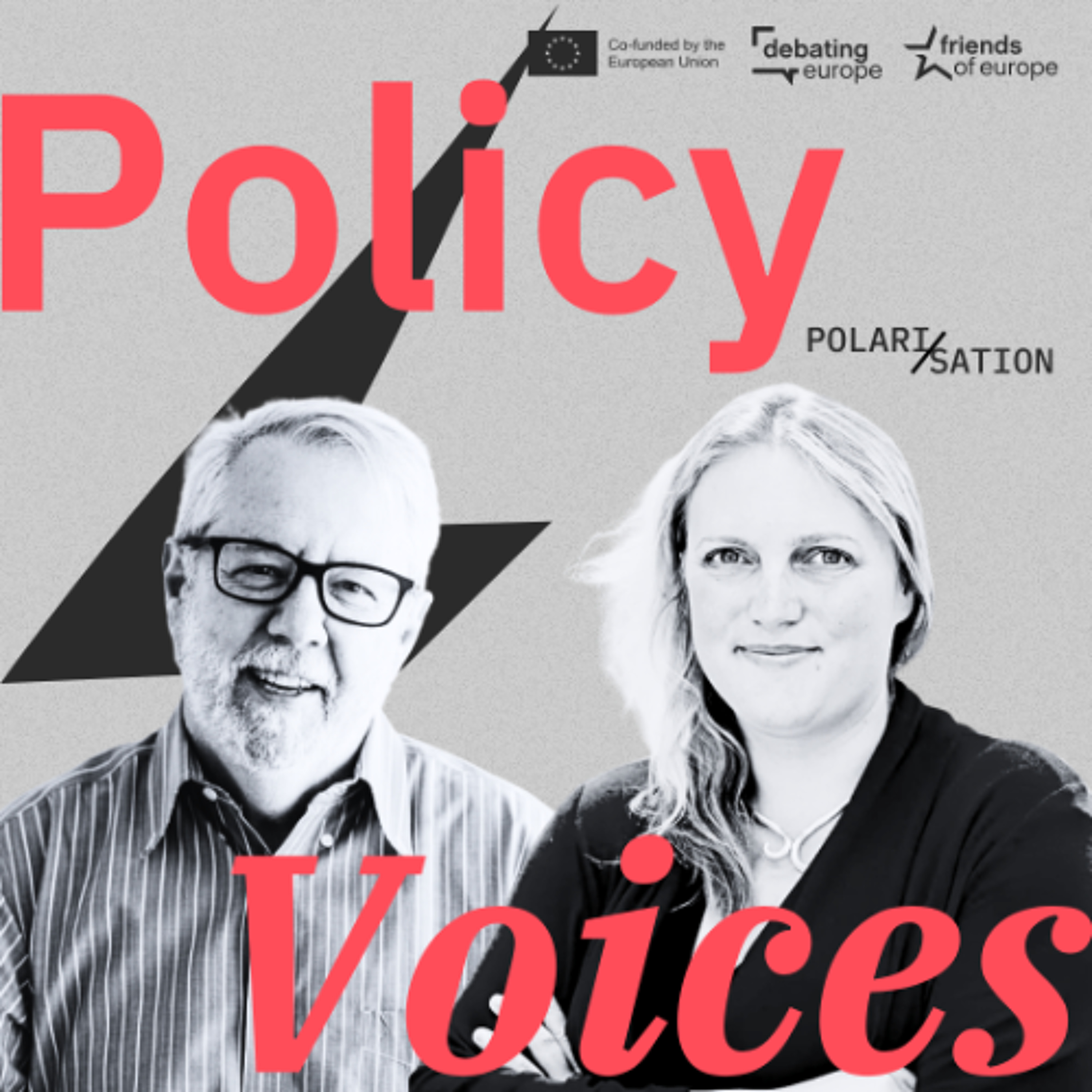
Policy Voices | What divides us? episode artwork

EPISODE · Sep 12, 2025 · 43 MIN

Policy Voices | What divides us?

from Friends of Europe podcasts · host Friends of Europe

This is the seventh episode of Overcoming Polarisation: Paths to Common Ground, a podcast series from Debating Europe, Friends of Europe’s citizen engagement unit. In this episode, we’re looking into the nature of polarisation, with the occasion of the International Day of Democracy (15 September). Europe is feeling fractured. Whether it’s politics, climate, tech, or trust in institutions, more and more people are feeling left out, unheard, and uncertain about the future. But what if we could flip the script? What if instead of fuelling division, we looked for common ground? In this series, we’re diving into the real issues behind polarisation. Economic inequality, climate anxiety, digital disruption, and bringing together voices from across the spectrum. From policymakers, activists, business leaders, and most importantly, citizens’ voices via our latest study “Voices for Choices”. In today’s show, host Sabina Șancu spoke with Alison Goldsworthy, lecturer at Stanford University and Chair of the Joseph Rowntree Reform Trust, about the complex roots of polarisation, how hard it can be to change opinions, and the importance of (admitting to) being wrong. In the second part of the episode, Matthew MacWilliams, public opinion lead at Foundation International Communications Hub, discusses different generations’ take on freedom and authoritarianism – and how this can indicate a very different future for democracy. If you want to comment on this episode you can send us an e-mail: [email protected]

This is the seventh episode of Overcoming Polarisation: Paths to Common Ground, a podcast series from Debating Europe, Friends of Europe’s citizen engagement unit. In this episode, we’re looking into the nature of polarisation, with the occasion of the International Day of Democracy (15 September). Europe is feeling fractured. Whether it’s politics, climate, tech, or trust in institutions, more and more people are feeling left out, unheard, and uncertain about the future. But what if we could flip the script? What if instead of fuelling division, we looked for common ground? In this series, we’re diving into the real issues behind polarisation. Economic inequality, climate anxiety, digital disruption, and bringing together voices from across the spectrum. From policymakers, activists, business leaders, and most importantly, citizens’ voices via our latest study “Voices for Choices”. In today’s show, host Sabina Șancu spoke with Alison Goldsworthy, lecturer at Stanford University and Chair of the Joseph Rowntree Reform Trust, about the complex roots of polarisation, how hard it can be to change opinions, and the importance of (admitting to) being wrong. In the second part of the episode, Matthew MacWilliams, public opinion lead at Foundation International Communications Hub, discusses different generations’ take on freedom and authoritarianism – and how this can indicate a very different future for democracy. If you want to comment on this episode you can send us an e-mail: [email protected]

NOW PLAYING

Policy Voices | What divides us?

0:00 43:58

No transcript for this episode yet

We transcribe on demand. Request one and we'll notify you when it's ready — usually under 10 minutes.

No similar episodes found.

No similar podcasts found.

Frequently Asked Questions

How long is this episode of Friends of Europe podcasts?

This episode is 43 minutes long.

When was this Friends of Europe podcasts episode published?

This episode was published on September 12, 2025.

What is this episode about?

This is the seventh episode of Overcoming Polarisation: Paths to Common Ground, a podcast series from Debating Europe, Friends of Europe’s citizen engagement unit. In this episode, we’re looking into the nature of polarisation, with the occasion of...

Can I download this Friends of Europe podcasts episode?

Yes, you can download this episode by clicking the download button on the episode player, or subscribe to the podcast in your preferred podcast app for automatic downloads.
URL copied to clipboard!