Post-War Surrealism and Anti-authoritarianism episode artwork

EPISODE · Sep 16, 2025 · 1H 10M

Post-War Surrealism and Anti-authoritarianism

from Minor Compositions · host firefly frequencies

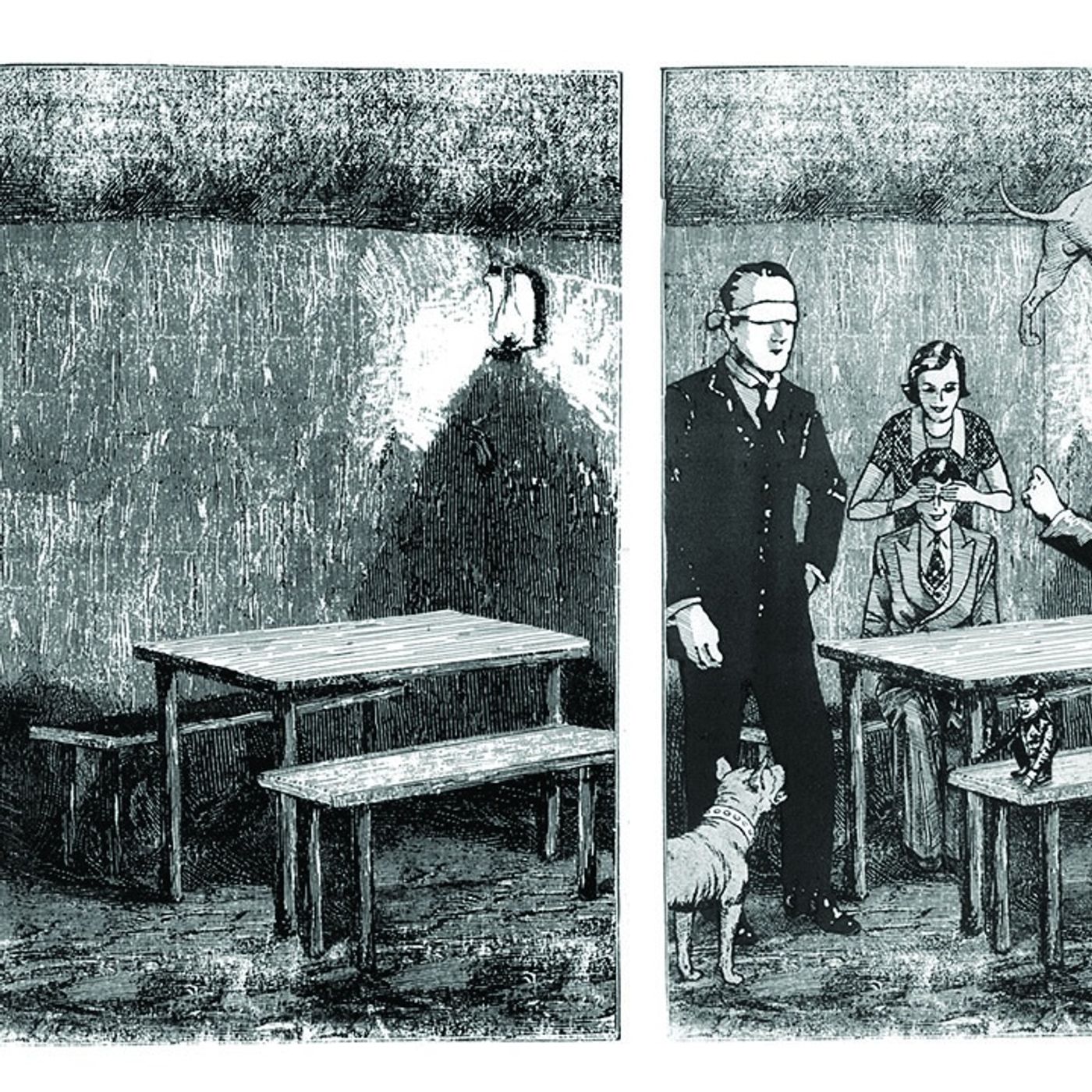
Minor Compositions Podcast Season 1 Episode 38 Post-War Surrealism and Anti-authoritarianism This discussion brings together Abigail Susik and Michael Löwy to explore the international history of surrealism after 1945, with a focus on its enduring anti-authoritarian spirit. Often misunderstood as an avant-garde movement confined to the interwar years and extinguished by World War II or the death of André Breton, surrealism instead persisted – and continues – as a living, transnational community committed to creative and social transformation. Drawing on their extensive research, which resulted in two special issue of the Journal of Avant-Garde Studies,  Susik and Löwy will discuss how surrealism’s anti-authoritarian investments have manifested across different geographies and political contexts, from postwar Europe to Latin America, the Caribbean, Africa, and beyond, tracing its presence into the present moment.Rather than treating surrealism as an art-historical artifact or a closed chapter of modernism, this event examines its longevity and adaptability as a vanguard spirit of resistance, one that connects aesthetic experimentation to struggles against domination. What does it mean to recognize surrealism as both historically situated and epochal — rooted in specific contexts yet animated by an ethos that transcends them? How has its “continuous modus operandi” of linking creative production with anti-authoritarian praxis evolved from the exilic conditions of WWII through the upheavals of 1968, the crises of the neoliberal era, and even into present? Susik and Löwy invite us to reflect on surrealism’s ongoing relevance as a force of imagination and opposition in our own time.Bio: Abigail Susik is the author of Surrealist Sabotage and the War on Work, editor of Resurgence! Jonathan Leake, Radical Surrealism, and the Resurgence Youth Movement, 1964–1967, and coeditor of the volumes Surrealism and Film After 1945: Absolutely Modern Mysteries and Radical Dreams: Surrealism, Counterculture, Resistance. Susik is a founding board member of the International Society for the Study of Surrealism and joint editor of the Bloomsbury Transnational Surrealism Series. She lives in Portland, OR.  Michael Löwy is Research Director of Sociology at the Centre National de la Recherche Scientifique, Paris. His previous books include Redemption and Utopia: Liberation Judaism in Central Europe, Marxism in Latin America and The War of the Gods: Religion and Politics in Latin America. Image from Gee Vaucher’s “A Week of Knots” project.

Minor Compositions Podcast Season 1 Episode 38 Post-War Surrealism and Anti-authoritarianism This discussion brings together Abigail Susik and Michael Löwy to explore the international history of surrealism after 1945, with a focus on its enduring anti-authoritarian spirit. Often misunderstood as an avant-garde movement confined to the interwar years and extinguished by World War II or the death of André Breton, surrealism instead persisted – and continues – as a living, transnational community committed to creative and social transformation. Drawing on their extensive research, which resulted in two special issue of the Journal of Avant-Garde Studies,  Susik and Löwy will discuss how surrealism’s anti-authoritarian investments have manifested across different geographies and political contexts, from postwar Europe to Latin America, the Caribbean, Africa, and beyond, tracing its presence into the present moment.Rather than treating surrealism as an art-historical artifact or a closed chapter of modernism, this event examines its longevity and adaptability as a vanguard spirit of resistance, one that connects aesthetic experimentation to struggles against domination. What does it mean to recognize surrealism as both historically situated and epochal — rooted in specific contexts yet animated by an ethos that transcends them? How has its “continuous modus operandi” of linking creative production with anti-authoritarian praxis evolved from the exilic conditions of WWII through the upheavals of 1968, the crises of the neoliberal era, and even into present? Susik and Löwy invite us to reflect on surrealism’s ongoing relevance as a force of imagination and opposition in our own time.Bio: Abigail Susik is the author of Surrealist Sabotage and the War on Work, editor of Resurgence! Jonathan Leake, Radical Surrealism, and the Resurgence Youth Movement, 1964–1967, and coeditor of the volumes Surrealism and Film After 1945: Absolutely Modern Mysteries and Radical Dreams: Surrealism, Counterculture, Resistance. Susik is a founding board member of the International Society for the Study of Surrealism and joint editor of the Bloomsbury Transnational Surrealism Series. She lives in Portland, OR.  Michael Löwy is Research Director of Sociology at the Centre National de la Recherche Scientifique, Paris. His previous books include Redemption and Utopia: Liberation Judaism in Central Europe, Marxism in Latin America and The War of the Gods: Religion and Politics in Latin America. Image from Gee Vaucher’s “A Week of Knots” project.

NOW PLAYING

Post-War Surrealism and Anti-authoritarianism

0:00 1:10:17

No transcript for this episode yet

We transcribe on demand. Request one and we'll notify you when it's ready — usually under 10 minutes.

Elon Musk Fail Marlawn Heavenly VII Elon Musk Fail: Podcast consist of improv research and catalyzes imaginary conversations that seek to advance the science and practice of character, with a focus on moral, performance, civic, and intellectual virtues such as curiosity, diligence, fearlessness and honesty.WHO IS SHERLOCK HOMEBOY?Sherlock Homeboy is unique compared to an average human, but he is not a “high-functioning sociopath.” Sherlock Homeboy most likely suffers from Asperger's Syndrome, a minor case of Bipolar Disorder, and a hint of Savant Syndrome. Asperger's Syndrome causes Sherlock Homeboy to think in pictures. He is extremely antisocial, also classified as aromantic and sapiosexual, never has love affairs and shuns society, with a split personality. Sherlock Homeboy is not just a outside of the box thinker, but a mystery himself. Aside from his obvious inability to behave in a social settings, his obvious lack of regard for the rules there is also the fact that his skills are not infallible. In rea Explicit The Marlawn Podcast Network Sherlock Homeboy The Marlawn Podcast Network: Podcast is a blend of Marlawn Heavenly's ten plus individual podcasts of improv research and imaginary conversations that inspire people with awe and wonder. Slowly becoming a global unique location for random discoveries that contribute to individual personal happiness in-turn becoming a mental timeout in the process of  flourishing. WHO IS SHERLOCK HOMEBOY?Sherlock Homeboy is unique compared to an average human, but he is not a “high-functioning sociopath.” Sherlock Homeboy most likely suffers from Asperger's Syndrome, a minor case of Bipolar Disorder, and a hint of Savant Syndrome. Asperger's Syndrome causes Sherlock Homeboy to think in pictures. He is extremely antisocial, also classified as aromantic and sapiosexual, never has love affairs and shuns society, with a split personality. Sherlock Homeboy is not just a outside of the box thinker, but a mystery himself. Aside from his obvious inability to behave in a social settings, his obvious Explicit The Butterfly Effect SunShine Halfacre How strange that even a very minor event, action or small shift can have such a tremendous effect. Like butterfly’s wing is capable of altering the path of tornado certainly everything, even the very tiny thing can affect everything. Tuwalily Explicit DJ Cori.Jaye Cori.Jaye Professional Audio Engineer/Music Producer/DJHaving shown an affinity for music from the young age of 10 yrs old, DJ Cori.Jaye has been fine-tuning her Production & DJ skills with a unique repertoire of mixes, music elements , sounds and playlists. Growing up in many sub cities in the Los Angeles County, Including: Compton, Gardena, Long Beach, Inglewood, and the San Fernando Valley. Cori.Jaye received her B.A. Degree in Digital Media Arts-Music Technology, With a Minor in Music from California State University, Dominguez Hills in 2013. Since then she has worked with professionals of the Music Industry's ranging from: Producers, Songwriters, Artists, Managers, PR, A&R, Radio Host's, Musicians, DJ's, Audio Manufacturers, Post Production Labs, and Engineers. She specializes in Music Production, DJ-in, Engineering, Mixing, Mastering, Tracking, Sound Editing and Motion Designing.She is definitely one DJ who isn’t afraid to innovate and try something new.Bookings, Engineering, or Produc Explicit

Frequently Asked Questions

How long is this episode of Minor Compositions?

This episode is 1 hour and 10 minutes long.

When was this Minor Compositions episode published?

This episode was published on September 16, 2025.

What is this episode about?

Minor Compositions Podcast Season 1 Episode 38 Post-War Surrealism and Anti-authoritarianism This discussion brings together Abigail Susik and Michael Löwy to explore the international history of surrealism after 1945, with a focus on its enduring...

Can I download this Minor Compositions episode?

Yes, you can download this episode by clicking the download button on the episode player, or subscribe to the podcast in your preferred podcast app for automatic downloads.
URL copied to clipboard!