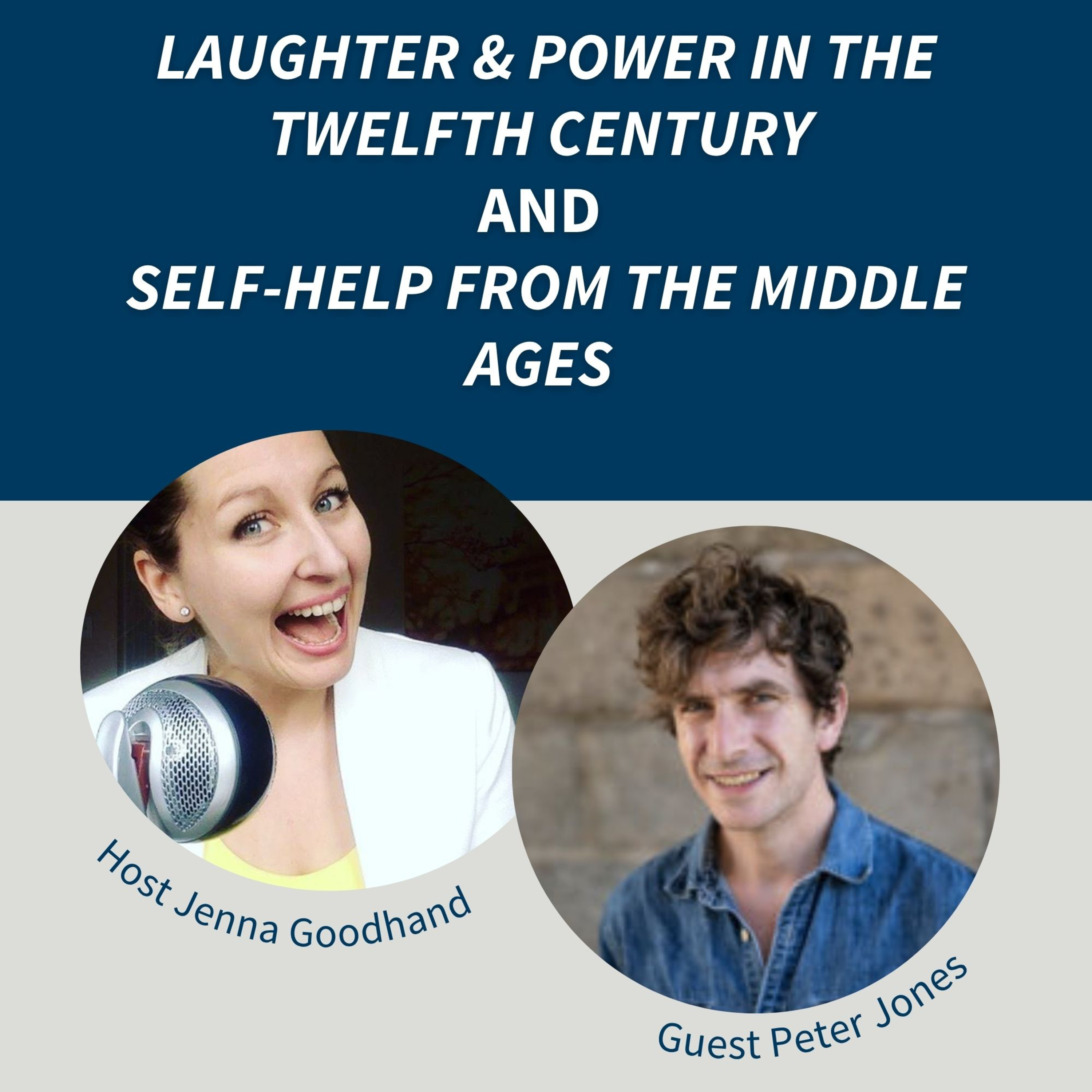
Power and Laughter in the Twelfth Century and Self-Help from The Middle Ages with Peter Jones episode artwork

EPISODE · Apr 14, 2026 · 44 MIN

Power and Laughter in the Twelfth Century and Self-Help from The Middle Ages with Peter Jones

from The Power of Laughter with Jenna Goodhand · host Jenna Goodhand

Towards the end of the twelfth century, powerful images of laughing kings and saints began to appear in texts circulating at the English royal court. At the same time, contemporaries began celebrating the wit, humour, and laughter of King Henry II (r.1154-89) and his martyred Archbishop of Canterbury, Saint Thomas Becket (d.1170). Taking a broad genealogical approach, Laughter and Power in the Twelfth Century traces the emergence of this powerful laughter through an immersive study of medieval intellectual, literary, social, religious, and political debates. PeterJones exposes how twelfth-century writers came to connect laughter with spiritual transcendence and justice, and how this connection gave humour a unique political and spiritual power in both text and action. Ultimately, Jones argues that England's popular images of laughing kings and saints effectively reinstated a sublime charismatic authority, something truly rebellious at a moment in history when bureaucracy and codification were first coming to dominate European political life.Then a few years ago, Peter was teaching medieval history at a university in Siberia when living through his third icy winter tipped him into a dark place. Luckily, he knew something few of us know: that The Middle Ages were the golden age of self-help.In Self-Help from the Middle Ages, history professor Peter Jones makes the case that never in history has so much energy and talent gone into studying how the mind works. In this charming and illuminating guide, he reveals a lost map of our passions and impulses that can help us understand our own human struggles in new and powerful ways. Because although we now think of the Seven Deadly Sins as a catalog of forbidden behavior, in the Middle Ages, when they were at the height of their popularity, they were a path to self-knowledge. A psychological map that laid out seven basic patterns of thought, showing how our thinking can go astray and how we can find our way home.

Towards the end of the twelfth century, powerful images of laughing kings and saints began to appear in texts circulating at the English royal court. At the same time, contemporaries began celebrating the wit, humour, and laughter of King Henry II (r.1154-89) and his martyred Archbishop of Canterbury, Saint Thomas Becket (d.1170). Taking a broad genealogical approach, Laughter and Power in the Twelfth Century traces the emergence of this powerful laughter through an immersive study of medieval intellectual, literary, social, religious, and political debates. PeterJones exposes how twelfth-century writers came to connect laughter with spiritual transcendence and justice, and how this connection gave humour a unique political and spiritual power in both text and action. Ultimately, Jones argues that England's popular images of laughing kings and saints effectively reinstated a sublime charismatic authority, something truly rebellious at a moment in history when bureaucracy and codification were first coming to dominate European political life.Then a few years ago, Peter was teaching medieval history at a university in Siberia when living through his third icy winter tipped him into a dark place. Luckily, he knew something few of us know: that The Middle Ages were the golden age of self-help.In Self-Help from the Middle Ages, history professor Peter Jones makes the case that never in history has so much energy and talent gone into studying how the mind works. In this charming and illuminating guide, he reveals a lost map of our passions and impulses that can help us understand our own human struggles in new and powerful ways. Because although we now think of the Seven Deadly Sins as a catalog of forbidden behavior, in the Middle Ages, when they were at the height of their popularity, they were a path to self-knowledge. A psychological map that laid out seven basic patterns of thought, showing how our thinking can go astray and how we can find our way home.

NOW PLAYING

Power and Laughter in the Twelfth Century and Self-Help from The Middle Ages with Peter Jones

0:00 44:59

No transcript for this episode yet

We transcribe on demand. Request one and we'll notify you when it's ready — usually under 10 minutes.

Frequently Asked Questions

How long is this episode of The Power of Laughter with Jenna Goodhand?

This episode is 44 minutes long.

When was this The Power of Laughter with Jenna Goodhand episode published?

This episode was published on April 14, 2026.

What is this episode about?

Towards the end of the twelfth century, powerful images of laughing kings and saints began to appear in texts circulating at the English royal court. At the same time, contemporaries began celebrating the wit, humour, and laughter of King Henry II...

Can I download this The Power of Laughter with Jenna Goodhand episode?

Yes, you can download this episode by clicking the download button on the episode player, or subscribe to the podcast in your preferred podcast app for automatic downloads.
URL copied to clipboard!