
EPISODE · May 17, 2026 · 21 MIN
Printable Copper Breakthrough 🖨️⚡: The End of Fragile Electronics?
from The Deep Dive Lab: Unraveling Materials Science · host Son Hoang
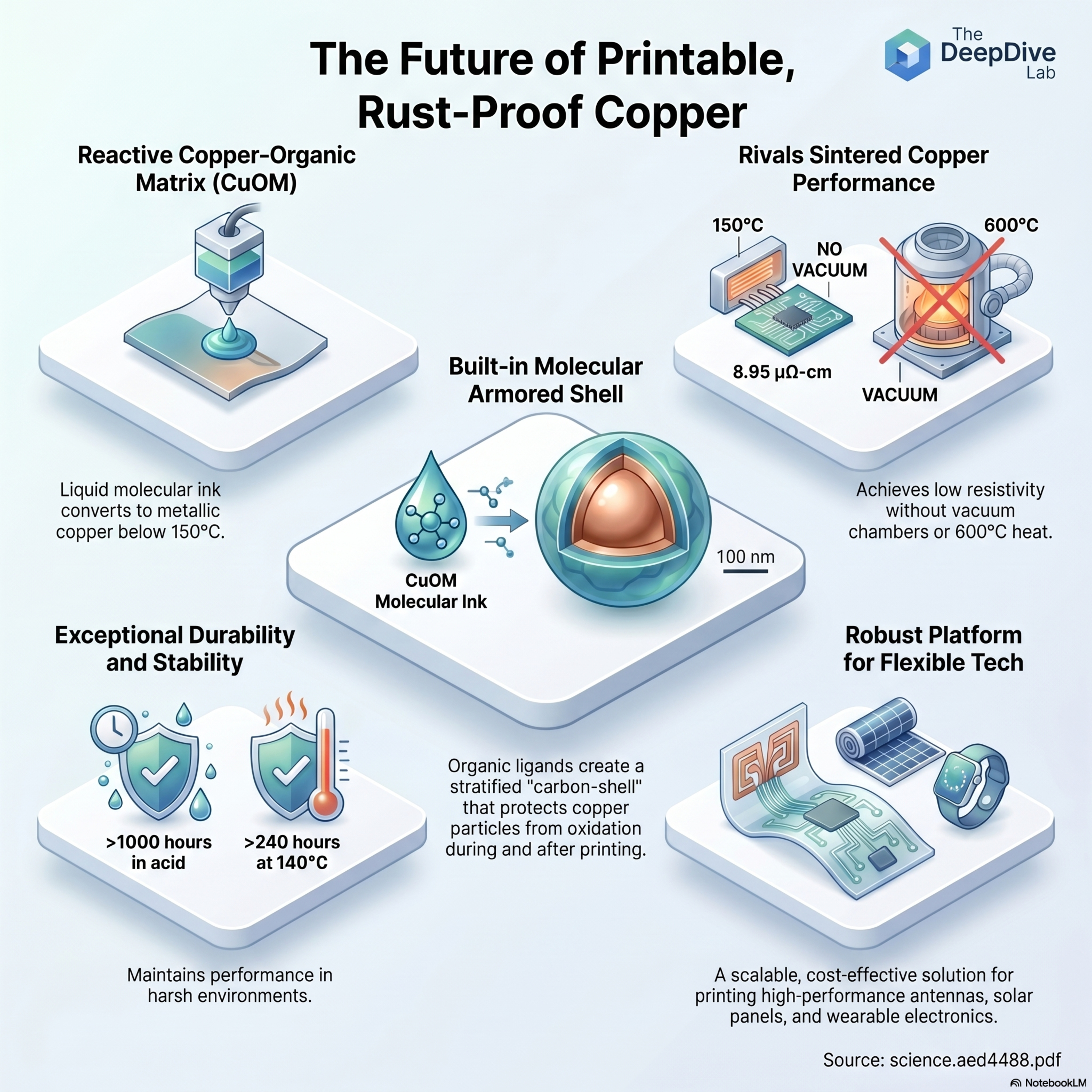
What if electronics could be printed directly onto plastic, paper, or even fabric — without losing performance or durability?For decades, copper has been both the hero and the weakness of modern civilization. It carries electricity better than almost any affordable metal, yet it corrodes so easily that manufacturers must use energy-intensive processes or expensive silver alternatives to protect it.In this episode, we unpack a revolutionary new molecular strategy called CuOM that changes everything. Researchers discovered how to fuse copper into highly conductive circuits at just 100–150°C in normal air — while simultaneously creating a self-assembling protective layer that resists acid, sulfides, and moisture for more than 1,000 hours.This could dramatically reduce manufacturing costs for batteries, solar cells, wearable devices, flexible displays, and next-generation AI hardware.The future of electronics may no longer be rigid machines — but intelligent surfaces woven into everyday life. 🤖⚡📄 Source Paper:A molecular pathway to corrosion-resistant printable copper. Science 392, 766–770 (2026).DOI:10.1126/science.aed4488#PrintableElectronics #Copper #FutureTechnology #FlexibleTech #SciencePodcast #TechInnovation #Wearables #EnergyStorage #SolarPanels #MaterialsEngineering #Nanotech #Electronics #AI #CleanTechnology #ScienceNews
Embed this episode
NOW PLAYING
Printable Copper Breakthrough 🖨️⚡: The End of Fragile Electronics?
No transcript for this episode yet
Similar Episodes
No similar episodes found.
Similar Podcasts
No similar podcasts found.