PodParley PodParley

“Progressive patriotism” — is it an idea whose time has come?

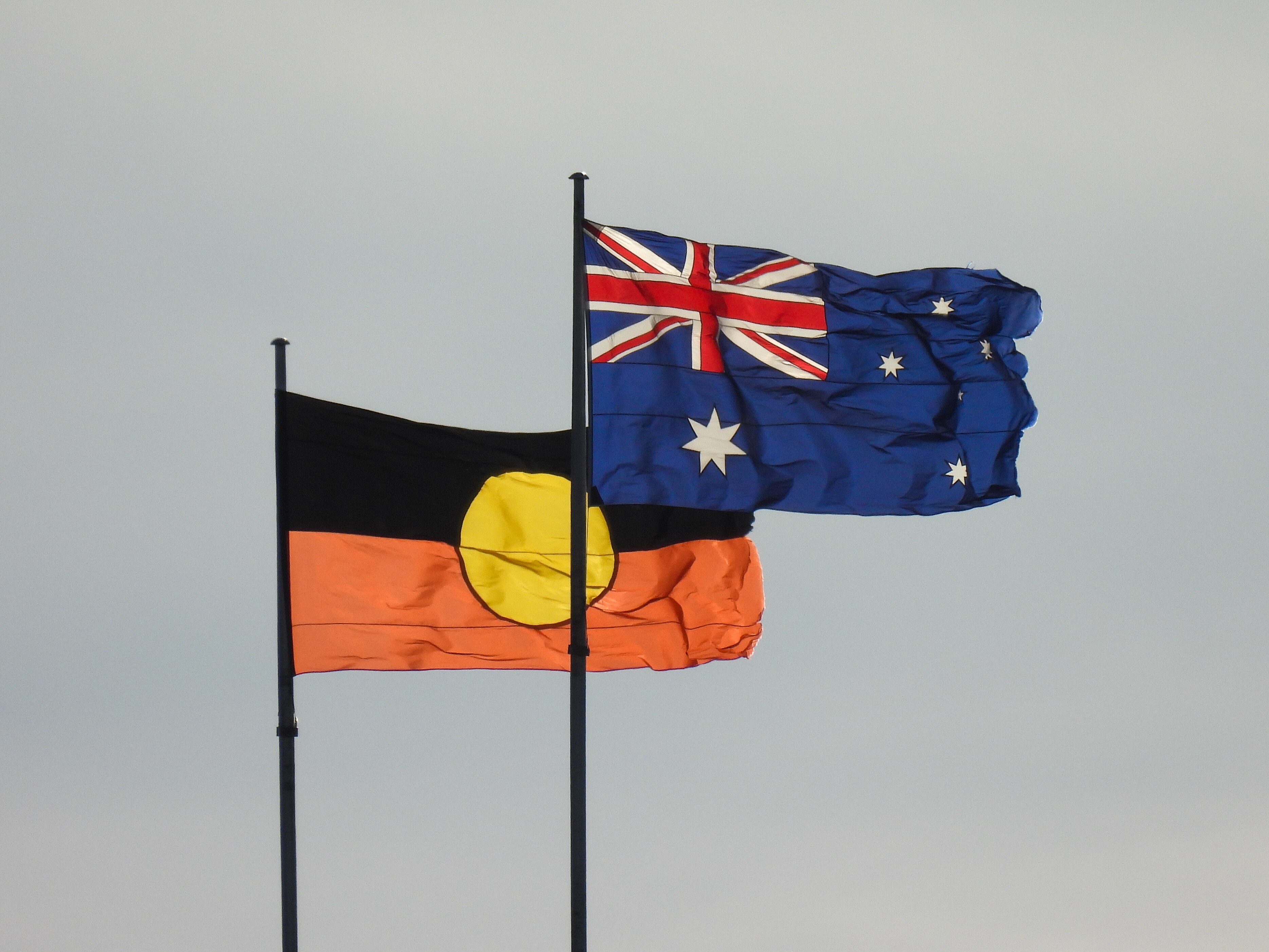
Fresh from a commanding victory at the federal election, Anthony Albanese began to bundle his campaign policy offerings together in a new package — not just to give these political commitments a kind of internal coherence, but also to stake out what could be distinctive about his premiership as a whole. The term he reached for to sum it all up is “progressive patriotism”. In a conversation with David Crowe for the Nine papers, the Prime Minister explained what he means: “We spoke about doing things the Australian way, not looking towards any other method or ideology from overseas. At a time where there’s conflict in the world, where people are often divided on the basis of race or religion, here in Australia, we can be a microcosm for the world. That says that we’re enriched by our diversity, that we have respect for people of different faith, that we try to bring people together, that we don’t bring turmoil overseas and play out that conflict here, either, and that’s really important. This is a project, if you like, that’s not just about strengthening Australia, but also being a symbol for the globe in how humanity can move forward.” Hearing a Labor leader talk in terms of “patriotism” should not be terribly strange to our ears. Bob Hawke did it in his own vernacular, and Paul Keating was able to combine a certain confidence over Australia’s place in the region with an irrepressible economic self-assurance that was his trademark style — a national confidence, moreover, that needn’t be undermined by a frank acknowledgement of what “we” Australians had done to the First Peoples of this land. But left-leaning patriotism can lay claim to a longer, more noble lineage. It was, after all, the British Labour government of Prime Minister Clement Atlee (1945–1951) and his Minister for Health, Aneurin Bevan, that established the NHS and embarked on an unprecedented public housing program — a welfare state borne along by the winds of post-war patriotic sentiment. For his part, Albanese seems to be invoking a notion of patriotism largely devoid of ideology and exceptionalism, and that is grounded in an enlarged idea of welfarism and social provision. It is a promising and undeniably noble sentiment. But in times like ours, can “patriotism” really shed its exclusivist undertones? Can patriotism be reoriented as a horizontal attachment to our fellow citizens through the shared principles that govern our common life — or must it always involve a form of vertical loyalty, a civic religion that binds some of us together insofar as we swear fealty to a necessarily exclusionary ideal?

An episode of the The Minefield podcast, hosted by Australian Broadcasting Corporation, titled "“Progressive patriotism” — is it an idea whose time has come?" was published on May 28, 2025 and runs 54 minutes.

May 28, 2025 ·54m · The Minefield

0:00 / 0:00

Fresh from a commanding victory at the federal election, Anthony Albanese began to bundle his campaign policy offerings together in a new package — not just to give these political commitments a kind of internal coherence, but also to stake out what could be distinctive about his premiership as a whole. The term he reached for to sum it all up is “progressive patriotism”. In a conversation with David Crowe for the Nine papers, the Prime Minister explained what he means: “We spoke about doing things the Australian way, not looking towards any other method or ideology from overseas. At a time where there’s conflict in the world, where people are often divided on the basis of race or religion, here in Australia, we can be a microcosm for the world. That says that we’re enriched by our diversity, that we have respect for people of different faith, that we try to bring people together, that we don’t bring turmoil overseas and play out that conflict here, either, and that’s really important. This is a project, if you like, that’s not just about strengthening Australia, but also being a symbol for the globe in how humanity can move forward.” Hearing a Labor leader talk in terms of “patriotism” should not be terribly strange to our ears. Bob Hawke did it in his own vernacular, and Paul Keating was able to combine a certain confidence over Australia’s place in the region with an irrepressible economic self-assurance that was his trademark style — a national confidence, moreover, that needn’t be undermined by a frank acknowledgement of what “we” Australians had done to the First Peoples of this land. But left-leaning patriotism can lay claim to a longer, more noble lineage. It was, after all, the British Labour government of Prime Minister Clement Atlee (1945–1951) and his Minister for Health, Aneurin Bevan, that established the NHS and embarked on an unprecedented public housing program — a welfare state borne along by the winds of post-war patriotic sentiment. For his part, Albanese seems to be invoking a notion of patriotism largely devoid of ideology and exceptionalism, and that is grounded in an enlarged idea of welfarism and social provision. It is a promising and undeniably noble sentiment. But in times like ours, can “patriotism” really shed its exclusivist undertones? Can patriotism be reoriented as a horizontal attachment to our fellow citizens through the shared principles that govern our common life — or must it always involve a form of vertical loyalty, a civic religion that binds some of us together insofar as we swear fealty to a necessarily exclusionary ideal?

Fresh from a commanding victory at the federal election, Anthony Albanese began to bundle his campaign policy offerings together in a new package — not just to give these political commitments a kind of internal coherence, but also to stake out what could be distinctive about his premiership as a whole.

The term he reached for to sum it all up is “progressive patriotism”. In a conversation with David Crowe for the Nine papers, the Prime Minister explained what he means:

“We spoke about doing things the Australian way, not looking towards any other method or ideology from overseas. At a time where there’s conflict in the world, where people are often divided on the basis of race or religion, here in Australia, we can be a microcosm for the world.

That says that we’re enriched by our diversity, that we have respect for people of different faith, that we try to bring people together, that we don’t bring turmoil overseas and play out that conflict here, either, and that’s really important.

This is a project, if you like, that’s not just about strengthening Australia, but also being a symbol for the globe in how humanity can move forward.”

Hearing a Labor leader talk in terms of “patriotism” should not be terribly strange to our ears. Bob Hawke did it in his own vernacular, and Paul Keating was able to combine a certain confidence over Australia’s place in the region with an irrepressible economic self-assurance that was his trademark style — a national confidence, moreover, that needn’t be undermined by a frank acknowledgement of what “we” Australians had done to the First Peoples of this land.

But left-leaning patriotism can lay claim to a longer, more noble lineage. It was, after all, the British Labour government of Prime Minister Clement Atlee (1945–1951) and his Minister for Health, Aneurin Bevan, that established the NHS and embarked on an unprecedented public housing program — a welfare state borne along by the winds of post-war patriotic sentiment.

For his part, Albanese seems to be invoking a notion of patriotism largely devoid of ideology and exceptionalism, and that is grounded in an enlarged idea of welfarism and social provision. It is a promising and undeniably noble sentiment. But in times like ours, can “patriotism” really shed its exclusivist undertones?

Can patriotism be reoriented as a horizontal attachment to our fellow citizens through the shared principles that govern our common life — or must it always involve a form of vertical loyalty, a civic religion that binds some of us together insofar as we swear fealty to a necessarily exclusionary ideal?

Chapter 21

Apr 13, 2026 ·17m

Chapter 22

Apr 13, 2026 ·23m

Chapter 23

Apr 13, 2026 ·22m

Chapter 24

Apr 13, 2026 ·18m

Chapter 25

Apr 13, 2026 ·27m

Chaper 26

Apr 13, 2026 ·17m

The Communication Paradox Dave Harries / Angela Jones Angela Jones and Dave Harries share their journey exploring the communication paradox - the tension between perfection and authenticity in business communications. Follow their insights and discoveries, as they discuss the communication paradox, interview expert guests and travel through the minefield of communications learning lots and (hopefully) growing a little along the way. The Late Shift The Late Shift Four unlikely friends embark on a creative endeavour that could only be spawned by narcissism, delusion, and an absence of any voice of reason. Marvel as they delve into the secrets of history, tread lightly through the minefield of conspiracy theories, and ruthlessly smother the creepy pasta you ordered with their own ridicule sauce, all without any responsible adult to tell them it's past bed-time.So sit back, open your mind, and regret it immediately because it's time for the Late Shift.intro: @aka-dj-quads Courage in Betrayal Angela Tobler This podcast if for anyone who has felt the sting of betrayal and is ready to find hope and healing. I will share my story as well as the lessons I have learned to help you navigate the minefield that is betrayal. Recovery is not some far off destination that one day you'll reach, but rather a commitment within yourself to find everyday. Start today and join me as we discuss the good the bad and the next steps. It doesn't matter where you are on your journey, all that matters is realizing that through small and simple steps, great things come to pass. I see greatness within you, all that is required is for you to have a desire to reach it. You can feel better, you can heal and peace is possible. Join me and let me show you how. Great Relationships: Gen X & Gen Z Deb Knupp Are you a Gen X parent who wants the best for your child and you keep having “misses” in your efforts to connect? Do you wish there was a way that you could bridge the gap and have an authentic, meaningful relationship with your Gen Z-er that brings out the best for both of you? Or maybe you are a Gen Z-er that wishes your Gen X parents understood how to connect with you and finally got a clue. Or as a Gen Z-er, you are tired of all the negative labels that older generations place on you as emotional, fragile or lazy.Join Sydney Knupp (Gen Z) and Deb Knupp (Gen X) as they interview their Gen Z guests on topics that most parents are afraid or don’t know how to talk to their kids about - everything from mental health to substance abuse, sex to schoolwork, and navigating the minefield that is friend and family dynamics in your teens and early 20s. Gain insight through the lens of Gen Z on how to speak with your kid and build a collaborative relations
URL copied to clipboard!