
EPISODE · Nov 21, 2024 · 18 MIN
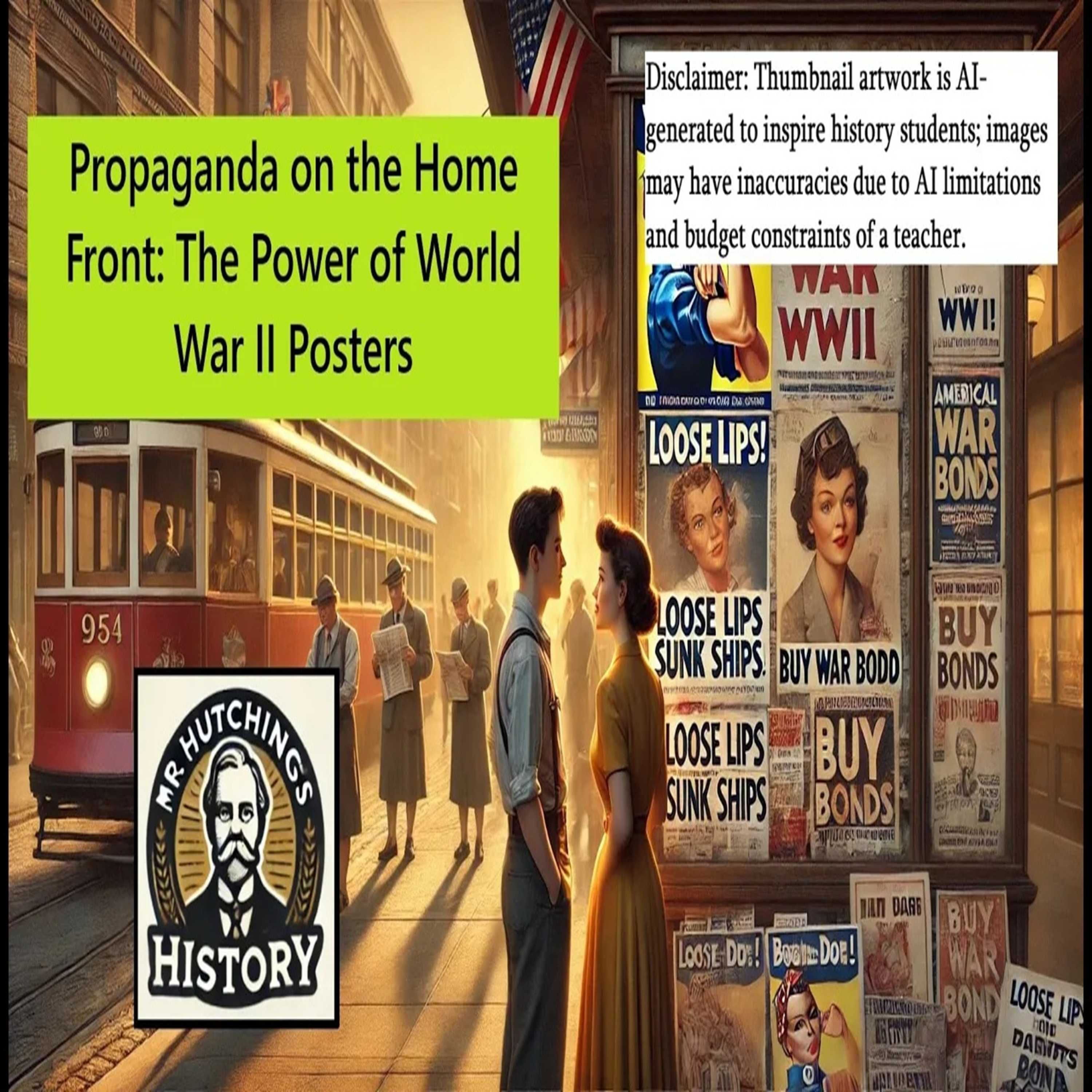
Propaganda on the Home Front: The Power of World War II Posters
from Mr. Hutchings History · host Produced, created, and written by Harold M. Hutchings
Welcome to Mr. Hutchings History. In this episode, we dive into the influential propaganda posters of World War II and their role in mobilizing the American workforce. Focusing on two iconic images, "Rosie the Riveter" and "Loose Lips Might Sink Ships," we analyze how these posters encouraged Americans to contribute to the war effort, whether by joining the workforce or protecting military secrets. Roosevelt’s call for national unity and sacrifice is mirrored in these posters, and we examine their alignment with the Office of War Information's guidelines. Additionally, we consider different historical perspectives on wartime propaganda, from traditionalist views of national unity to revisionist takes on gender roles and racial inequalities. These posters not only shaped the U.S. home front but also reflected the social and cultural climate of the war era. #WWIIPosters #RosieTheRiveter #LooseLipsMightSinkShips #WWIIPropaganda #HomeFront #USWartimeEconomy #OfficeOfWarInformation #FDR #WomenInWorkforce #WarBonds #AmericanMobilization #SocialHistory #CulturalHistory #GenderRolesWWII #Patriotism #WWIIPatriotism #HistoryPodcast #WWIIPostersAnalysis #USHistory Works Cited Hastings, Max. Inferno: The World at War, 1939-1945. Vintage, 2011.Kennedy, David M. Freedom from Fear: The American People in Depression and War, 1929-1945. Oxford UP, 1999.Leffler, Melvyn P. For the Soul of Mankind: The United States, the Soviet Union, and the Cold War. Hill and Wang, 2007. Roosevelt, Franklin D. Fireside Chat. April 28, 1942.
Embed this episode
NOW PLAYING
Propaganda on the Home Front: The Power of World War II Posters
No transcript for this episode yet
Similar Episodes
No similar episodes found.
Similar Podcasts
No similar podcasts found.