
EPISODE · Jun 17, 2026 · 1H 5M
PSYCH 033: Neuropsychiatric Aspects of Cerebrovascular Disorders
from Clinical Deep Dives · host Dr Manaan Kar Ray
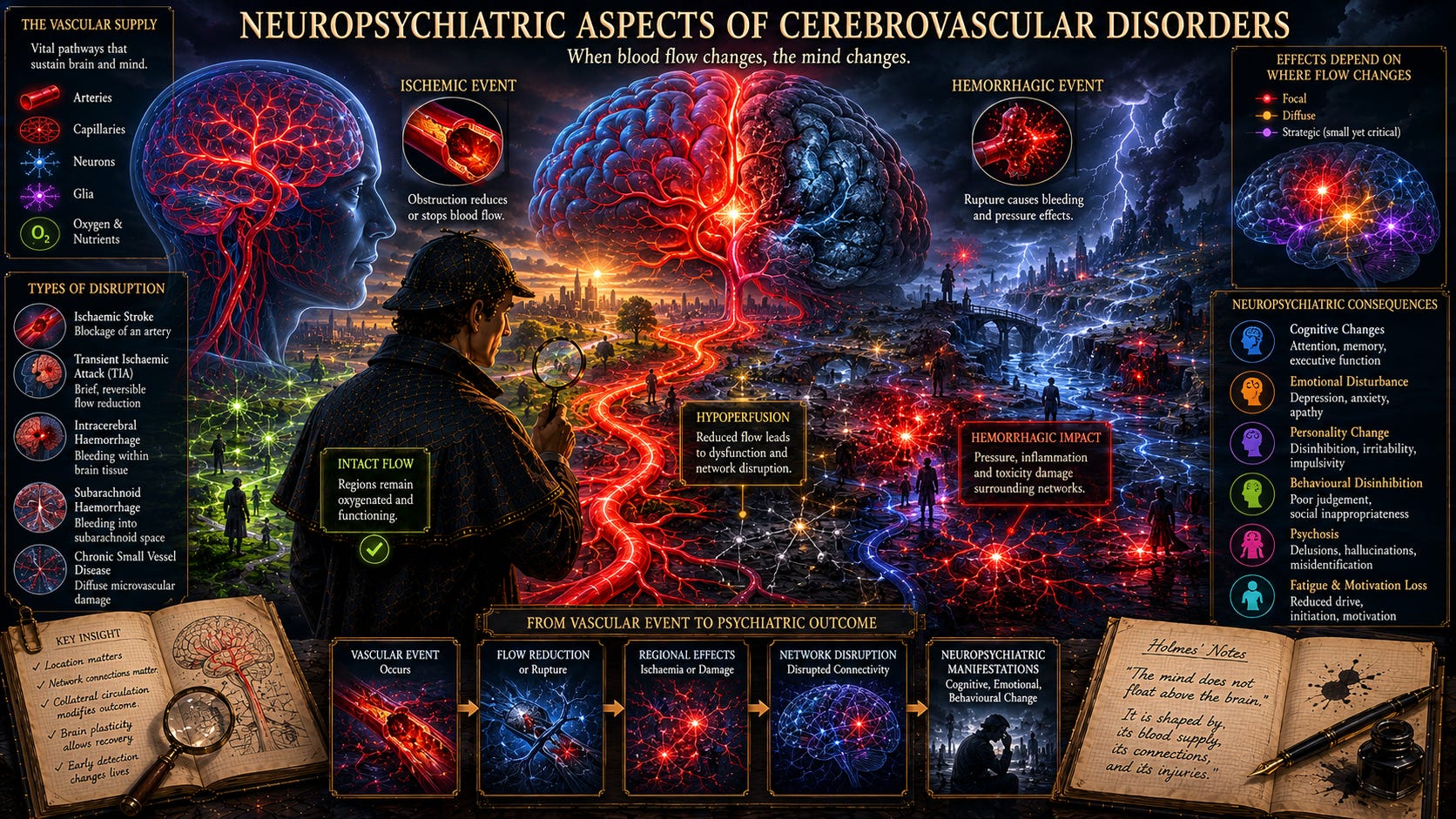
The brain depends on a constant, finely regulated blood supply. When this flow is disrupted - whether abruptly, as in stroke, or gradually, as in vascular disease - the consequences extend far beyond motor deficits. This chapter explores how cerebrovascular disorders reshape cognition, emotion, and personality.In this episode, we examine how different vascular events affect specific brain regions and networks, producing distinct neuropsychiatric syndromes. The clinical picture depends not only on the size of the lesion, but on its location and the systems it disrupts.We explore common presentations, including post-stroke depression, emotional lability, apathy, cognitive impairment, and vascular dementia. These are not secondary phenomena - they are integral to how vascular injury manifests in the brain.A key theme is localisation within systems. Damage to frontal-subcortical circuits, limbic pathways, or strategic cortical regions can produce patterns of dysfunction that resemble primary psychiatric disorders, yet arise from identifiable structural causes.This chapter reinforces a crucial clinical insight: sudden or atypical changes in mood, behaviour, or cognition should always raise the possibility of an underlying vascular process.Cerebrovascular disorders remind us that the mind is not only shaped by experience, but sustained by physiology - and when that physiology falters, the effects can be profound and immediate.Key Takeaways* Cerebrovascular disorders can produce significant neuropsychiatric symptoms.* Clinical manifestations depend on lesion location and affected networks.* Common features include depression, apathy, emotional lability, and cognitive impairment.* Vascular dementia reflects cumulative or strategic vascular injury.* Frontal-subcortical and limbic circuits are often involved.* Neuropsychiatric symptoms may be the presenting feature of vascular disease.* Sudden changes in mental state should prompt consideration of vascular causes. This is a public episode. If you'd like to discuss this with other subscribers or get access to bonus episodes, visit drmanaankarray.substack.com/subscribe
Embed this episode
Ready to play
PSYCH 033: Neuropsychiatric Aspects of Cerebrovascular Disorders
No transcript for this episode yet
Similar Episodes
No similar episodes found.
Similar Podcasts
No similar podcasts found.