
EPISODE · Feb 23, 2026 · 34 MIN
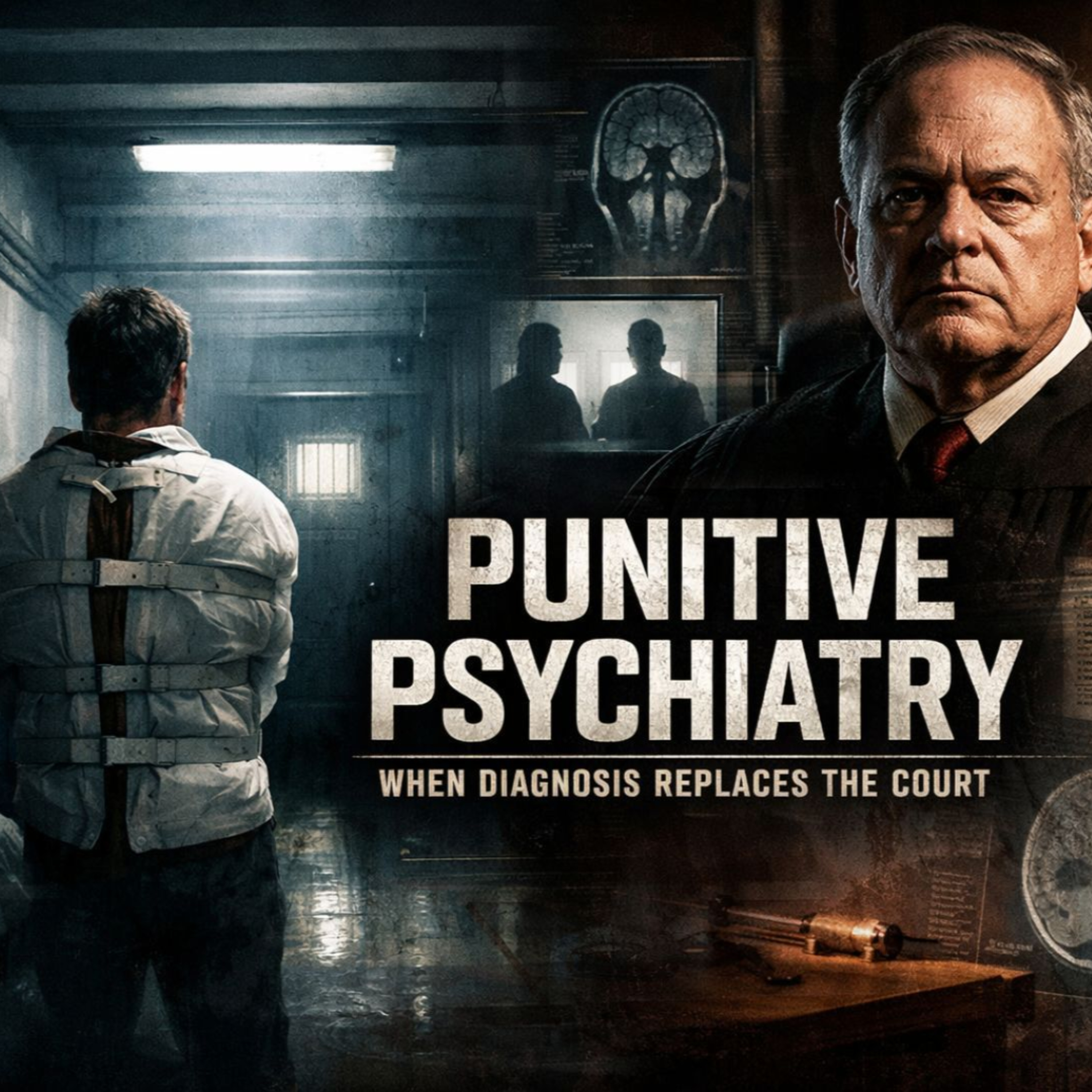
Punitive Psychiatry: When Diagnosis Replaces the Court
from Deep Press Analysis · host Deep Press Analysis
Punitive psychiatry did not disappear after the collapse of the USSR. It was redesigned.This investigative documentary reconstructs how the Russian state revived and modernized the Soviet system of punitive psychiatry, transforming medical diagnosis into a mechanism of political control.Using court records, psychiatric classifications, and legislative documents, this video traces the system from the Soviet-era concept of “sluggish schizophrenia,” developed in the 1960s, to its contemporary equivalent — schizotypal personality disorder (F21) — now applied to political dissidents in Russia.The analysis shows how psychiatric institutions replaced criminal courts as instruments of repression, allowing the state to impose indefinite detention without fixed sentences, public trials, or clear release conditions.What this investigation covers:• How Soviet psychiatry redefined dissent as mental illness• The institutional role of the Serbsky Center in forensic psychiatric examinations• The removal of independent patient rights protections after 2024• Why modern diagnoses no longer require psychosis or functional breakdown• How “active civic position” and “heightened sense of justice” became clinical indicatorsCase reconstruction:The documentary examines documented cases including Alexander Gabyshev, the Yakut shaman whose forced psychiatric confinement was extended in December 2025 based on behavioral criteria such as communication and correspondence.It also analyzes the use of psychiatric pressure in cases involving anti-war activists and political defendants since 2022, where forced treatment functions as an alternative to imprisonment.Key findings:• Punitive psychiatry operates as a closed system without a release mechanism• Medical institutions assume de facto judicial functions• Courts defer to psychiatric conclusions without independent review• Patients lose access to communication, legal defense, and external oversight• The system persists because responsibility is structurally diffusedThis is not an account of individual doctors or isolated abuses.It is a system autopsy — an examination of how institutional architecture enables repression without overt violence.Full archive, sources, and extended analysis:https://deeppressanalysis.com#PunitivePsychiatry #Russia #HumanRights #PoliticalRepression #SovietUnion #USSR #SystemAutopsy #InvestigativeDocumentary #Psychiatry #MentalHealth #PoliticalPrisoners #Authoritarianism #FSB #JudicialAbuse #2026
Embed this episode
NOW PLAYING
Punitive Psychiatry: When Diagnosis Replaces the Court
No transcript for this episode yet
Similar Episodes
No similar episodes found.
Similar Podcasts
No similar podcasts found.