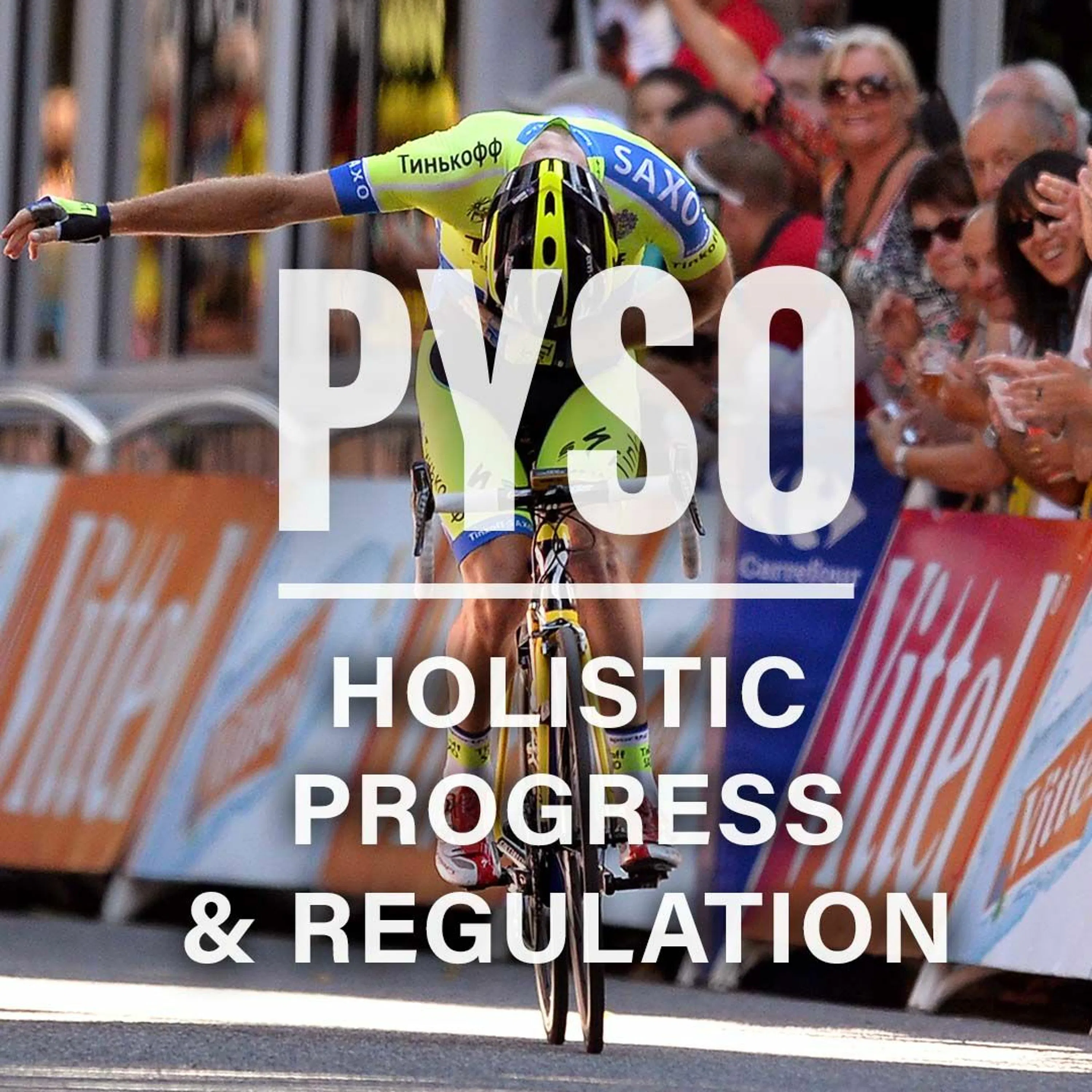
PYSO, ep. 81: UCI innovation manager Michael Rogers on progress and regulation episode artwork

EPISODE · Dec 3, 2020 · 56 MIN

PYSO, ep. 81: UCI innovation manager Michael Rogers on progress and regulation

from Bobby and Jens · host Velo

The Lugano Charter, constructed in 1996, formed the UCI's basis for regulation of bike technology with a noble ideal: the rider, not his or her access to technology, should determine who wins a bike race. The devil, as always, is in the details. Now, Michael "Mick" Rogers, a three-time world time trial champion, is tasked with guiding the regulation of bicycle equipment and clothing as innovation manager at the UCI. Rogers got his start in big-time racing with Mapei in 2000. He proceeded to have a successful career with Quick-Step, T-Mobile, Team Sky and Saxo-Tinkoff before retiring in 2016. In addition to having world-class physiology, Rogers was also fascinated with the physics and mathematics at play in bike racing, whether that was in the mechanics of a long sprint leadout train, or in the interconnected variables of a fast time trial position. At T-Mobile, which became HTC, Rogers said "we were one of the the teams to really master the leadout train. If we go back into the mid ’90s with [Marco] Cipollini and Saeco, they revolutionized the leadout train. At HTC, we took that that one step further, we started to understand some of the mathematics. We started to understand that when we were riding on the front, with two or three kilometers to go, we're at 60 plus K an hour — the amount of energy that the riders behind us would would need to come up beside Mark Cavendish was going to have a massive effect on the actual sprint." Rogers' real-world studying later included time racing at Team Sky, a team famous for its analysis and methodical racing tactics. Rogers talks about how the team could be so effective when riding in coordination. "It just kind of came down to, we knew what we were good at as riders," Rogers said of being able to reel in breakaways and attacking riders with confidence. "Simple math — when we were riding at our threshold, the power values and very high power to weight ratios. We knew that anyone riding out over that threshold, to be able to open up a large enough gap, the amount of energy required to put in is almost for most people unbearable. When you're attacking on some of these climbs, you might have to ride at 600 650 watts for for 30 to 40 seconds. And there's only a handful of guys that can withstand that kind of intensity for anything longer than a minute. So it's simple math, they're going to come back." Now at the UCI, Rogers and his coworkers are tasked with keeping up to speed with a sport that is changing rapidly. "We are aware that cycling must progress. There must be evolution," Rogers said. How that looks, and how a level playing field can be enforces among teams and nations with varying levels of financial ability, will be an ongoing challenge. Tune in to this episode of Put Your Socks On to hear Rogers' thoughts on the challenges and the excitement of regulating bike racing heading into a new world of cycling.

The Lugano Charter, constructed in 1996, formed the UCI's basis for regulation of bike technology with a noble ideal: the rider, not his or her access to technology, should determine who wins a bike race. The devil, as always, is in the details. Now, Michael "Mick" Rogers, a three-time world time trial champion, is tasked with guiding the regulation of bicycle equipment and clothing as innovation manager at the UCI. Rogers got his start in big-time racing with Mapei in 2000. He proceeded to have a successful career with Quick-Step, T-Mobile, Team Sky and Saxo-Tinkoff before retiring in 2016. In addition to having world-class physiology, Rogers was also fascinated with the physics and mathematics at play in bike racing, whether that was in the mechanics of a long sprint leadout train, or in the interconnected variables of a fast time trial position. At T-Mobile, which became HTC, Rogers said "we were one of the the teams to really master the leadout train. If we go back into the mid ’90s with [Marco] Cipollini and Saeco, they revolutionized the leadout train. At HTC, we took that that one step further, we started to understand some of the mathematics. We started to understand that when we were riding on the front, with two or three kilometers to go, we're at 60 plus K an hour — the amount of energy that the riders behind us would would need to come up beside Mark Cavendish was going to have a massive effect on the actual sprint." Rogers' real-world studying later included time racing at Team Sky, a team famous for its analysis and methodical racing tactics. Rogers talks about how the team could be so effective when riding in coordination. "It just kind of came down to, we knew what we were good at as riders," Rogers said of being able to reel in breakaways and attacking riders with confidence. "Simple math — when we were riding at our threshold, the power values and very high power to weight ratios. We knew that anyone riding out over that threshold, to be able to open up a large enough gap, the amount of energy required to put in is almost for most people unbearable. When you're attacking on some of these climbs, you might have to ride at 600 650 watts for for 30 to 40 seconds. And there's only a handful of guys that can withstand that kind of intensity for anything longer than a minute. So it's simple math, they're going to come back." Now at the UCI, Rogers and his coworkers are tasked with keeping up to speed with a sport that is changing rapidly. "We are aware that cycling must progress. There must be evolution," Rogers said. How that looks, and how a level playing field can be enforces among teams and nations with varying levels of financial ability, will be an ongoing challenge. Tune in to this episode of Put Your Socks On to hear Rogers' thoughts on the challenges and the excitement of regulating bike racing heading into a new world of cycling.

NOW PLAYING

PYSO, ep. 81: UCI innovation manager Michael Rogers on progress and regulation

0:00 56:39

No transcript for this episode yet

We transcribe on demand. Request one and we'll notify you when it's ready — usually under 10 minutes.

MG Show MG Show The MG Show, hosted by Jeffrey Pedersen and Shannon Townsend, is a leading alternative media platform dedicated to uncovering the truth behind today’s most pressing political issues. Launched in 2019, the show has grown exponentially, offering unfiltered insights, comprehensive research, and real-time analysis. With a commitment to independent journalism and factual integrity, the MG Show empowers its audience with knowledge and encourages active participation in the political discourse. Breaking News Show | eTurboNews Juergen Thomas Steinmetz News is relevant to the global travel and tourism industry, human rights and global issues.Breaking news when it happens and only from the source. Eat to Live Jenna Fuhrman, Dr. Fuhrman Our health is our most precious gift and smart nutrition can change your life. Each month, join Dr. Fuhrman and his daughter, Jenna Fuhrman as they discuss important topics in the world of nutrition. Eat to Live will change the way you eat and think about food. French Your Way Jessica: Native French teacher founder of French Your Way Boost your French listening skills and test your comprehension with this one of a kind series of podcasts. Get the chance to listen to a real conversation between native speakers talking at normal speed AND customise your learning experience through carefully designed sets of questions (2 levels of difficulty) available for download at www.frenchvoicespodcast.com. All interviews also come with the transcript. French teacher Jessica interviews native speakers of French from around the world who share a bit of their life and passion. Where else would you meet in one same place a French yoga teacher based in Melbourne, a soap manufacturer from Provence, or a couple cycling around the world?

Frequently Asked Questions

How long is this episode of Bobby and Jens?

This episode is 56 minutes long.

When was this Bobby and Jens episode published?

This episode was published on December 3, 2020.

What is this episode about?

The Lugano Charter, constructed in 1996, formed the UCI's basis for regulation of bike technology with a noble ideal: the rider, not his or her access to technology, should determine who wins a bike race. The devil, as always, is in the...

Can I download this Bobby and Jens episode?

Yes, you can download this episode by clicking the download button on the episode player, or subscribe to the podcast in your preferred podcast app for automatic downloads.
URL copied to clipboard!