PodParley PodParley

Quicksaaaand!

For many of us, quicksand was once a real fear — it held a vise grip on our imaginations, from childish sandbox games to grown-up anxieties about venturing into unknown lands. But these days, quicksand can't even scare an 8-year-old. In this short, we try to find out why.  Then-Producer Soren Wheeler introduces us to Dan Engber, writer and columnist for Slate, now with The Atlantic. Dan became obsessed with quicksand after happening upon a strange fact: kids are no longer afraid of it. In this episode, Dan recounts for Soren and Robert Krulwich the story of his obsession. He immersed himself in research, compiled mountains of data, met with quicksand fetishists and, in the end, formulated a theory about why the terror of his childhood seems to have lost its menacing allure. Then Carlton Cuse, who at the time we first aired this episode was best-known as the writer and executive producer of Lost, helps us think about whether giant pits of hero-swallowing mud might one day creep back into the spotlight.And, as this episode first aired in 2013, we can see if we were right.   Episode Credits:Reported and produced by Soren Wheeler Our newsletter comes out every Wednesday. It includes short essays, recommendations, and details about other ways to interact with the show. Sign up (https://radiolab.org/newsletter)! Radiolab is supported by listeners like you. Support Radiolab by becoming a member of The Lab (https://members.radiolab.org/) today. Follow our show on Instagram, Twitter and Facebook @radiolab, and share your thoughts with us by emailing [email protected].     Leadership support for Radiolab’s science programming is provided by the Gordon and Betty Moore Foundation, Science Sandbox, a Simons Foundation Initiative, and the John Templeton Foundation. Foundational support for Radiolab was provided by the Alfred P. Sloan Foundation.

Episode 470 of the Radiolab podcast, hosted by WNYC Studios, titled "Quicksaaaand!" was published on September 16, 2022 and runs 16 minutes.

September 16, 2022 ·16m · Radiolab

0:00 / 0:00

For many of us, quicksand was once a real fear — it held a vise grip on our imaginations, from childish sandbox games to grown-up anxieties about venturing into unknown lands. But these days, quicksand can't even scare an 8-year-old. In this short, we try to find out why.  Then-Producer Soren Wheeler introduces us to Dan Engber, writer and columnist for Slate, now with The Atlantic. Dan became obsessed with quicksand after happening upon a strange fact: kids are no longer afraid of it. In this episode, Dan recounts for Soren and Robert Krulwich the story of his obsession. He immersed himself in research, compiled mountains of data, met with quicksand fetishists and, in the end, formulated a theory about why the terror of his childhood seems to have lost its menacing allure. Then Carlton Cuse, who at the time we first aired this episode was best-known as the writer and executive producer of Lost, helps us think about whether giant pits of hero-swallowing mud might one day creep back into the spotlight.And, as this episode first aired in 2013, we can see if we were right.   Episode Credits:Reported and produced by Soren Wheeler Our newsletter comes out every Wednesday. It includes short essays, recommendations, and details about other ways to interact with the show. Sign up (https://radiolab.org/newsletter)! Radiolab is supported by listeners like you. Support Radiolab by becoming a member of The Lab (https://members.radiolab.org/) today. Follow our show on Instagram, Twitter and Facebook @radiolab, and share your thoughts with us by emailing [email protected].     Leadership support for Radiolab’s science programming is provided by the Gordon and Betty Moore Foundation, Science Sandbox, a Simons Foundation Initiative, and the John Templeton Foundation. Foundational support for Radiolab was provided by the Alfred P. Sloan Foundation.

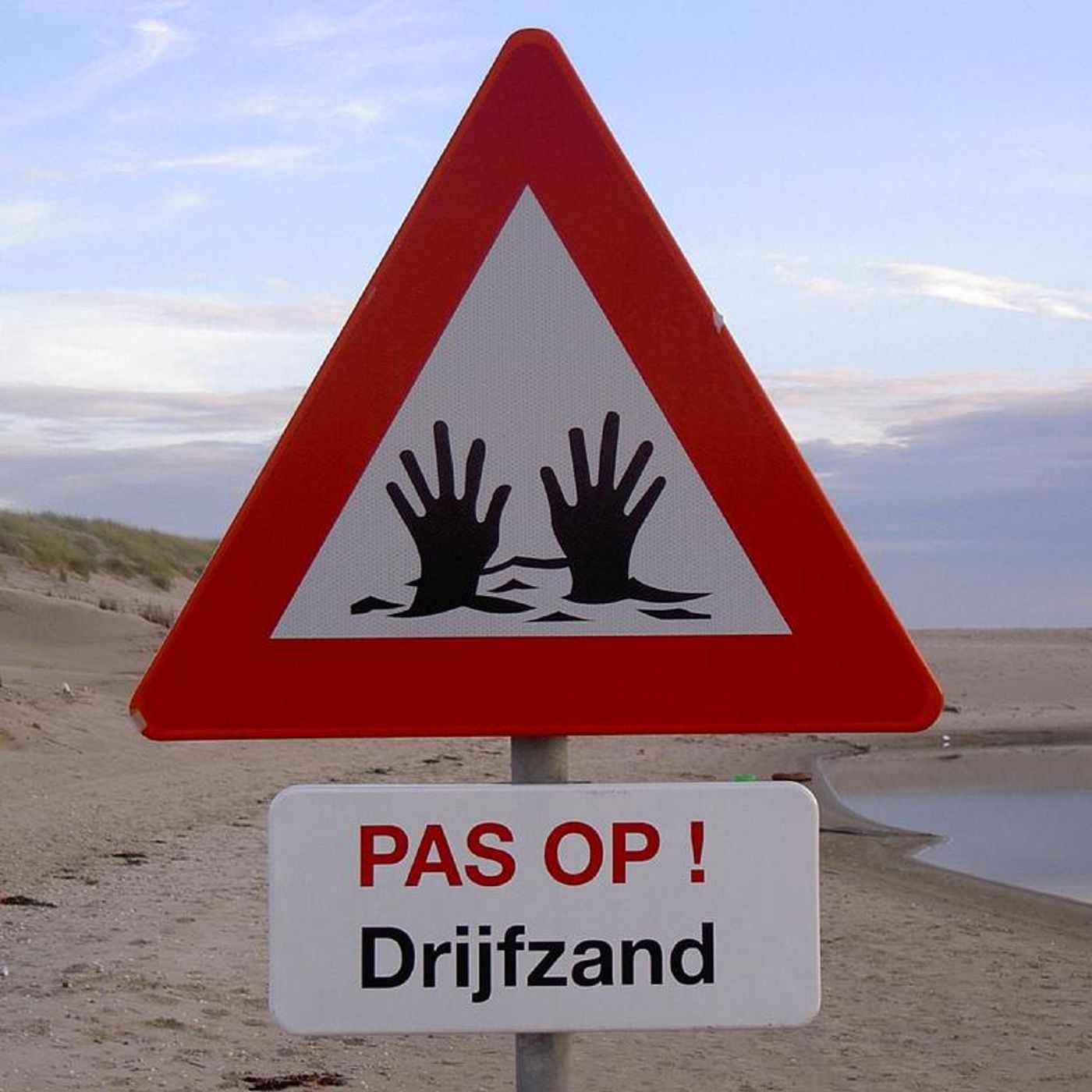
For many of us, quicksand was once a real fear — it held a vise grip on our imaginations, from childish sandbox games to grown-up anxieties about venturing into unknown lands. But these days, quicksand can't even scare an 8-year-old. In this short, we try to find out why. 

Then-Producer Soren Wheeler introduces us to Dan Engber, writer and columnist for Slate, now with The Atlantic. Dan became obsessed with quicksand after happening upon a strange fact: kids are no longer afraid of it. In this episode, Dan recounts for Soren and Robert Krulwich the story of his obsession. He immersed himself in research, compiled mountains of data, met with quicksand fetishists and, in the end, formulated a theory about why the terror of his childhood seems to have lost its menacing allure. Then Carlton Cuse, who at the time we first aired this episode was best-known as the writer and executive producer of Lost, helps us think about whether giant pits of hero-swallowing mud might one day creep back into the spotlight.And, as this episode first aired in 2013, we can see if we were right.


Episode Credits:Reported and produced by Soren Wheeler

Our newsletter comes out every Wednesday. It includes short essays, recommendations, and details about other ways to interact with the show. Sign up (https://radiolab.org/newsletter)!

Radiolab is supported by listeners like you. Support Radiolab by becoming a member of The Lab (https://members.radiolab.org/) today.

Follow our show on Instagram, Twitter and Facebook @radiolab, and share your thoughts with us by emailing [email protected].


Leadership support for Radiolab’s science programming is provided by the Gordon and Betty Moore Foundation, Science Sandbox, a Simons Foundation Initiative, and the John Templeton Foundation. Foundational support for Radiolab was provided by the Alfred P. Sloan Foundation.


The Vanishing of Harry Pace (Radiolab) WNYC Studios From the creators of Dolly Parton's America, Jad Abumrad and Shima Oliaee, comes a new series produced in collaboration with author Kiese Laymon, scholar Imani Perry, writer Cord Jefferson, WQXR’s Terrance McKnight, and WNYC's Jami Floyd. Based on the book Black Swan Blues: the Hard Rise and Brutal Fall of America’s First Black Owned Record Label by Paul Slade.It was Motown before Motown, FUBU before FUBU: Black Swan Records. The label founded 100 years ago by Harry Pace. Pace launched the career of Ethel Waters, inadvertently invented the term rock n roll, played an important role in W.C. Handy becoming "Father of the Blues," inspired Ebony and Jet magazines, and helped desegregate the South Side of Chicago in an epic Supreme Court battle. Then, he disappeared.  The Vanishing of Harry Pace is a series about the phenomenal but forgotten man who changed America. It's a story about betrayal, family, hidden identities, and a time like no other. Note to Self WNYC Studios Is your phone watching you? Can texting make you smarter? Are your kids real? Note to Self explores these and other essential quandaries facing anyone trying to preserve their humanity in the digital age. WNYC Studios is a listener-supported producer of other leading podcasts, including Radiolab, Death, Sex & Money, Snap Judgment, Here’s the Thing with Alec Baldwin, Nancy and many others.© WNYC Studios RadioLacan.com |Radio Lacan en el VII ENAPOL RadioLacan.com es el sitio de audios y conferencias de la Asociación Mundial de Psicoanálisis. RadioLacan.com |#LacanianosxElMundo: Ginebra. Entrevista a Sofía Guaraguara Comenzamos una serie de entrevistas a los colegas que por distintos motivos han dejado su país de origen y han decidido ejercer el psicoanálisis en otro país, en otra lengua, para que nos cuenten sobre lo que esto implica para cada uno y lo interesante de cómo hacer florecer el psicoanálisis en el mundo. En esta oportunidad Liliana Mauas entrevista a Sofía Guaraguara.
URL copied to clipboard!