
EPISODE · Jul 15, 2022 · 1H 24M
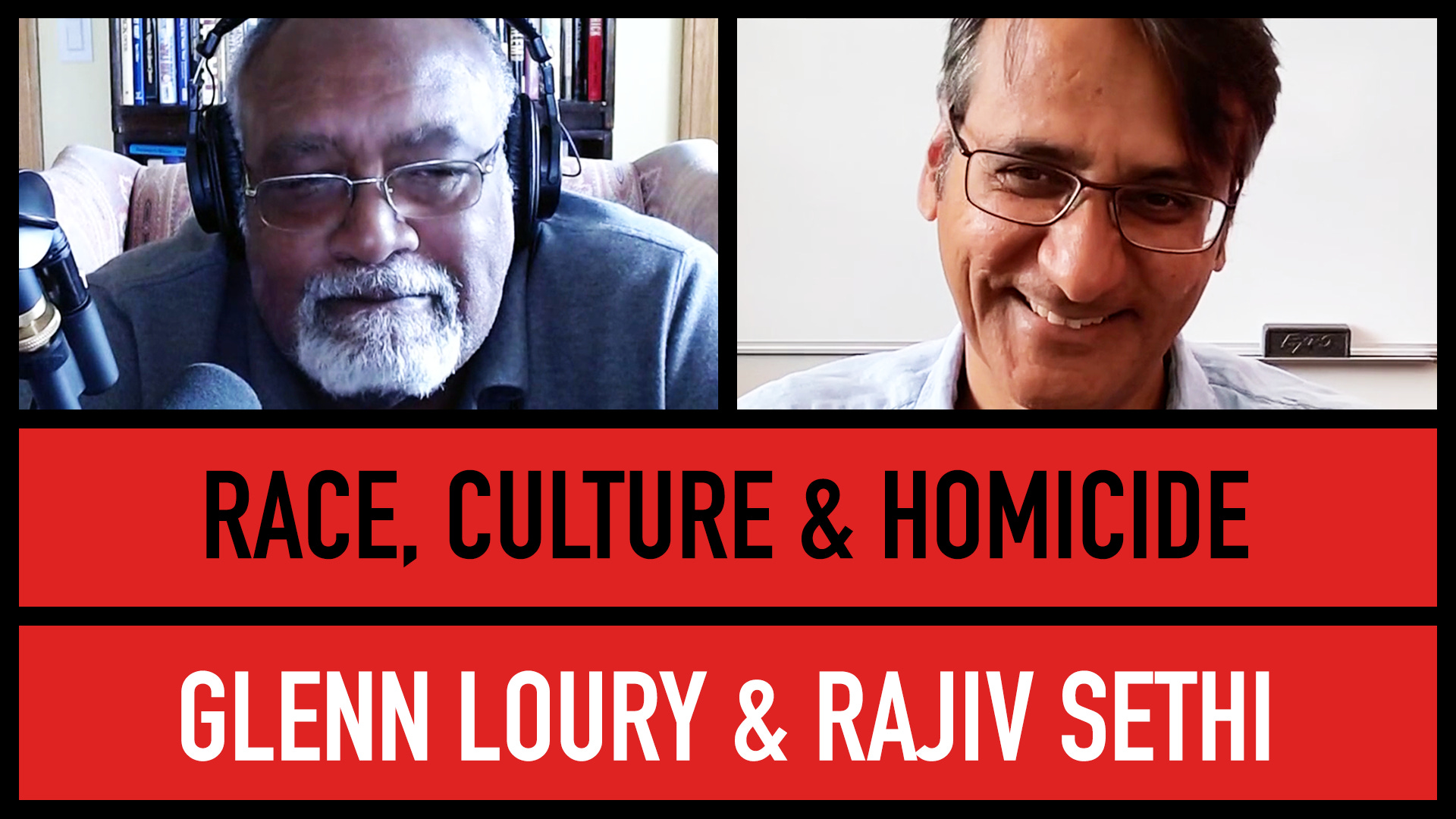
Rajiv Sethi – Our Gun Problem
from The Glenn Show · host Glenn Loury
My guest this week is my friend Rajiv Sethi. Rajiv is Professor of Economics at Barnard College, Columbia University and External Professor at the Santa Fe Institute, and he writes an occasional newsletter at Imperfect Information. He’s published widely on problems of crime and segregation, among many other topics, and as you’ll hear in this conversation, he’s done some deep thinking about an area that is sadly pertinent to our society today: gun violence. I first ask Rajiv to catch me up on how economists are thinking about the state of financial markets today, and in short, things aren’t looking good. You don’t need a PhD in economics to know that. Just look at your stock portfolio. But Rajiv makes an interesting connection between the economist John Kenneth Galbraith’s analysis of the stock market crash of 1929 and the ongoing, much-publicized cryptocurrency crash. Rajiv talks about his blogging and his Substack, including his critique of Sundhil Mullainathan’s analysis of bias and police violence. We move on to the recent Supreme Court gun ruling and attempts by gun control advocates to float policies intended to reduce gun violence. Rajiv is critical of many of these policies, not because he doesn’t want to reduce gun violence but because he thinks the policies won’t be consequential enough. Much gun violence takes place amongst African Americans, but Rajiv wants to separate, to de-essentialize, race and violence. He draws on some of my own work on these issues to ask how we can look at the conditions that render acts of violence in high-crime areas, in some sense, rational. Certain conditions must make violence seem like the right solution to a given problem. Rajiv argues that we’re all—all Americans—involved in creating those conditions, and so we cannot simply say that the problems of high-crime black communities are their problems and not ours. I’m very much against racial essentialism, but we see it everywhere, including in our school with CRT-influenced policies and practices. While Rajiv acknowledges the excesses, he sees an equal threat coming from the anti-CRT backlash, and points to the case of Cecilia Lewis as an example. Along the same lines, he thinks that many critiques of the 1619 Project miss something important about the true depth and length of American history. And finally, we return to the problem of gun violence and bias in policing. Rajiv’s got an interesting idea to disincentivize illegal gun sales and some theories about why we see such stark racial disparities in the commission of gun crimes. Yesterday, I posted a conversation with John McWhorter that addressed civil and constructive disagreement. Rajiv and I certainly disagree about some things, but his arguments can’t simply be brushed aside. I’m quite interested to know what you all think of this one. Let me know!This post is free and available to the public. To receive early access to TGS episodes, an ad-free podcast feed, Q&As, and other exclusive content and benefits, click below.0:00 The cryptocurrency bezzle 6:52 Rajiv’s critique of the contact hypothesis 12:53 Will popular proposed gun control measures meaningfully reduce homicides? 19:08 Can we talk about culture without becoming essentialists? 30:19 Rajiv: I find self-censorship and anti-CRT mobs equally disturbing 43:28 Debating the 1619 Project 51:00 Rajiv’s idea to reduce illegal firearm sales: gun insurance 1:02:35 Why do we see such racial disparities in gun violence? Rajiv has some theories 1:11:02 What did we learn from the second Justice Department investigation in Ferguson? Links and ReadingsJohn Kenneth Galbraith’s book, The Great Crash 1929Rajiv’s Substack, Imperfect InformationRajiv’s post about The Anatomy of Racial InequalitySendhil Mullainathan’s NYT piece, “Police Killings of Blacks: Here Is What the Data Say” Rajiv’s post about Mullainathan’s claims Rajiv and Brendan O’Flaherty’s book, Shadows of Doubt: Stereotypes, Crime, and the Pursuit of JusticeRajiv’s conversation about guns with Bari Weiss and David French Glenn and Hanming Fang’s paper, “‘Dysfunctional Identities’ Can Be Rational” Glenn’s Cato Unbound essay, “A Nation of Jailers” and responses Nicole Carr’s ProPublica piece, “White Parents Rallied to Chase a Black Educator Out of Town. Then, They Followed Her to the Next One.” Ralph Ellison’s essay, “What America Would Be Like Without Blacks” Albert Murray, The Omni-Americans: Some Alternatives to the Folklore of White SupremacyJill Leovy’s book, Ghettoside: A True Story of Murder in AmericaGlenn’s conversation with Robert Woodson and Sylvia Bennett-Stone Voices of Black Mothers United This is a public episode. If you'd like to discuss this with other subscribers or get access to bonus episodes, visit glennloury.substack.com/subscribe
Embed this episode
NOW PLAYING
Rajiv Sethi – Our Gun Problem
No transcript for this episode yet
Similar Episodes
No similar episodes found.
Similar Podcasts
No similar podcasts found.