
EPISODE · May 7, 2026 · 41 MIN
Ramban on Behar and Bechukosai
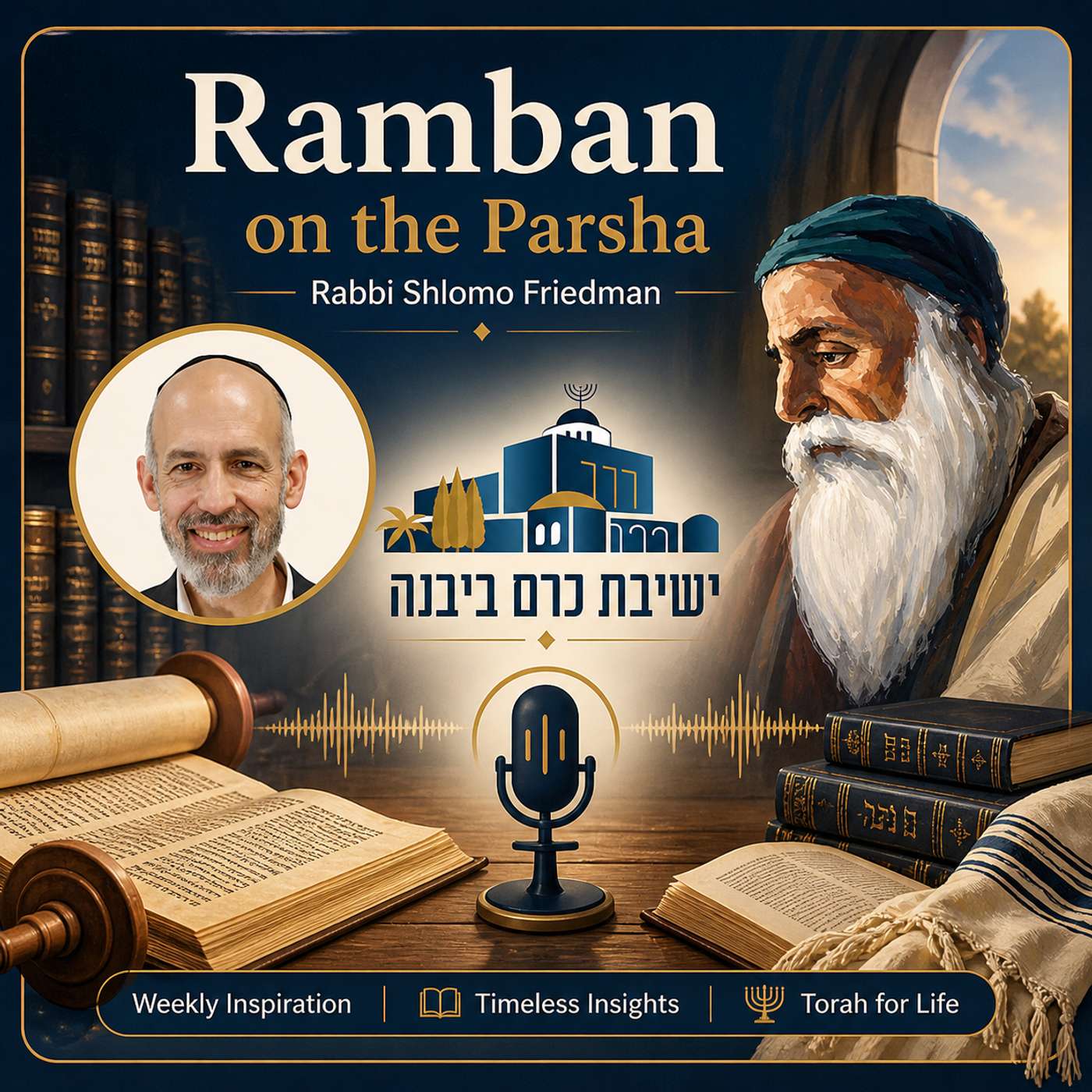
from Ramban on the Parsha | Rabbi Shlomo Friedman (Yeshivat Kerem B'Yavneh) · host Yeshivat Kerem B'Yavneh
AI-Generated Summary (AI can be inaccurate. Check important information): 1. Shemittah as residency condition — The observance of Shemittah is a fundamental requirement for dwelling in Eretz Yisrael, similar to the laws of arayos (forbidden relationships). 2. Sefichim is Rabbinic — While Rabbi Akiva views the prohibition of sefichim (spontaneous crops) as a Biblical law (d'Oraisa), we rule that it is a Rabbinic decree (d'Rabbanan) to prevent illicit planting. 3. Biur is renunciation — Following the Ramban, the obligation of biur (removal) of Seventh-year produce entails a public declaration of hefker (abandonment) rather than total destruction of the fruit. 4. Otzar Beis Din mechanism — This institution allows for the organized distribution of Shemittah produce by appointing agents to harvest and transport goods, charging only for labor costs. 5. Land price fraud — Although there is no legal recourse to cancel a land sale based on ona'ah (price fraud), the prohibition against overcharging still applies to real estate transactions. 6. Relative's first right — Based on the laws of geulah (redemption) and the story of Ruth, a close relative has the primary right to purchase family land before it is offered to others. 7. Redemption through suffering — The end of exile can be triggered either through teshuvah (repentance) or through the cumulative weight of suffering (kapparah) endured by the Jewish people. 8. Original nature restored — In the future era, predatory animals will not be extinct but will return to their original, non-harmful state as herbivores, mirroring the world before the sin of Adam HaRishon. 9. Two distinct admonitions — The Tochachah in Bechukosai parallels the destruction of the First Temple (focusing on avodah zarah), while the one in Ki Savo parallels the Second Temple (focusing on Roman exile). 10. Desolation as blessing — The fact that Eretz Yisrael remained barren and refused to respond to foreign occupation throughout history is a hidden blessing and proof of our eventual return. 11. Permissibility of medicine — Although a person on a perfect spiritual level would be healed directly by God, the Torah grants the doctor reshus (permission) to heal those functioning within the laws of nature.
What this episode covers
AI-Generated Summary (AI can be inaccurate. Check important information): 1. Shemittah as residency condition — The observance of Shemittah is a fundamental requirement for dwelling in Eretz Yisrael, similar to the laws of arayos (forbidden relationships). 2. Sefichim is Rabbinic — While Rabbi Akiva views the prohibition of sefichim (spontaneous crops) as a Biblical law (d'Oraisa), we rule that it is a Rabbinic decree (d'Rabbanan) to prevent illicit planting. 3. Biur is renunciation — Following the Ramban, the obligation of biur (removal) of Seventh-year produce entails a public declaration of hefker (abandonment) rather than total destruction of the fruit. 4. Otzar Beis Din mechanism — This institution allows for the organized distribution of Shemittah produce by appointing agents to harvest and transport goods, charging only for labor costs. 5. Land price fraud — Although there is no legal recourse to cancel a land sale based on ona'ah (price fraud), the prohibition against overcharging still applies to real estate transactions. 6. Relative's first right — Based on the laws of geulah (redemption) and the story of Ruth, a close relative has the primary right to purchase family land before it is offered to others. 7. Redemption through suffering — The end of exile can be triggered either through teshuvah (repentance) or through the cumulative weight of suffering (kapparah) endured by the Jewish people. 8. Original nature restored — In the future era, predatory animals will not be extinct but will return to their original, non-harmful state as herbivores, mirroring the world before the sin of Adam HaRishon. 9. Two distinct admonitions — The Tochachah in Bechukosai parallels the destruction of the First Temple (focusing on avodah zarah), while the one in Ki Savo parallels the Second Temple (focusing on Roman exile). 10. Desolation as blessing — The fact that Eretz Yisrael remained barren and refused to respond to foreign occupation throughout history is a hidden blessing and proof of our eventual return. 11. Permissibility of medicine — Although a person on a perfect spiritual level would be healed directly by God, the Torah grants the doctor reshus (permission) to heal those functioning within the laws of nature.
NOW PLAYING
Ramban on Behar and Bechukosai
No transcript for this episode yet
Similar Episodes
Mar 26, 2026 ·1m
Mar 19, 2026 ·34m
Feb 18, 2026 ·11m
Feb 11, 2026 ·45m