
EPISODE · Mar 11, 2026 · 41 MIN
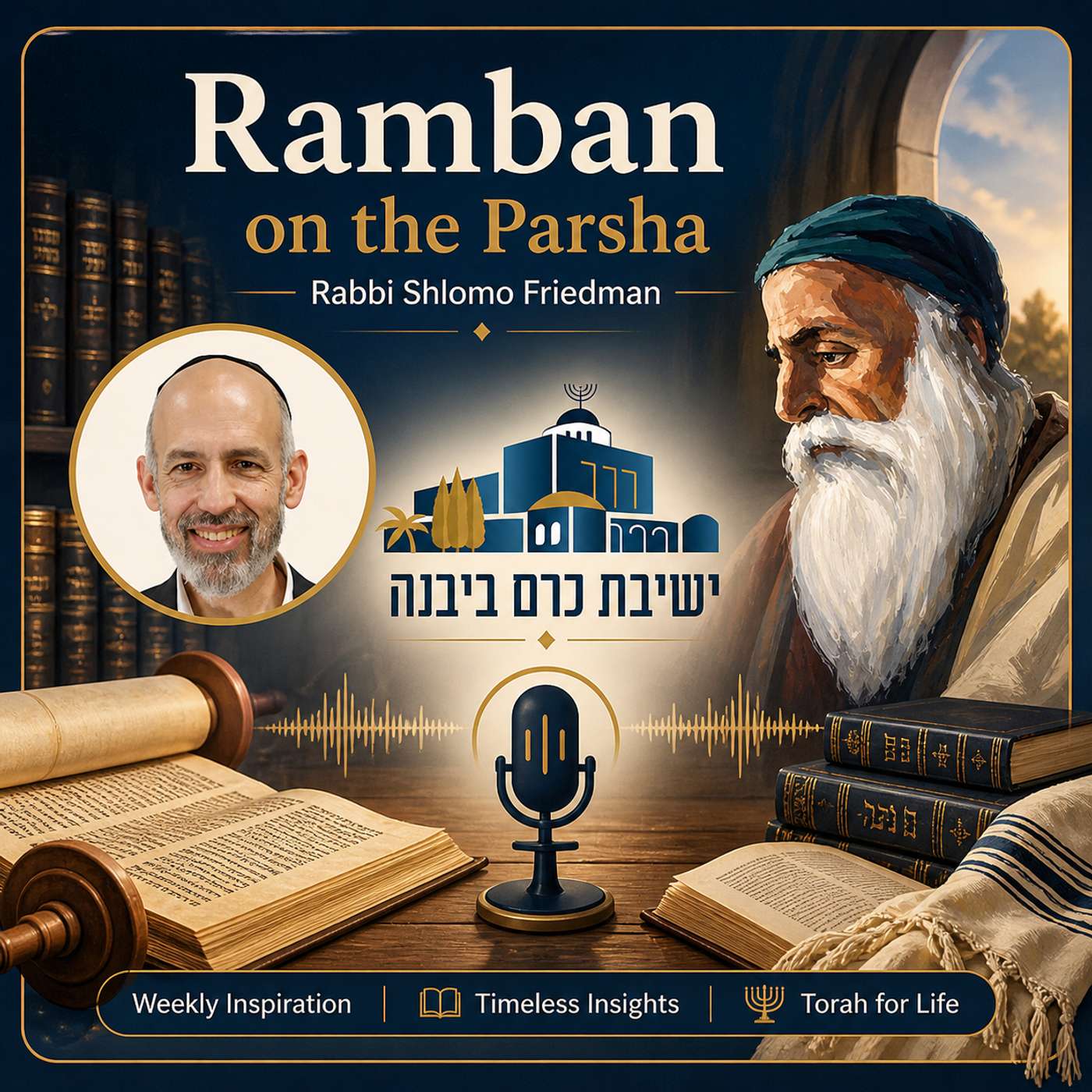
Ramban on Vayakhel-Pekudei
from Ramban on the Parsha | Rabbi Shlomo Friedman (Yeshivat Kerem B'Yavneh) · host Yeshivat Kerem B'Yavneh
AI-Generated Summary (AI can be inaccurate. Check important information): 1. *Inclusion of women and children* — The *Ramban* notes that while *mitzvos* were typically taught to the men, *Moshe Rabbeinu* gathered the entire congregation, including women and *taf* (children), because everyone participated in the donations for the *Mishkan*. 2. *Restored relationship* — Following the *Chet Ha’egel*, the original love and closeness (*ahavas kluloisam*) between *Hashem* and *Bnei Yisrael* was restored, leading *Moshe* to realize that the command to build the *Mishkan* remained in effect. 3. *Shabbos and the Mishkan* — The sequence of the *psukim* teaches that although the work of the *Mishkan* is vital, it must be performed during the six days of work and does not supersede the sanctity of *Shabbos*. 4. *Prohibition of fire* — The specific mention of *hav’ara* (kindling fire) on *Shabbos* serves to teach that even *ochel nefesh* (food preparation) or activities for physical enjoyment are forbidden, or to establish the *halacha* that one is liable for each individual *melacha* performed. 5. *Innate craftsmanship* — The term *nesa’o libo* refers to the craftsmen who, having no formal training in the arts, found within themselves a Divinely inspired, innate ability to perform the complex labors of the *Mishkan*. 6. *Generosity of women* — The women were the first to donate, offering their personal jewelry with great enthusiasm; the *Kiyor* was uniquely fashioned from their copper mirrors to symbolize their role in building *tzva’os* (multitudes) of children in *Mitzrayim*. 7. *Integrity of leadership* — The *Torah* praises *Moshe* and the *chachamim* for their absolute honesty, as they publicly halted donations once the necessary materials were gathered, seeking no personal gain from the public's wealth. 8. *Seven Days of Miluim* — During the *Shivas Yemei Miluim*, *Moshe* served as the *Kohen Gadol* and performed the daily ritual of erecting and dismantling the *Mishkan* to train the *Levi’im* and to emphasize the unique sanctity of the eighth day (*Yom HaShmini*).
What this episode covers
AI-Generated Summary (AI can be inaccurate. Check important information): 1. *Inclusion of women and children* — The *Ramban* notes that while *mitzvos* were typically taught to the men, *Moshe Rabbeinu* gathered the entire congregation, including women and *taf* (children), because everyone participated in the donations for the *Mishkan*. 2. *Restored relationship* — Following the *Chet Ha’egel*, the original love and closeness (*ahavas kluloisam*) between *Hashem* and *Bnei Yisrael* was restored, leading *Moshe* to realize that the command to build the *Mishkan* remained in effect. 3. *Shabbos and the Mishkan* — The sequence of the *psukim* teaches that although the work of the *Mishkan* is vital, it must be performed during the six days of work and does not supersede the sanctity of *Shabbos*. 4. *Prohibition of fire* — The specific mention of *hav’ara* (kindling fire) on *Shabbos* serves to teach that even *ochel nefesh* (food preparation) or activities for physical enjoyment are forbidden, or to establish the *halacha* that one is liable for each individual *melacha* performed. 5. *Innate craftsmanship* — The term *nesa’o libo* refers to the craftsmen who, having no formal training in the arts, found within themselves a Divinely inspired, innate ability to perform the complex labors of the *Mishkan*. 6. *Generosity of women* — The women were the first to donate, offering their personal jewelry with great enthusiasm; the *Kiyor* was uniquely fashioned from their copper mirrors to symbolize their role in building *tzva’os* (multitudes) of children in *Mitzrayim*. 7. *Integrity of leadership* — The *Torah* praises *Moshe* and the *chachamim* for their absolute honesty, as they publicly halted donations once the necessary materials were gathered, seeking no personal gain from the public's wealth. 8. *Seven Days of Miluim* — During the *Shivas Yemei Miluim*, *Moshe* served as the *Kohen Gadol* and performed the daily ritual of erecting and dismantling the *Mishkan* to train the *Levi’im* and to emphasize the unique sanctity of the eighth day (*Yom HaShmini*).
NOW PLAYING
Ramban on Vayakhel-Pekudei
No transcript for this episode yet
Similar Episodes
Mar 26, 2026 ·1m
Mar 19, 2026 ·34m
Feb 18, 2026 ·11m
Feb 11, 2026 ·45m