
EPISODE · Oct 1, 2024 · 46 MIN
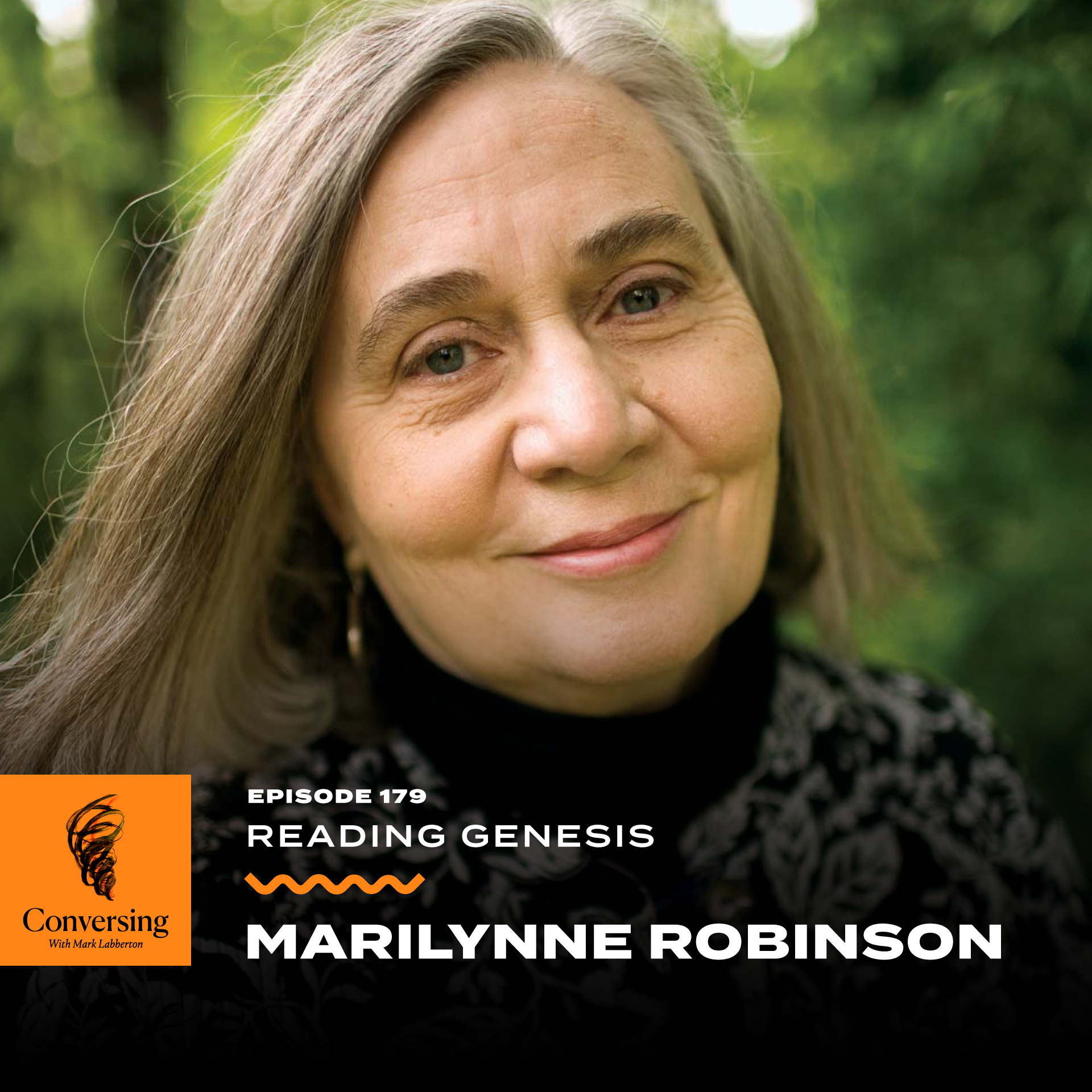
Reading Genesis, with Marilynne Robinson
from Conversing with Mark Labberton
"We have to go back to the very basic thing of understanding our shared humanity. And we've departed a long way from that—even the best of us, I'm afraid. It is just stunning. I mean, we are such a danger to everything we value." (Marilynne Robinson, from the episode) Today on the show, Mark Labberton welcomes the celebrated novelist and essayist Marilynne Robinson to discuss her most recent book, Reading Genesis. Known for novels such as Housekeeping, Gilead, Home, and Lila, she offers a unique perspective on ancient scripture in her latest work of nonfiction. In this enriching and expansive conversation, they discuss the theological, historical, and literary value in the Book of Genesis; the meaning of our shared humanity; fear and reverence; how to free people from the view of God as threatening; the complicated and enigmatic nature of human freedom; the amazing love, mercy, and long-suffering of God on display in the unfolding drama of the Genesis narrative; and overall: "The beautiful ordinariness of a God-fashioned creature in ordinary communion with one another." About Marilynne Robinson Marilynne Robinson is an award-winning American novelist and essayist. Her fictional and non-fictional work includes recurring themes of Christian spirituality and American political life. In a 2008 interview with the Paris Review, Robinson said, "Religion is a framing mechanism. It is a language of orientation that presents itself as a series of questions. It talks about the arc of life and the quality of experience in ways that I've found fruitful to think about." Her novels include Housekeeping (1980, Hemingway Foundation/Pen Award, Pulitzer Prize finalist), Gilead (2004, Pulitzer Prize), Home (2008, National Book Award Finalist), Lila (2014, National Book Award Finalist), and most recently, Jack (2020). Robinson's non-fiction works include Mother Country: Britain, the Welfare State, and Nuclear Pollution (1989), The Death of Adam: Essays on Modern Thought (1998), Absence of Mind: The Dispelling of Inwardness from the Modern Myth of the Self (2010), When I was a Child I Read Books: Essays (2012), The Givenness of Things: Essays (2015), and What Are We Doing Here?: Essays (2018). Her latest book is Reading Genesis (2024). Marilynne Robinson received a B.A., magna cum laude, from Brown University in 1966 and a Ph.D. in English from the University of Washington in 1977. She has served as a writer-in-residence or visiting professor at a variety of universities, including Yale Divinity School in Spring 2020. She currently teaches at the Iowa Writers' Workshop at the University of Iowa. She has served as a deacon for the Congregational United Church of Christ. Robinson was born and raised in Sandpoint, Idaho and now lives in Iowa City. Show Notes Get your copy of Reading Genesis by Marilynne Robinson Mark introduces Marilynne Robinson and her most recent foray into biblical interpretation Overarching narrative of God's time vs. Human time Theological, biblical, historical, and literary categories Why Genesis? Why biblical commentary? "Genesis is the foundational text, and God's self-revelation is the work of Genesis." The expansiveness of the creation narrative from the beginning of everything to two people hoeing in a garden. Elohim and the universal God-name Monotheism and the enormously cosmic assertion of the nature of God From cosmology to granular human existence Amazement and the Book of Genesis "God saw the intentions of our heart and they were only evil always." Conjuring the idea of a vindictive God—as opposed to a merciful, long-suffering, and loving God "It's hard to wiggle people free from the idea that God is primarily threatening." The role of fear in sin, temptation, and evil "I think the fall is a sort of realization of a fuller aspect of our nature, which is painful to us and painful to God. But it's our humanity." From the book: "The narrative of scripture has moved with astonishing speed from let there be light to this intimate scene of shared grief and haplessness. There is no incongruity in this. Human beings are at the center of it all. Love and grief are, in this infinite creation, things of the kind we share with God. The fact that they have their being in the deepest reaches of our extensionless and undiscoverable souls only makes them more astonishing. Over and against the roaring cosmos, that they exist at all can only be proof of a tender solicitude." Ancient Near Eastern mythology "Meaning cannot leak out of this. It's absolutely meaningful." Genesis is a "particular series of stories that are stories of the tumbling, bumbling, faithful, faithless, violent, peaceable, loyal, disloyal agency of human beings." Mystery Theology as a vision, a revelation "The beautiful ordinariness of a God-fashioned creature in ordinary communion with one another." The impact of Genesis in the history of our understanding of humanity, freedom, relationships, and so much more. Law as a liberation of one another: it limits your behavior and is emancipating to everyone around you. God's patience with human freedom and the ability to go wrong The enigma of freedom "From the very beginning, the Bible seems aware that we are our enemy and that we are our apocalyptic beast." "Our freedom is very costly. It's costly to us. It's costly to God." Imagination and the dynamics of freedom "An enhanced reverence for oneself has to be rooted in a reverence for God." "The idea of the sacredness of God and the sacredness of the self." Fear and reverence "You are holding in your imagination … and helping us to see, feel, and hear the voices and see the actions of ordinary human beings, who are both (like Psalm 8), 'a little lower than the angels,' and at the same time, 'we are dust and to dust you will return.'" Paying attention Marilynne Robinson's upbringing, access to nature, access to books, and plenty of solitude Joseph and the ending of the Genesis narrative: How might the story of Joseph speak to our time? "We have to go back to the very basic thing of understanding our shared humanity. And we've departed a long way from that—even the best of us, I'm afraid. It is just stunning. I mean, we are such a danger to everything we value. We are a danger to everything we value. And the fact that we can persist in doing that or tolerating it … there we are, you know? … We've always been strange, we human beings." The perplexity of freedom "The way that Joseph understands his history is a comment on the idea of divine time." "Joseph did enslave the Egyptians." "There is no bow to tie around anything. There's simply whatever it yields in terms of meaning and beauty and so on." Matthew 28 and the Great Commission "Christianity sliding into empire" The value of resolution and the open-ended nature of the Genesis narrative Production Credits Conversing is produced and distributed in partnership with Comment magazine and Fuller Seminary.
NOW PLAYING
Reading Genesis, with Marilynne Robinson
No transcript for this episode yet
Similar Episodes
Mar 26, 2026 ·1m
Jan 2, 2026 ·47m
Dec 21, 2025 ·46m