
EPISODE · Sep 19, 2024 · 32 MIN
Reed Canyon Rain Soundwalk
from Soundwalk · host Chad Crouch
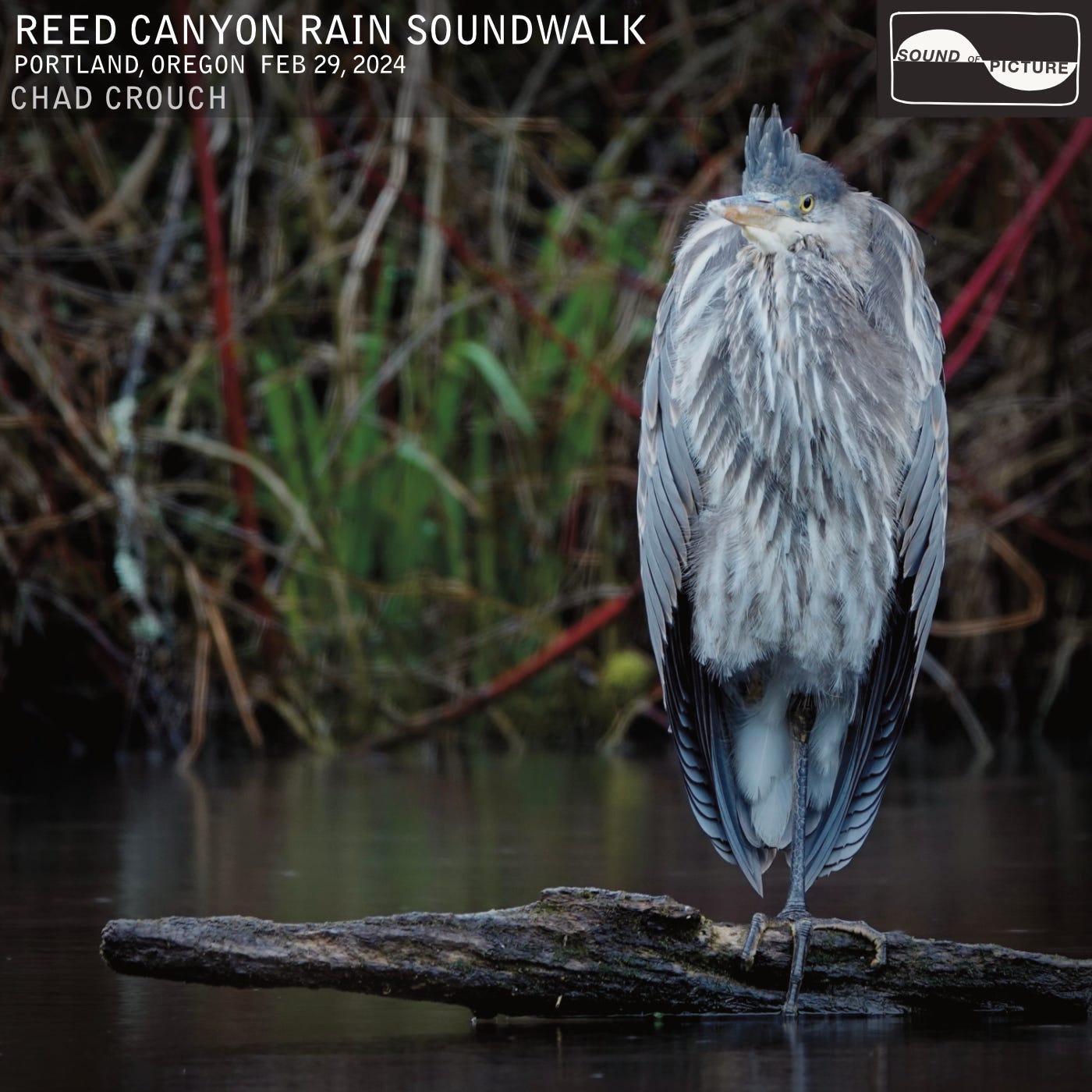
And now we return to our soundwalk series on quiet spots in the city. This is part two of two. But before we get to that, I’d just like to take a minute to reflect on my journey to get here.On April 29, 2022 I released Chapman Beach Soundwalk. It was both extremely simple and, to me, experimental. It was, in a nutshell, a natural soundscape with musical soundtrack. I had no basis to believe that the idea would commercially viable, and to be honest, while it has shown promise, it hasn’t really caught on in a big way either. Still, I persuaded myself to keep doing it, as a practice. And so, here we are, two and a half years on, and we’ve come to soundwalk #50. Let me tell you, it is possible to be both proud and embarrassed at the same time. Proud because, well, fifty! Embarrassed because, well, you know—fifty. A string of 50 non-hits, if you will. At a good clip, too! So, for #50, we are rediscovering Reed Canyon, another “hidden” natural area near downtown Portland, Oregon. Type it into a mapping app, and it won’t know where to go. This is because is not a nature park and is not public land. It’s on the Reed College campus, and thankfully, the campus welcomes neighbors, near and far, who enjoy walking the trails that wind around the canyon’s lake shore and through a wetland environment on its east end. The canyon was formed by Crystal Springs, which erupts from the broad plane of inner SE Portland next to huddle of buildings forming the Reed College Campus. According to a historical overview, surveys indicate Reed Lake is the oldest naturally occurring lake in Portland. That’s not saying an awful lot, as Portland topography isn’t especially dotted with lakes. It also depends on where you draw the city limits, of course. If anything, the city has filled in most of the lakes it once had, alongside the Willamette and Columbia Rivers. Let’s go ahead and name those lakes, and when they were filled in, for posterity. I’d estimate Portland lost more than 75% of its total lake surface area in the last century. Historical Lakes of Portland, Oregon* Guild’s Lake c. 1913-1926* Kittridge & Doane Lakes c. 1930* Mud Lake c. 1930* Switzler’s Lake & Columbia Slough unnamed lakes c.1930* Ramsey Lake c. 1964* Mock’s Bottom c. 1980So, being able to walk around a natural lake in Portland anymore is a rare thing! And just to be clear, while the basin is natural, the Reed Lake water level has been maintained by a small dam built in 1929.This walk takes place on a drizzly leap year day—February 29th—of this past year. Winter and Spring are perhaps my favorite seasons here. Waterfowl motor around. Mallards, Buffleheads, Hooded Mergansers, Wigeon, Gadwall, and Canada Geese are all common visitors. Huge flocks of geese sometimes wheel overhead, attracted to the all-you-can-eat lawn buffet the campus provides just over the canyon rim. Songbirds sound so sweet here in this intimate and reverberant canyon; you can easily forget that there’s a city all around you.My composition features almost all solo performances of piano, unplugged Wurlitzer electric piano, a “soft clarinet” synth pad, and a “bottle” synth sound that I think sounds like droplets. Oh, and zither. All performed unrehearsed, warts and all. Why? Well, because, for now, it conveys what I want to convey; some alchemical expression forged in the naïveté—the grasping. Part of me thinks I’ll eventually work myself out of a job here. Meaning, my music will become by degrees more spare and quiet and adrift that eventually all that will be left is the natural soundscape.It reminds me of a trope of architecture writers that goes something like, “The design sought to blend seamlessly with the landscape.” It seems like four out of five articles in Dwell magazine used parade that one out. Meanwhile, walls of glass and rectilinear volumes were de rigueur. There’s a limit to the blending that can occur with that design language, and it’s far from “seamless”.When you boil it down, I think it’s pretty common to try and convince other people you are doing something thoughtfully, when really we’re all just kind of clunky. Nothing is seamless. So why try and convince? Embrace Your Clunkiness! I say.Anyway, thanks for reading. I hope you can spend some quiet time with Reed Canyon Soundwalk. Or better, head on over there in real life, if you can. It’s nice. You’ll like it.Reed Canyon Soundwalk is available on all streaming platforms (Spotify, Apple, Tidal, Amazon, YouTube…) Friday, September 20th. This is a public episode. If you'd like to discuss this with other subscribers or get access to bonus episodes, visit chadcrouch.substack.com/subscribe
NOW PLAYING
Reed Canyon Rain Soundwalk
No transcript for this episode yet
Similar Episodes
Mar 27, 2026 ·46m
Nov 28, 2025 ·25m
Nov 28, 2025 ·20m
Nov 28, 2025 ·23m
Nov 28, 2025 ·22m
Sep 9, 2025 ·28m