
EPISODE · Feb 28, 2026 · 26 MIN
Reimagining Access to Justice: Should Courts Go More into the Community?
from Court Leader's Advantage · host Peter C. Kiefer
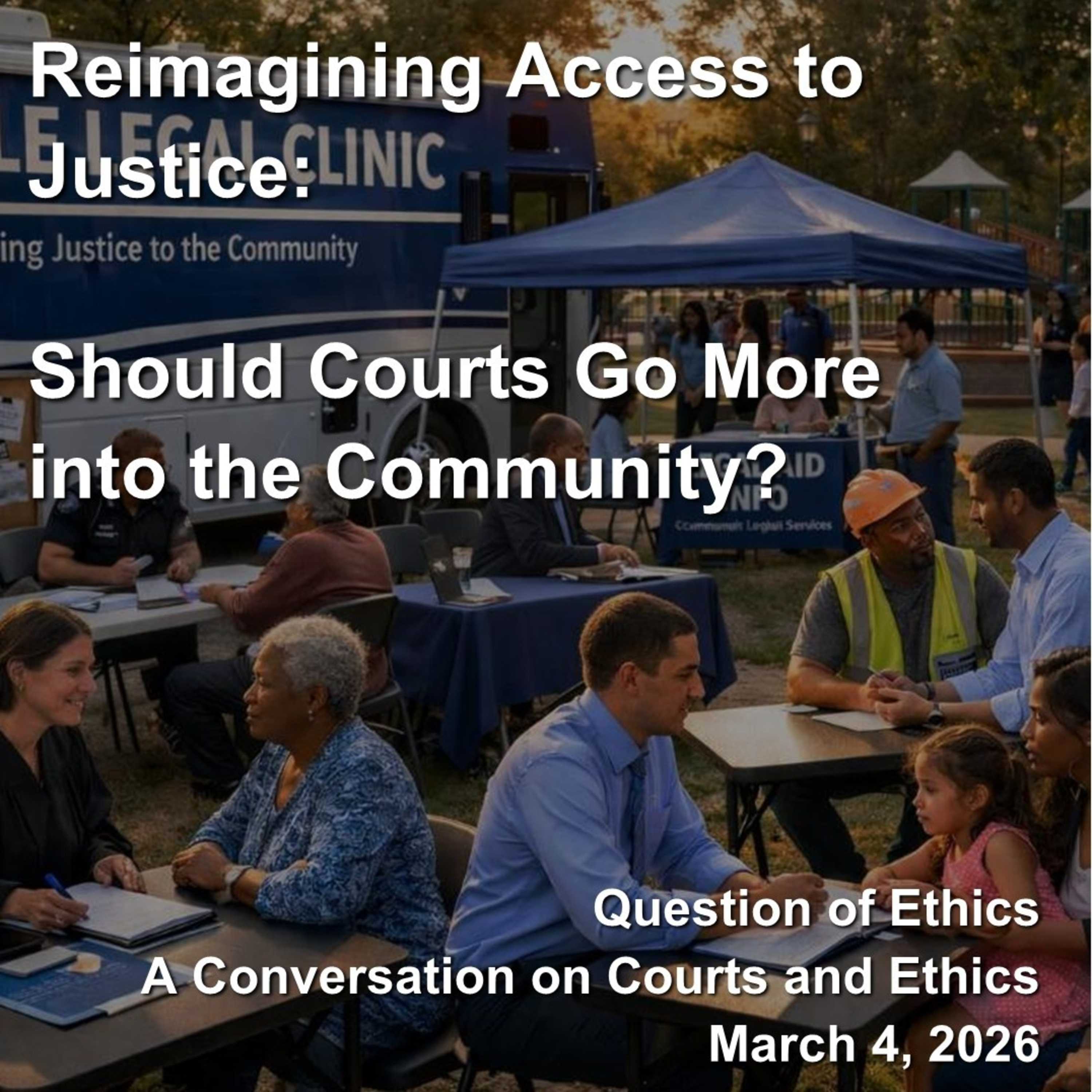
Question of Ethics: A Conversation on Courts and EthicsMarch 4th, 2026Courts stand at a crossroads between tradition andnecessity. On the one hand, we are guardians of legal boundaries, carefully distinguishing who may practice law and what constitutes legal advice. On the other hand, we are confronted with an undeniable reality: in many locationsaround our country, people with legal problems never reach the courthouse door, often because:DistanceThey live miles away from the courthouse or even any legal helpAffordabilityThey cannot afford to get the legal help they need RecognitionThey do not even see their problem as “legal” or the courthouse as a place that can help. As unmet legal needs grow, our community is asking courtsto do more, to do things differently, with fewer resources, and with fewer assumptions about how justice is accessed. These questions invite us to wrestle with uncomfortable issues. If non-attorney legal advocates are helping close critical legal gaps in selected areas around the country, is the currentlimitation on giving legal advice (Canon 1.7) still appropriate? Conversely, do some areas of law require stricter boundaries to protect the public?Can we continue to rely on courthouse-centered models, ormust courts extend their presence into the community in more sustained and meaningful ways? And as front-line staff increasingly become the first, and sometimes the only point of contact, how do we responsibly navigate that thin line between providing helpful information and giving permissible legal advice?Finally, this discussion challenges us to think about thefuture of the court’s workforce itself. Expanding non-attorney legal advisors raises questions not only about service delivery, but about professional identity, training, liability, and career development within the courts.Are we prepared to redefine roles, invest in training newskills, and accept a more flexible vision of how we as court leaders serve the public? The answers to these questions may shape not just access to justice, but the very role of courts in the communities we serve.In this episode, we examine the expanding roles of non-attorney advocacy and community-based services. We look at the evolving role of court staff to meet people where they are. We ask the question can we reimagine access to justice? Today’s PanelMaggie Humm Executive Director of the Alaska Legal Services Corporation in Anchorage.Sarah Carver Co-director of the Alaska Legal Services Corporation’s Community Justice Workers Resource Center.Creadell Webb Diversity, Equity, and Inclusion Officer for the 1st Judicial District Court, in Philadelphia, Pennsylvania,Liz Rambo Trial Court Administrator for the Lane County Circuit Court, in Eugene, Oregon Access the episode by going to the NACM website podcast link: https://www.nacmnet.org/podcastsBecome part of the Conversation. Submit your comments and questions to: [email protected] the Question of Ethics Conversation held after the Subcommittee meetings every fourth Thursday of the month at 2:00 pm ET.
Embed this episode
NOW PLAYING
Reimagining Access to Justice: Should Courts Go More into the Community?
No transcript for this episode yet
Similar Episodes
No similar episodes found.