
EPISODE · Jun 26, 2026 · 1H
Resilience, AI, and What It Means to Be Human Next | DisrupTV Ep 444
from DisrupTV · host DisrupTV
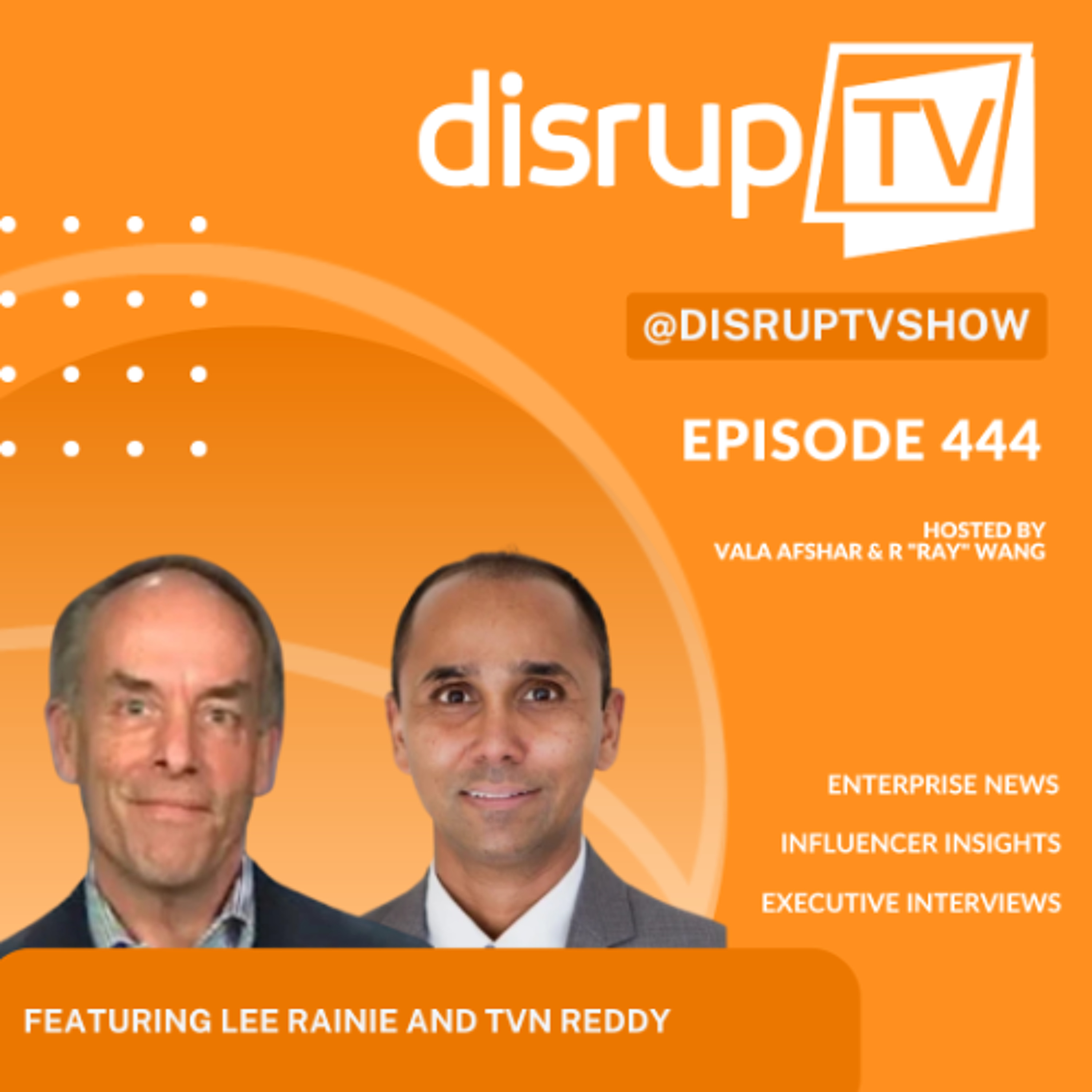
What does it actually take to win with AI at the enterprise level — and what does it mean for society as AI becomes inseparable from how we live, work, and relate to one another? In Episode 444 of DisrupTV, hosts R Ray Wang and Vala Afshar bring together two leaders at the front lines of those questions from very different vantage points. TVN Reddy, CEO of Aptean — a vertical enterprise software company serving more than 10,000 customers — shares what AI adoption actually looks like at the front line of business. He explains why most organizations are caught in the action trap, burning tokens without creating outcomes, and why the shift from selling tools to selling results is fundamentally rewriting the enterprise software model. He introduces the 90/10 rule for competitive differentiation, makes the case for hiring AI-native engineers whose job is to feed agents work rather than do work themselves, and explains how ecosystems of agents — not single agents — are how you get from 60% accuracy to 99%. Lee Rainie, who spent nearly 25 years leading Pew Research’s internet and technology work and now directs the Imagining the Digital Future Center at Elon University, brings a societal lens to the same transformation. His research asks how humans will cope with the disruptions AI brings — and his answer may surprise you: resilience must start with institutions, not individuals. He introduces the concept of existential literacy, explains why AI may consume our solitude, and makes the case that deliberate friction — pause points built into AI-augmented workflows — may be essential to preserving human judgment, creativity, and agency. Together, they trace a through-line from enterprise outcomes to civilizational resilience, and close with a line that reframes the entire conversation: we are the last generation that will know what human capability felt like before it became inseparable from AI.
What this episode covers
What does it actually take to win with AI at the enterprise level — and what does it mean for society as AI becomes inseparable from how we live, work, and relate to one another? In Episode 444 of DisrupTV, hosts R Ray Wang and Vala Afshar bring together two leaders at the front lines of those questions from very different vantage points. TVN Reddy, CEO of Aptean — a vertical enterprise software company serving more than 10,000 customers — shares what AI adoption actually looks like at the front line of business. He explains why most organizations are caught in the action trap, burning tokens without creating outcomes, and why the shift from selling tools to selling results is fundamentally rewriting the enterprise software model. He introduces the 90/10 rule for competitive differentiation, makes the case for hiring AI-native engineers whose job is to feed agents work rather than do work themselves, and explains how ecosystems of agents — not single agents — are how you get from 60% accuracy to 99%. Lee Rainie, who spent nearly 25 years leading Pew Research’s internet and technology work and now directs the Imagining the Digital Future Center at Elon University, brings a societal lens to the same transformation. His research asks how humans will cope with the disruptions AI brings — and his answer may surprise you: resilience must start with institutions, not individuals. He introduces the concept of existential literacy, explains why AI may consume our solitude, and makes the case that deliberate friction — pause points built into AI-augmented workflows — may be essential to preserving human judgment, creativity, and agency. Together, they trace a through-line from enterprise outcomes to civilizational resilience, and close with a line that reframes the entire conversation: we are the last generation that will know what human capability felt like before it became inseparable from AI.
NOW PLAYING
Resilience, AI, and What It Means to Be Human Next | DisrupTV Ep 444
No transcript for this episode yet
Similar Episodes
No similar episodes found.
Similar Podcasts
No similar podcasts found.