
EPISODE · Apr 15, 2025 · 14 MIN
Rethinking Inequality: What 50,000 Ancient Homes Tell Us About Power, Wealth, and Human Choices
from Evolutionary Insights by Anthropology.net · host Anthropology.net
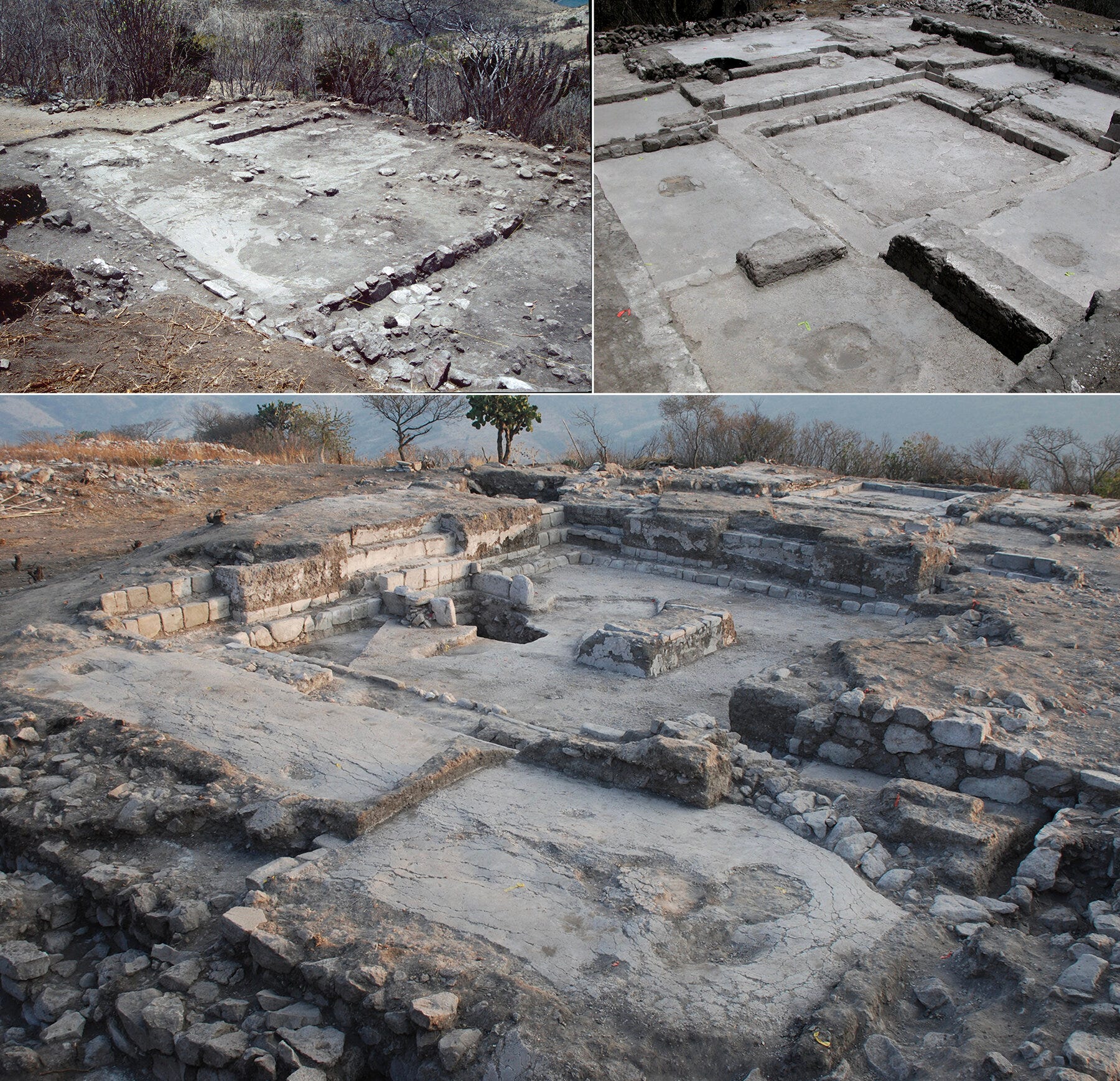
For much of history, the rise of inequality has been treated like gravity: inevitable, natural, and inescapable. From the sprawling villas of Roman elites to the thatched huts of the poor in medieval Europe, textbook history often presents wealth disparity as a consequence of human progress.But what if that assumption is wrong? What if inequality wasn’t a guaranteed outcome of agriculture, population growth, or the emergence of powerful rulers?A sweeping archaeological analysis led by Gary Feinman of the Field Museum of Natural History offers a strikingly different view. Drawing on data from over 50,000 ancient homes spread across six continents and 10,000 years of human history, the research team measured the economic disparities of the past through one of its most visible clues: the size of people's houses.“There are factors that may make inequality more likely,” said Feinman, “but human decisions and social institutions have consistently shaped whether or not it took hold.”Measuring Inequality in Clay and StoneTo capture economic inequality across time and geography, the research team calculated the Gini coefficient—a statistical tool commonly used today to assess income distribution—for each of more than 1,000 archaeological settlements. House size, it turns out, is a surprisingly consistent proxy for household wealth.“From the Valley of Oaxaca to the Indus Valley, bigger homes almost always mean thicker walls, more elaborate features, and evidence of greater access to resources,” said Feinman.A Gini coefficient of 0 means complete equality, while 1 indicates maximal inequality. The sites analyzed ranged from Neolithic farming villages to preindustrial urban centers, each revealing a different pattern in how inequality took root—or didn’t.The results offered no tidy historical arc. Inequality didn't uniformly rise with the emergence of agriculture, nor did it always spike when populations boomed. In fact, some large and politically complex societies maintained surprisingly modest levels of economic disparity.No Single Path to PowerThe study, published in the Proceedings of the National Academy of Sciences, pushes back against what scholars call "grand narratives"—those sweeping, linear explanations of human development often centered on ancient Greece, Rome, or medieval Europe.“We found no one-size-fits-all explanation,” said co-author Lane M. Nicholas. “The idea that big populations or new technologies automatically lead to widening inequality simply doesn’t hold up in the archaeological record.”Instead, the picture that emerges is one of human agency. People in different places made different choices about governance, resource sharing, and social cooperation.Some communities implemented checks and balances that curbed wealth concentration. Others developed traditions or institutions that emphasized reciprocity and mutual aid. These decisions mattered—and they still do.Inequality as a Choice, Not a DestinyPerhaps the most provocative implication of the study is its relevance to the present. The researchers argue that economic inequality is not an inevitable byproduct of complexity or innovation, but a social and political outcome shaped by cultural norms, leadership decisions, and institutional structures.“What this study suggests,” said Feinman, “is that we have choices. Societies of the past faced the same pressures—population growth, technological shifts, political upheaval—and yet not all of them responded by concentrating wealth at the top.”In this way, archaeology provides a counter-narrative to modern fatalism. By examining how ancient people organized themselves, distributed resources, and adapted to change, we get a clearer picture of the possibilities for the future.Related ResearchHere are other peer-reviewed studies that further illuminate the social and economic lives of early human societies:* Kohler, T. A., Smith, M. E., Bogaard, A., Feinman, G. M., Peterson, C. E., Betzenhauser, A., ... & Ortman, S. G. (2017). “Greater post-Neolithic wealth disparities in Eurasia than in North America and Mesoamerica.” Nature, 551(7682), 619–622. https://doi.org/10.1038/nature24646* Smith, M. E., & Peregrine, P. N. (2012). “Approaches to Social Inequality and Difference.” In The Comparative Archaeology of Complex Societies (pp. 1–28). Cambridge University Press. https://doi.org/10.1017/CBO9781139022716.002* Flannery, K. V. (1999). “Process and Agency in Early State Formation.” Cambridge Archaeological Journal, 9(1), 3–21. https://doi.org/10.1017/S0959774300015233* Hegmon, M., et al. (2008). “Social Transformation and Its Human Costs in the Prehispanic U.S. Southwest.” American Anthropologist, 110(3), 313–324. https://doi.org/10.1111/j.1548-1433.2008.00041.x This is a public episode. If you'd like to discuss this with other subscribers or get access to bonus episodes, visit www.anthropology.net/subscribe
NOW PLAYING
Rethinking Inequality: What 50,000 Ancient Homes Tell Us About Power, Wealth, and Human Choices
No transcript for this episode yet
Similar Episodes
No similar episodes found.
Similar Podcasts
No similar podcasts found.