
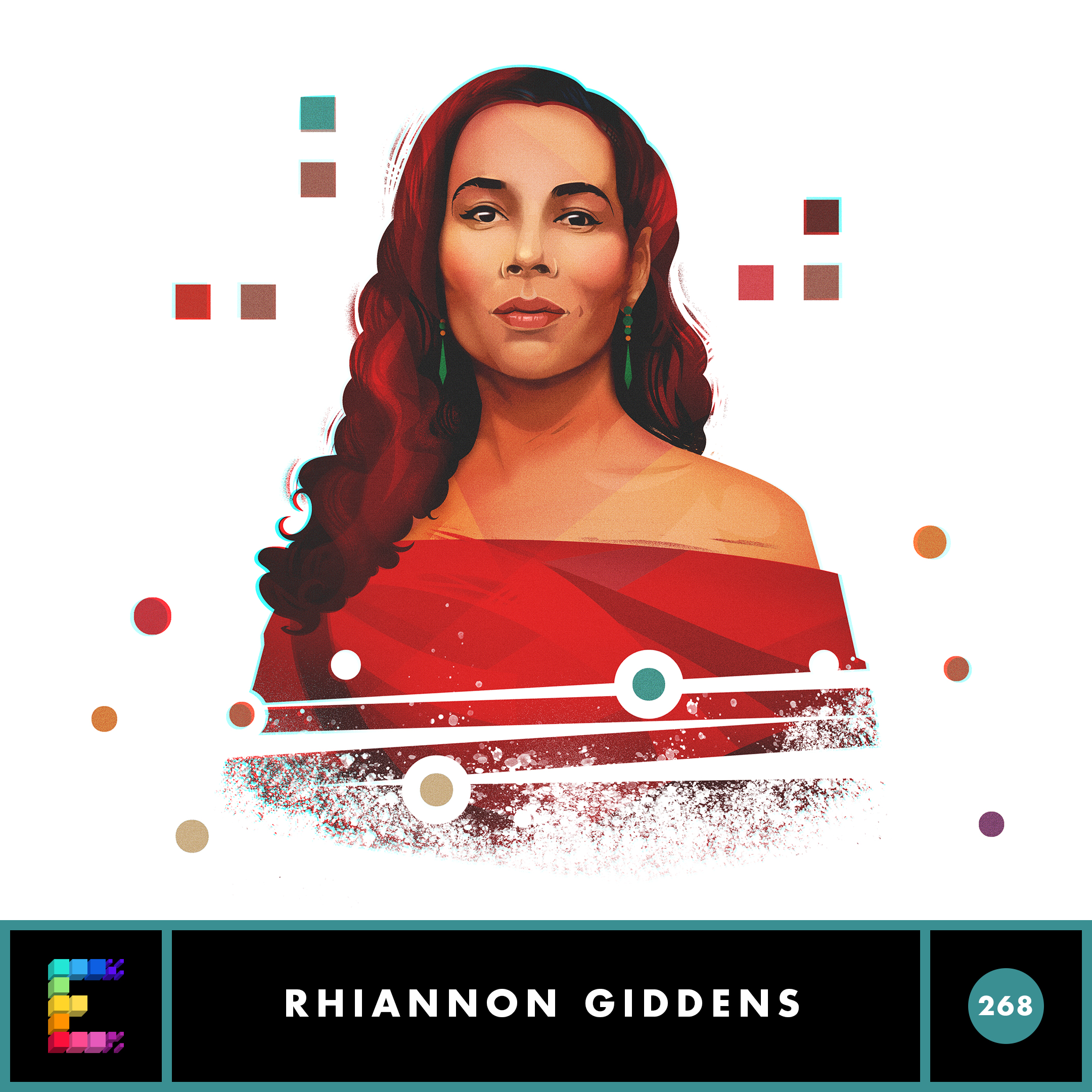
You're listening to song-exploder where musicians take apart their songs and piece-by-piece tell the story of how they were made. I'm Rishike Shirway. Rianne Giddens is one of those people where I feel like they have to start inventing new awards because she's already won all of them. She's got multiple Grammys.
She won the Pulitzer Prize for an opera she co-wrote called Omar. She's a MacArthur Genius. And the new Beyonce song, Texas Hold'em, that features the banjo? That's Rianne Giddens playing the banjo.
I guess it's not technically an award, but it feels like one to me. Rianne Giddens has released five solo albums since 2015, and before that, she was a member of the Grammy-winning band The Caroline and Chocolate Drops. She's now also the artistic director of the Silk Road Ensemble, the musical supergroup that Yoyo Ma founded. In 2023, Rianne released an album called You're the One, and I talked to her about a song she wrote for it called You Louisiana Man, which was nominated for a Grammy for Best American Risk Performance.
My name is Rianne Giddens. I was born in Greensboro, North Carolina in the central part of the state. And what was your life like in terms of the music did you play a lot of music when you were growing up? You know, I was surrounded by a lot of music.
I picked up a few guitar chords for my dad. He was a guitar player, but that was kind of it until I was like my senior year in high school. That's when I kind of decided I wanted to be a singer. So I started auditioning for schools, and I went to Oberlin Conservatory.
At that time, did you have this idea of like, I want to be an opera singer? Totally. I mean, I was going to sing at the Met, and I was in a lot of operas at Oberlin, so it was definitely, I was on the track. You go there, and then you go to a grad school, and then you start winning competitions, and then you start getting cast, you know?
I completed the first part of that, which was to go to Oberlin. I didn't do any of the rest of it. This is great, because I'm trying to have a better understanding of connecting the dots. How do you go from, I'm going to be an opera singer, I'm going to perform at the Met, to playing fiddle and banjo?
All that started with Contradance, actually, because when I went to Oberlin, I saw a flyer for English Country Dance, and I'm a Jane Austen Nutt, and that's what they do in Jane Austen novels is English Country Dance. And I was like, I want to learn how to do that. And so I went, but it's actually a Contradance, which is an American art form descended from English Country Dance. And there was a live band, and I was like, oh my God, this is so fun.
So I started going to the Contradances at Oberlin, and then I went back down to Greensboro after I graduated, and found the Contradance scene, and that's when I started like hearing New England fiddle music, Canadian fiddle music, like all of this stuff, and kind of going, this is amazing. I joined a Celtic band. It was like an advertisement. You know, we're looking for a lead singer, and I was like, okay.
And then I decided I wanted to pick up the fiddle, and then banjo started to creep in. Do you remember when you first started thinking about Uluisiana Mann? I remember sitting at the kitchen table, and I started writing these words. You turned my head, tripped up my mind, Uluisiana Mann.
You turned my head, tripped up my mind, Uluisiana Mann. You burned my bed, lit up my sky, Uluisiana Mann. Can you tell me what was it that you were feeling that led to those words? Is anger, it's like how many times have you struck up a friendship with somebody that then went way further than you thought, romantic or not.
You're like, oh, hey, let's have a coffee. And then like two months later, you're like telling each other your deepest, darkest secrets, and then that person has all the power to destroy you, you know what I mean, if they want. And that's really vulnerable. You know, and you get mad at people, but it's like you're really mad at yourself for staying in it past when you should have or for not letting it go.
But in a song, it's much funner to be mad at a person. So I was mad at Uluisiana Mann. You stole my breath, you took my soul, Uluisiana Mann. Had you ever written a song from this kind of emotional place before?
I was definitely carving out New Ground. I mean, I was just in a very confused time in my life was feeling things in a very intense way. And so I was thinking, I just got to write this down. It was a time I was writing a lot of poetry.
I kind of feel like it was almost a teenage delay. Like I didn't have a boyfriend until I was 23. And so I never did, you know, a lot of those sort of emotional things when I was a teenager because I was just like this nerd reading books and like watching Dan Austin movies or whatever, but not really participating in life in that way. I was an observer.
And so I was kind of in the midst of like life life, you know, and not really knowing how to do with it. This was written on the minstrel banjo. And I do that a lot as I find the tune on the banjo and I often just double myself when I'm singing. It's just so beautiful and supportive to the voice.
You can just hear there, they just go together so beautifully. So we made a demo, it was actually for the Freedom Highway sessions. And that was a record that had a lot of my mission based work, like my slave songs. So this song didn't really belong.
You know what I mean? It just kind of felt a little too party for the sort of gravitas of that album. And it just didn't turn out. We didn't get it to where we wanted it to.
So we just sat on it and that became the demo, that recording. So can you tell me about what made it right to bring this song in for this one? You know, I worked on Omar, mine, and Michael Abel's opera for a total of five years. It's the story of an Islamic scholar from Senegal who sold in Dislavery and ends up living as an enslaved man in North Carolina for over 50 years, dies right before the Civil War.
I'm like, that's a heavy story. And all the things that I do are pretty serious and heavy. And so I was just like, I just need to just have some fun, sing some love songs and break up songs, whatever. Just have a good time.
And so then how did you end up working with Jack Splash as the producer? I felt like a lot of these songs needed a bigger palette than the folk and acoustic palettes that I've been really working with. And really meeting him. I just thought he had such a quick brain and such a knowledge of all the different styles that I wanted to play in and was willing to meet me halfway.
You know, I was like, I don't want to just throw these songs at you and then have it be you with a little bit of me. And I don't want it to be mostly me with a little bit of you, like put some beats on it or something. I want us to actually find a halfway point. And he was really into it.
So I brought some musicians that I've been working with. And he brought the musicians that he's been working with. It was two discrete groups coming together and finding where everybody fit, because you had all of these different instruments. You had the Cajun Fiddle, you hear the banjo, you hear all of these super acoustic sounds.
And then the more modern kind of drum beat, the electric bass, everybody was just like, how's this going to work? And then you start playing and just like, oh, that's how it's going to work. And I was like, this is so cooking. This is what I was missing.
This is what this song needed. It was just so neat to hear those cross rhythms and how it just seamlessly worked with the freaking fretless banjo from 1858, you know what I mean? Like, these were people talking to each other with music. And that's the way I like to do collaborations, you know?
Each piece kind of fits in in this really beautiful, nestled way. And nobody's covering anybody up. You're overlapping in a way that then highlights everybody. But we can't have everybody playing all the time.
The idea is that you create that energy on the floor and then you just carve it out. Yeah, I thought it was interesting listening to the tracks on their own. You can hear how the acoustic guitar kind of pops in and out, like it's edited in and out of the song. Yeah.
And he played acoustic guitar on everything. And this is a great part, but like you wouldn't have heard it anyway because there's all this other stuff going on. So you just take it out and then just put it in where it needs to be. You left me here.
You lose me and a man. I love doing harmony vocals. You know, I used to sing on my sister. She was the lead and I was harming.
She was older than me. And so that's actually my natural place is I go to harmony first. I have to like force myself to sing lead. So when I get to sing harmony with myself, like I know what I'm going to be doing, I freaking love it.
I never knew that. Thanks for going to get so far. I never knew it. I never knew that you were going to break my heart you.
The bass line really captures the sort of agitation and kind of friction in the song where you can tell the protagonist is just like trying to play it cool, even at the end, which you know, I generally tend to like to leave woman oriented songs about men who done them wrong or whatever. I generally like to leave it on a positive like this thing happened, but I'm not going to let it define me or whatever. So at the end, you know, I've wet my tears and I move on. You know, so she's like, yeah, yeah, yeah, but then underneath is like, dah, dah, dah, dah.
So she's lyrically you're saying I've moved on, but then the music hasn't actually changed along with it. I mean, I think I can speak for a lot of people who've been in relationships and they go, I'm totally over this. Are they totally over it? No.
But you have to say it enough until you are over it, you know, you keep repeating it until you've actually done it. So, you know, this protagonist is not quite there, but like she's stating an intention. So that's upright bass and electric bass that barber, you know, that's the electric bass. Yeah, D ray on bass and I can see him from my booth and I should just like watch his fingers fly.
It's going on right now. So good. And then that's on the upright and that's Jason Seifer, Jason has played KJ music, he's played Irish music. So he's been my bass player for a long time and they're coming from totally different musical worlds.
White upright bass player, black electric bass player and they're totally different genres and they could work together like no problem. At the end of the song, I think everybody was just really digging on each other. There's this outro of just, it's like party time. Then Jack had horns added.
That was another moment where I was like, okay, this is freaking cool. I'm so glad we're doing this. You know, I've never thought of that in a million years. And that's why you collaborate.
Let me. And you know, we have these relationships with people where they don't do what you want them to do. You know what I mean? And it's like, they ain't got to do what you want them to do because they grow people and they don't do what they want to do.
But like that doesn't stop us from wanting them to be different. The person who this song is about? Hmm. Do they know what's about them?
They do. I sent it to them. What was that like? Oh, it was funny.
I was just like, I've been processing things and this is how it came out. I was like, this is how I feel. And they were like, that's a great song. That's a great song.
Coming up, you'll hear how all these ideas and elements came together in the final song. And now here's You Louisiana Man by Riannon Giddens in its entirety. You're Louisiana Man. You took my soul.
You're Louisiana Man. Catch my death. You look so cold. You're going to get so far.
I never make my heart you. You're Louisiana Man. For more, visit songexploder.net. You'll find links to buy or stream, you're Louisiana Man.
And you can watch the music video. This episode was produced by Craig Ili, Theo Balcom, Kathleen Smith, Mary Dolan, and myself. The episode artwork is by Carlos Laramah and I made the show's theme music and logo. SongExploder is a proud member of Radiotopia from PRX, a network of independent, listener-supported, artist-owned podcasts.
You can learn more about all our shows at radiotopia.fm. You can follow me on social media at RishiHairway, and you can follow the show at SongExploder. You can also get a SongExploder T-shirt at songexploder.net slash shirt. I'm RishiHairway.
Thanks for listening. Radiotopia. As you've probably heard on this show, SongExploder is a member of Radiotopia, a network of original, creator-owned podcasts. Something you might not know, though, is that we have a monthly newsletter called The Citizen that's packed with details about new content, behind-the-scenes stories, and upcoming events.
If you're a fan of the podcasts on Radiotopia, you don't want to miss The Citizen. You can subscribe by going to radiotopia.fm slash Citizen.