
EPISODE · Jul 25, 2025 · 1H
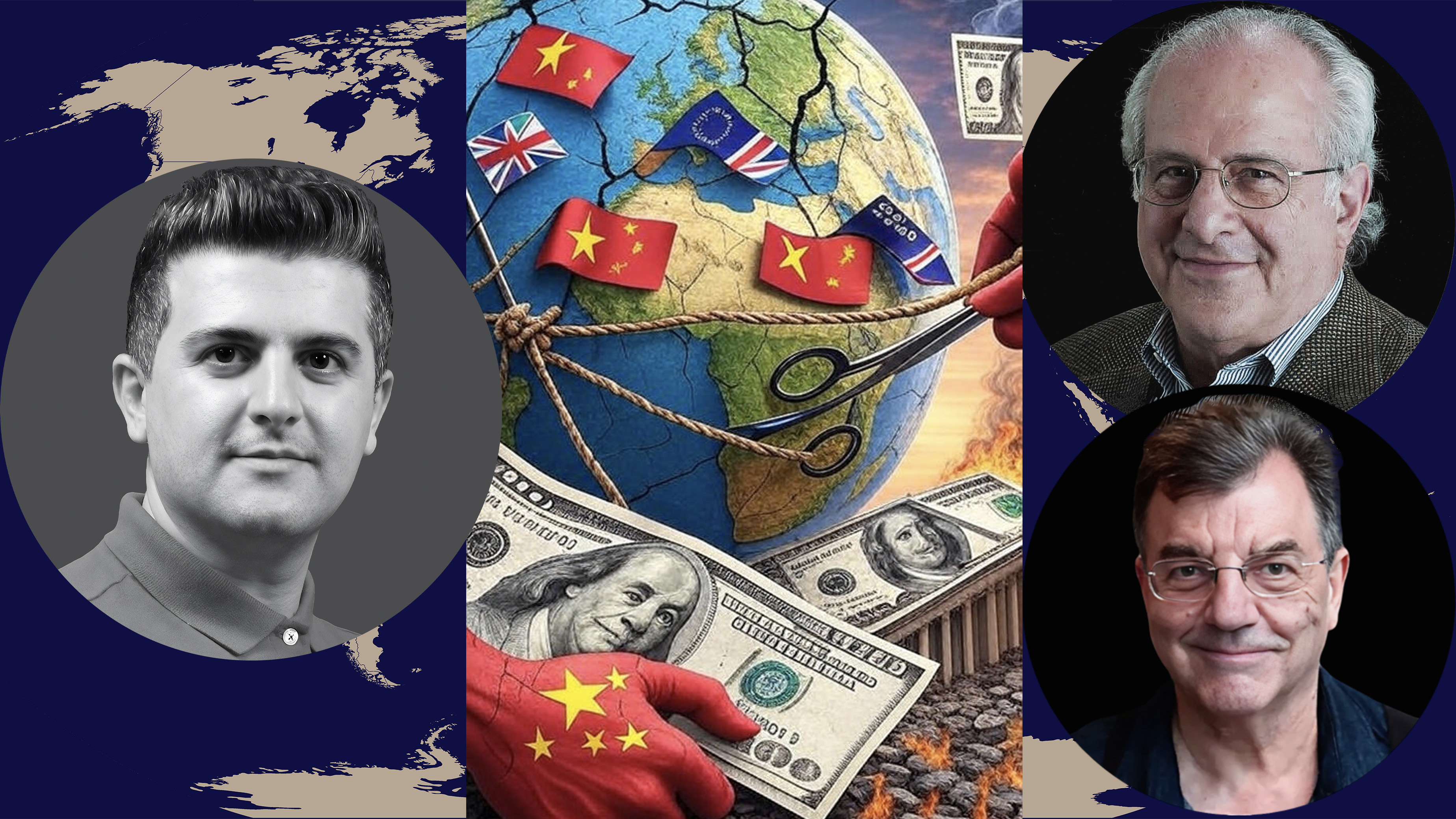
Richard Wolff & Michael Hudson: BRICS Earthquake, Dollar Tumbles as China Walks Away from US Debt
from Dialogue Works
Nima Rostami Alkhorshid:What is your take on Donald Trump’s claim that BRICS is fading and his threat to impose 10% tariffs on member nations?How do current U.S. policies, especially under Trump, affect the global standing and value of the dollar?Can you explain the significance of the Financial Times article showing declining foreign holdings of U.S. Treasuries, especially by China?What explains the sharp rise in U.S. Treasury holdings reported by the Cayman Islands?How are global political shifts, such as rising nationalism in Japan and Europe, influenced by U.S. economic and trade policies?Michael Hudson:Trump’s policies—tariffs, inflation, monopoly tolerance—are driving foreign investors out of dollar assets, accelerating the dollar’s decline despite higher interest rates.The dollar is falling because investors see U.S. policy as destabilizing; they’re moving into gold, Bitcoin, and other safe assets, not because of economic strength but fear of loss.The Cayman Islands’ rising Treasury holdings reflect offshore financial flows, often from illicit sources like tax evasion, dictators, or crypto scams funneled through U.S. bank branches.U.S. weapon systems are being exposed as ineffective in Ukraine and the Middle East, undermining the arms export economy that was meant to sustain global dollar demand.The post-WWII Bretton Woods system is unraveling; just as the U.S. replaced the British pound, emerging powers are now building alternatives to dollar dominance, which U.S. threats can’t stop.Richard Wolff:Trump’s belief that devaluing the dollar boosts exports ignores that the U.S. has deindustrialized—there’s little left to export, making the policy self-defeating.Harsh U.S. immigration and ICE policies are deterring tourism and foreign real estate investment, reducing demand for dollars and contributing to its decline.Countries like Japan and Canada are using non-tariff barriers—cultural and political resistance—to reject U.S. goods, despite trade deals, showing limits of American leverage.The U.S. is alienating allies with tariffs and erratic policies, pushing them toward BRICS and new economic alignments as a defense against American economic instability.The decline of American empire is clear in military weakness (e.g., inability to sustain long wars) and loss of ideological influence, mirrored in the rise of left and right nationalist movements abroad. Hosted on Acast. See acast.com/privacy for more information.
What this episode covers
Nima Rostami Alkhorshid:What is your take on Donald Trump’s claim that BRICS is fading and his threat to impose 10% tariffs on member nations?How do current U.S. policies, especially under Trump, affect the global standing and value of the dollar?Can you explain the significance of the Financial Times article showing declining foreign holdings of U.S. Treasuries, especially by China?What explains the sharp rise in U.S. Treasury holdings reported by the Cayman Islands?How are global political shifts, such as rising nationalism in Japan and Europe, influenced by U.S. economic and trade policies?Michael Hudson:Trump’s policies—tariffs, inflation, monopoly tolerance—are driving foreign investors out of dollar assets, accelerating the dollar’s decline despite higher interest rates.The dollar is falling because investors see U.S. policy as destabilizing; they’re moving into gold, Bitcoin, and other safe assets, not because of economic strength but fear of loss.The Cayman Islands’ rising Treasury holdings reflect offshore financial flows, often from illicit sources like tax evasion, dictators, or crypto scams funneled through U.S. bank branches.U.S. weapon systems are being exposed as ineffective in Ukraine and the Middle East, undermining the arms export economy that was meant to sustain global dollar demand.The post-WWII Bretton Woods system is unraveling; just as the U.S. replaced the British pound, emerging powers are now building alternatives to dollar dominance, which U.S. threats can’t stop.Richard Wolff:Trump’s belief that devaluing the dollar boosts exports ignores that the U.S. has deindustrialized—there’s little left to export, making the policy self-defeating.Harsh U.S. immigration and ICE policies are deterring tourism and foreign real estate investment, reducing demand for dollars and contributing to its decline.Countries like Japan and Canada are using non-tariff barriers—cultural and political resistance—to reject U.S. goods, despite trade deals, showing limits of American leverage.The U.S. is alienating allies with tariffs and erratic policies, pushing them toward BRICS and new economic alignments as a defense against American economic instability.The decline of American empire is clear in military weakness (e.g., inability to sustain long wars) and loss of ideological influence, mirrored in the rise of left and right nationalist movements abroad. Hosted on Acast. See acast.com/privacy for more information.
NOW PLAYING
Richard Wolff & Michael Hudson: BRICS Earthquake, Dollar Tumbles as China Walks Away from US Debt
No transcript for this episode yet
Similar Episodes
Jun 20, 2026 ·31m
Jun 20, 2026 ·24m
Jun 20, 2026 ·42m
Jun 20, 2026 ·26m
Jun 20, 2026 ·22m
Jun 20, 2026 ·37m