
EPISODE · Jun 21, 2025 · 1H 8M
Richard Wolff & Michael Hudson: Iran"s Supreme Leader Fires Back at Trump with Final Warning!
from Dialogue Works
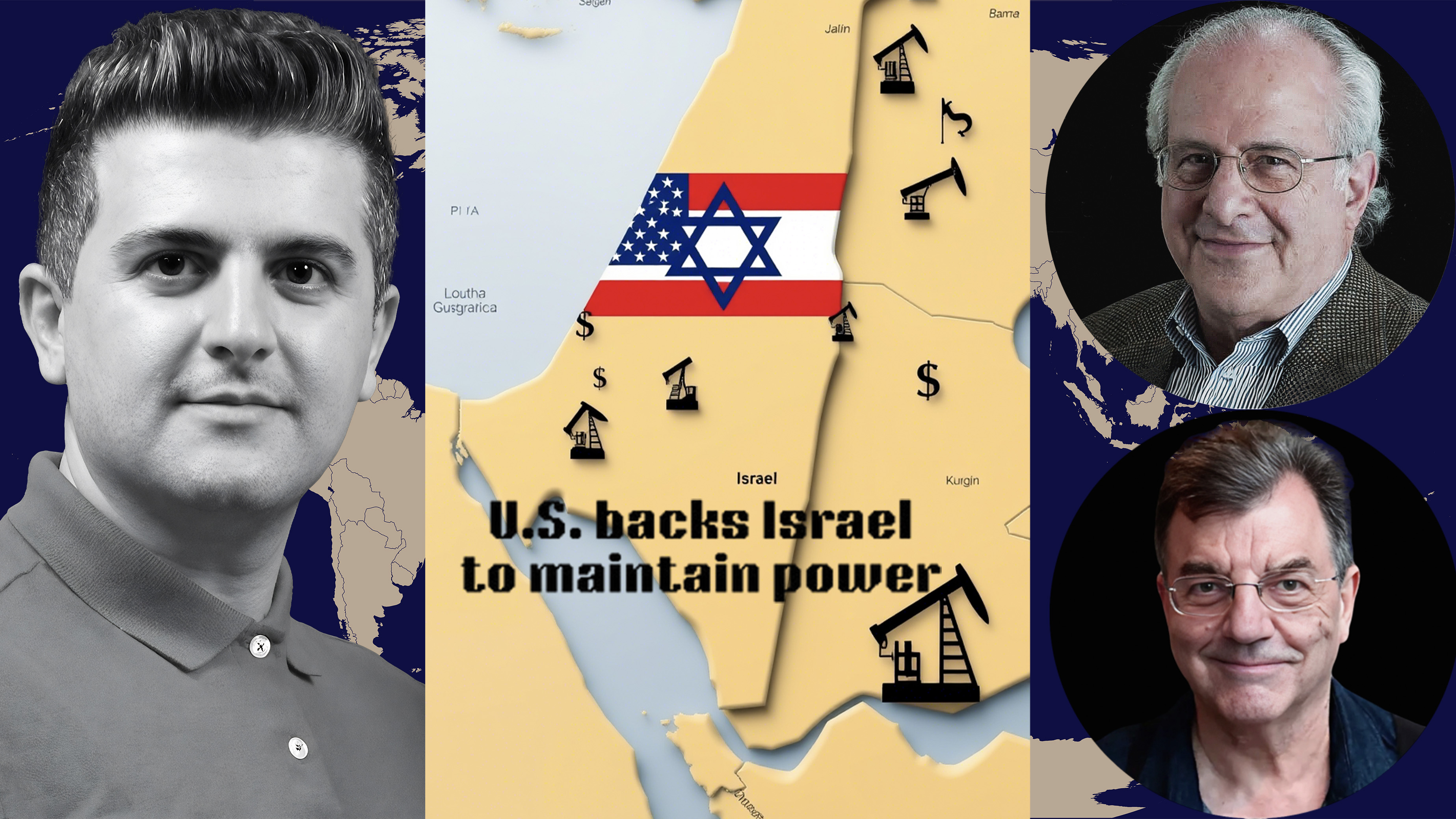
U.S. backs Israel to maintain power, oil control, and stop global de-dollarization.Nima Rostami Alkhorshid:What is the broader historical context of U.S. involvement in the Middle East, particularly with Iran and Israel?Why does the U.S. continue to support Israel despite global criticism?How do U.S.-Iran tensions relate to the broader geopolitical struggle over de-dollarization and colonialism?Is a potential U.S. attack on Iran driven by Israeli interests or larger U.S. strategic goals?What are the implications of escalating tensions between the U.S., Iran, and its allies like Russia and China?Richard Wolff:The U.S. involvement in the Middle East is part of the end of centuries-long colonialism, where former colonies are asserting independence, and the West is trying to resist this shift.Israel survives only because of U.S. backing; without it, it could not withstand regional opposition. It serves as a proxy for U.S. control of oil and regional influence.Tensions with Iran are tied to U.S. efforts to halt China’s Belt and Road Initiative and maintain financial dominance by blocking alternative economic alliances.Israel is a junior partner; the U.S. is pulling the strings. The conflict serves American imperial strategy more than Israeli national interest.Escalation will likely fail, as history shows that empires cannot stop the march of decolonization and multipolarity.Michael Hudson:U.S. policy in the Middle East is about maintaining control over oil and preventing countries from escaping the dollar-based financial system.The U.S. has long sought to divide Iran ethnically to weaken it, similar to strategies used against Russia and China.Iran is key to U.S. plans to block China’s Silk Road and Russia’s access to southern trade routes, making it central to global power struggles.While Israel may believe it acts independently, it is ultimately controlled by U.S. interests and used to distract attention from American imperialism.A war with Iran would be economically self-defeating for the U.S., accelerating global de-dollarization and increasing inflation worldwide. Hosted on Acast. See acast.com/privacy for more information.
What this episode covers
U.S. backs Israel to maintain power, oil control, and stop global de-dollarization.Nima Rostami Alkhorshid:What is the broader historical context of U.S. involvement in the Middle East, particularly with Iran and Israel?Why does the U.S. continue to support Israel despite global criticism?How do U.S.-Iran tensions relate to the broader geopolitical struggle over de-dollarization and colonialism?Is a potential U.S. attack on Iran driven by Israeli interests or larger U.S. strategic goals?What are the implications of escalating tensions between the U.S., Iran, and its allies like Russia and China?Richard Wolff:The U.S. involvement in the Middle East is part of the end of centuries-long colonialism, where former colonies are asserting independence, and the West is trying to resist this shift.Israel survives only because of U.S. backing; without it, it could not withstand regional opposition. It serves as a proxy for U.S. control of oil and regional influence.Tensions with Iran are tied to U.S. efforts to halt China’s Belt and Road Initiative and maintain financial dominance by blocking alternative economic alliances.Israel is a junior partner; the U.S. is pulling the strings. The conflict serves American imperial strategy more than Israeli national interest.Escalation will likely fail, as history shows that empires cannot stop the march of decolonization and multipolarity.Michael Hudson:U.S. policy in the Middle East is about maintaining control over oil and preventing countries from escaping the dollar-based financial system.The U.S. has long sought to divide Iran ethnically to weaken it, similar to strategies used against Russia and China.Iran is key to U.S. plans to block China’s Silk Road and Russia’s access to southern trade routes, making it central to global power struggles.While Israel may believe it acts independently, it is ultimately controlled by U.S. interests and used to distract attention from American imperialism.A war with Iran would be economically self-defeating for the U.S., accelerating global de-dollarization and increasing inflation worldwide. Hosted on Acast. See acast.com/privacy for more information.
NOW PLAYING
Richard Wolff & Michael Hudson: Iran"s Supreme Leader Fires Back at Trump with Final Warning!
No transcript for this episode yet
Similar Episodes
Jun 20, 2026 ·31m
Jun 20, 2026 ·24m
Jun 20, 2026 ·42m
Jun 20, 2026 ·26m
Jun 20, 2026 ·22m
Jun 20, 2026 ·37m