PodParley PodParley

Rippin’ the Rainbow an Even Newer One

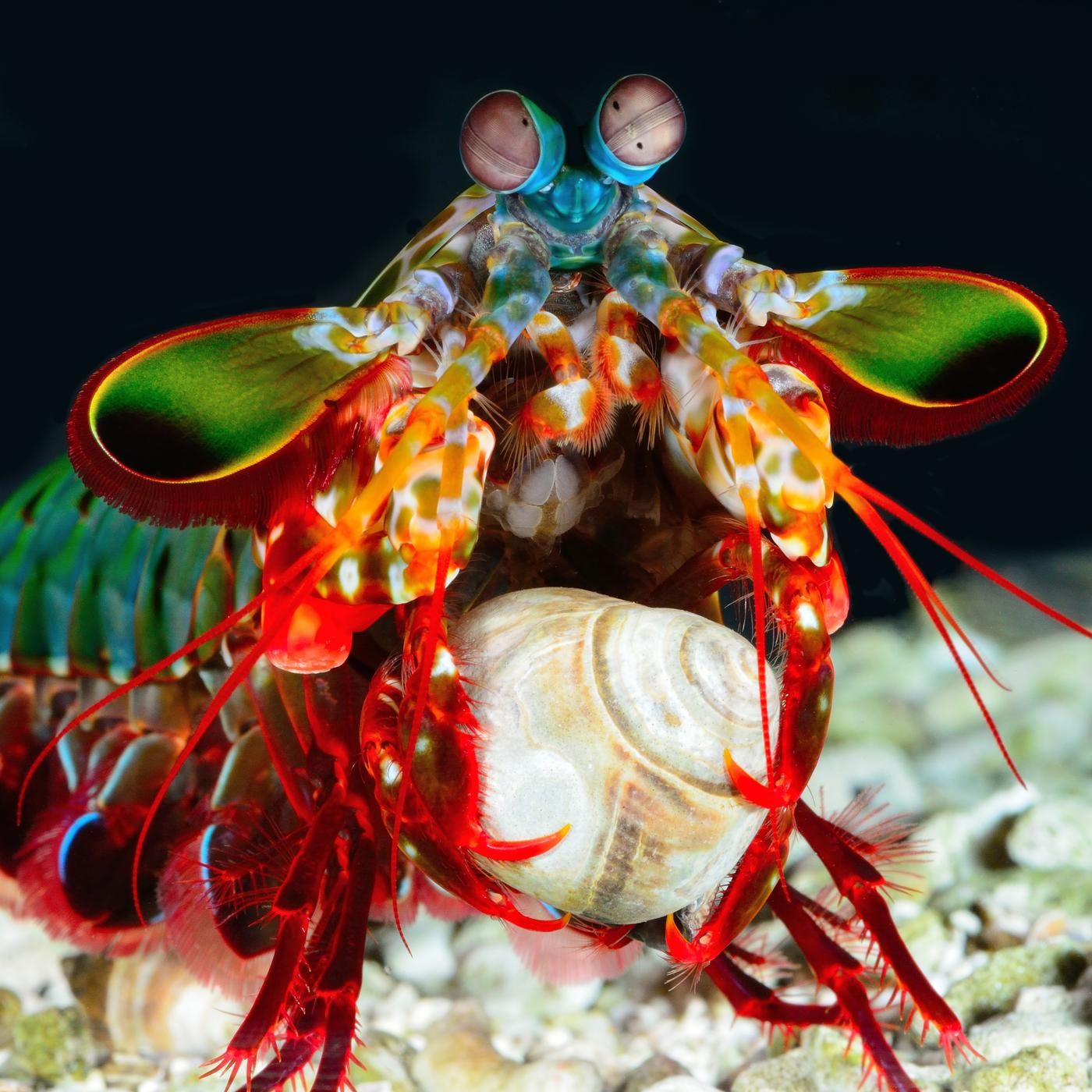
One of our most popular episodes of all time was our Colors episode, where we introduced you to a sea creature that could see a rainbow far beyond what humans can experience. Peacock mantis shrimps are as extraordinary as they are strange and boast what may well be the most complicated visual system in the world. They each have 16 photoreceptors compared to our measly three. But recently researchers in Australia put the mantis shrimps’ eyes to the test only to discover that sure, they can SEE lots of colors, but that doesn't mean they can tell them apart. In fact, when two colors are close together - like yellow and yellow-y green - they can’t seem to tell them apart at all.   MORE ON COLORS: There was a time -- between the flickery black-and-white films of yore and the hi-def color-corrected movies we watch today -- when color was in flux. Check out this blog post on how colors made it to the big screen from our director of research, Latif Nasser.  Our original episode was produced by Tim Howard and Pat Walters. This update was produced by Amanda Aronczyk. Special thanks to Chris Martin of Creative Aquarium Nation, Phil Weissman, David Gebel and Kate Hinds for lending us their colorful garments. Also thanks to Michael Kerschner, Elisa Nikoloulias and the Young New Yorkers’ Chorus, as well as Chase Culpon and The Greene Space team. Support Radiolab today at Radiolab.org/donate.

Episode 271 of the Radiolab podcast, hosted by WNYC Studios, titled "Rippin’ the Rainbow an Even Newer One" was published on March 15, 2018 and runs 33 minutes.

March 15, 2018 ·33m · Radiolab

0:00 / 0:00

One of our most popular episodes of all time was our Colors episode, where we introduced you to a sea creature that could see a rainbow far beyond what humans can experience. Peacock mantis shrimps are as extraordinary as they are strange and boast what may well be the most complicated visual system in the world. They each have 16 photoreceptors compared to our measly three. But recently researchers in Australia put the mantis shrimps’ eyes to the test only to discover that sure, they can SEE lots of colors, but that doesn't mean they can tell them apart. In fact, when two colors are close together - like yellow and yellow-y green - they can’t seem to tell them apart at all.   MORE ON COLORS: There was a time -- between the flickery black-and-white films of yore and the hi-def color-corrected movies we watch today -- when color was in flux. Check out this blog post on how colors made it to the big screen from our director of research, Latif Nasser.  Our original episode was produced by Tim Howard and Pat Walters. This update was produced by Amanda Aronczyk. Special thanks to Chris Martin of Creative Aquarium Nation, Phil Weissman, David Gebel and Kate Hinds for lending us their colorful garments. Also thanks to Michael Kerschner, Elisa Nikoloulias and the Young New Yorkers’ Chorus, as well as Chase Culpon and The Greene Space team. Support Radiolab today at Radiolab.org/donate.

One of our most popular episodes of all time was our Colors episode, where we introduced you to a sea creature that could see a rainbow far beyond what humans can experience.

Peacock mantis shrimps are as extraordinary as they are strange and boast what may well be the most complicated visual system in the world. They each have 16 photoreceptors compared to our measly three. But recently researchers in Australia put the mantis shrimps’ eyes to the test only to discover that sure, they can SEE lots of colors, but that doesn't mean they can tell them apart.

In fact, when two colors are close together - like yellow and yellow-y green - they can’t seem to tell them apart at all.  

MORE ON COLORS: There was a time -- between the flickery black-and-white films of yore and the hi-def color-corrected movies we watch today -- when color was in flux. Check out this blog post on how colors made it to the big screen from our director of research, Latif Nasser. 

Our original episode was produced by Tim Howard and Pat Walters. This update was produced by Amanda Aronczyk.

Special thanks to Chris Martin of Creative Aquarium Nation, Phil Weissman, David Gebel and Kate Hinds for lending us their colorful garments. Also thanks to Michael Kerschner, Elisa Nikoloulias and the Young New Yorkers’ Chorus, as well as Chase Culpon and The Greene Space team.

Support Radiolab today at Radiolab.org/donate.

The Vanishing of Harry Pace (Radiolab) WNYC Studios From the creators of Dolly Parton's America, Jad Abumrad and Shima Oliaee, comes a new series produced in collaboration with author Kiese Laymon, scholar Imani Perry, writer Cord Jefferson, WQXR’s Terrance McKnight, and WNYC's Jami Floyd. Based on the book Black Swan Blues: the Hard Rise and Brutal Fall of America’s First Black Owned Record Label by Paul Slade.It was Motown before Motown, FUBU before FUBU: Black Swan Records. The label founded 100 years ago by Harry Pace. Pace launched the career of Ethel Waters, inadvertently invented the term rock n roll, played an important role in W.C. Handy becoming "Father of the Blues," inspired Ebony and Jet magazines, and helped desegregate the South Side of Chicago in an epic Supreme Court battle. Then, he disappeared.  The Vanishing of Harry Pace is a series about the phenomenal but forgotten man who changed America. It's a story about betrayal, family, hidden identities, and a time like no other. Note to Self WNYC Studios Is your phone watching you? Can texting make you smarter? Are your kids real? Note to Self explores these and other essential quandaries facing anyone trying to preserve their humanity in the digital age. WNYC Studios is a listener-supported producer of other leading podcasts, including Radiolab, Death, Sex & Money, Snap Judgment, Here’s the Thing with Alec Baldwin, Nancy and many others.© WNYC Studios RadioLacan.com |Radio Lacan en el VII ENAPOL RadioLacan.com es el sitio de audios y conferencias de la Asociación Mundial de Psicoanálisis. RadioLacan.com |#LacanianosxElMundo: Ginebra. Entrevista a Sofía Guaraguara Comenzamos una serie de entrevistas a los colegas que por distintos motivos han dejado su país de origen y han decidido ejercer el psicoanálisis en otro país, en otra lengua, para que nos cuenten sobre lo que esto implica para cada uno y lo interesante de cómo hacer florecer el psicoanálisis en el mundo. En esta oportunidad Liliana Mauas entrevista a Sofía Guaraguara.
URL copied to clipboard!