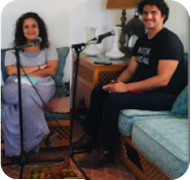
Roots And Traces Of Contemporary Cultural Life In Tangier episode artwork

EPISODE · Sep 30, 2021 · 27 MIN

Roots And Traces Of Contemporary Cultural Life In Tangier

from Maghrib in Past & Present | Podcasts · host themaghribpodcast.com

Episode 131: Roots And Traces Of Contemporary Cultural Life In Tangier In this discussion at Youmein 2021: Roots and Traces, anthropologist George Bajalia and journalist Aida Alami explore the roots and traces of contemporary cultural life in Tangier, especially as they relate to northern Morocco’s border regions.  From questions of diversity and difference to the roots of present debates around representation, responsibility, and justice, Youmein 2021: Roots and Traces was an open-ended artistic inquiry into how the structures of our past have shaped our current moment. The traces of this past appear in unexpected places, both institutionally and in the social milieu from which we develop artistic reflections. Uncomfortable inequities and realities sit adjacent to the rise of powerful populist and progressive movements worldwide. Since Youmein began in 2014, xenophobia, isolationism, and neo-imperialism have grown simultaneously with new forms of solidarities and ways of being in-common. How will these movements leave their traces in our shifting social orders, and how will they transform, sediment, and root themselves differently? So far, each edition of the Youmein Festival has taken on themes speaking to Tangier as a space of both border and bridge: al-barzakh, crisis, imitation, limit(s), and desire. This year, those themes became the fertile ground on which we will reconvene and dig deep into what has come before and make choices about where we want to go next. After a year of isolated reflections, and alongside the Bicentennial of the Tangier-American Legation, Youmein invited the artists, speakers, and the public to critically reflect on the view from Tangier, and the cultures, peoples, and conditions which compose it.  As a part of the 2021 Youmein Festival, Alami and Bajalia reflected on Tangier and its myths, past and present, and alternative cultural histories and present realities in this corner of the Strait of Gibraltar. From Maalem Abdellah Gourd and the renovation of his home in Tangier medina to the role of the Tangier American Legation Museum in the city, they share thoughts how different flows of people through the city, categorized differently as migrants, immigrants, “ex-pats,” and artists, intersect and overlap.   George Bajalia is an anthropologist (Ph.D., Columbia University), Assistant Professor at Wesleyan University, and theatre director based between Morocco and New York. He is the co-founder of the annual Youmein Creative Media Festival in Tangier, Morocco and the Northwestern University in Qatar Creative Media Festival. His work has been supported by the CAORC-Mellon Mediterranean Research Fellowship, the American Institute of Maghrib Studies Long-Term Fellowship, and the Fulbright Foundation, and he is a Fellow of the Tangier- American Legation Institute for Moroccan Studies. Aida Alami is a Moroccan freelance journalist who’s frequently on the road, reporting from North Africa, France, the Caribbean, and more recently, Senegal. She regularly contributes to the New York Times, and her work has also been published by the New York Review of Books, The Financial Times, and Foreign Policy. She earned her bachelor’s degree in media studies at Hunter College and her master’s degree in journalism at Columbia University. She mainly covers migration, human rights, religion, politics and racism. These days, Aida spends a lot of time in France, where she is directing a documentary feature on antiracism activists and police violence. This episode was recorded on July 28th, 2021 at the Tangier American Legation Institute for Moroccan Studies (TALIM).    Posted by Hayet Lansari, Librarian, Outreach Coordinator, Content Curator (CEMA).

In this discussion at Youmein 2021: Roots and Traces, anthropologist George Bajalia and journalist Aida Alami explore the roots and traces of contemporary cultural life in Tangier, especially as they relate to northern Morocco’s border regions.  From questions of diversity and difference to the roots of present debates around representation, responsibility, and justice, Youmein 2021: Roots and Traces was an open-ended artistic inquiry into how the structures of our past have shaped our current moment. The traces of this past appear in unexpected places, both institutionally and in the social milieu from which we develop artistic reflections. Uncomfortable inequities and realities sit adjacent to the rise of powerful populist and progressive movements worldwide. Since Youmein began in 2014, xenophobia, isolationism, and neo-imperialism have grown simultaneously with new forms of solidarities and ways of being in-common. How will these movements leave their traces in our shifting social orders, and how will they transform, sediment, and root themselves differently? So far, each edition of the Youmein Festival has taken on themes speaking to Tangier as a space of both border and bridge: al-barzakh, crisis, imitation, limit(s), and desire. This year, those themes became the fertile ground on which we will reconvene and dig deep into what has come before and make choices about where we want to go next. After a year of isolated reflections, and alongside the Bicentennial of the Tangier-American Legation, Youmein invited the artists, speakers, and the public to critically reflect on the view from Tangier, and the cultures, peoples, and conditions which compose it.  As a part of the 2021 Youmein Festival, Alami and Bajalia reflected on Tangier and its myths, past and present, and alternative cultural histories and present realities in this corner of the Strait of Gibraltar. From Maalem Abdellah Gourd and the renovation of his home in Tangier medina to the role of the Tangier American Legation Museum in the city, they share thoughts how different flows of people through the city, categorized differently as migrants, immigrants, “ex-pats,” and artists, intersect and overlap.   George Bajalia is an anthropologist (Ph.D., Columbia University), Assistant Professor at Wesleyan University, and theatre director based between Morocco and New York. He is the co-founder of the annual Youmein Creative Media Festival in Tangier, Morocco and the Northwestern University in Qatar Creative Media Festival. His work has been supported by the CAORC-Mellon Mediterranean Research Fellowship, the American Institute of Maghrib Studies Long-Term Fellowship, and the Fulbright Foundation, and he is a Fellow of the Tangier- American Legation Institute for Moroccan Studies. Aida Alami is a Moroccan freelance journalist who’s frequently on the road, reporting from North Africa, France, the Caribbean, and more recently, Senegal. She regularly contributes to the New York Times, and her work has also been published by the New York Review of Books, The Financial Times, and Foreign Policy. She earned her bachelor’s degree in media studies at Hunter College and her master’s degree in journalism at Columbia University. She mainly covers migration, human rights, religion, politics and racism. These days, Aida spends a lot of time in France, where she is directing a documentary feature on antiracism activists and police violence. This episode was recorded on July 28th, 2021 at the Tangier American Legation Institute for Moroccan Studies (TALIM).  Posted by Hayet Lansari, Librarian, Outreach Coordinator, Content Curator (CEMA).

NOW PLAYING

Roots And Traces Of Contemporary Cultural Life In Tangier

0:00 27:45

No transcript for this episode yet

We transcribe on demand. Request one and we'll notify you when it's ready — usually under 10 minutes.

MG Show MG Show The MG Show, hosted by Jeffrey Pedersen and Shannon Townsend, is a leading alternative media platform dedicated to uncovering the truth behind today’s most pressing political issues. Launched in 2019, the show has grown exponentially, offering unfiltered insights, comprehensive research, and real-time analysis. With a commitment to independent journalism and factual integrity, the MG Show empowers its audience with knowledge and encourages active participation in the political discourse. Eat to Live Jenna Fuhrman, Dr. Fuhrman Our health is our most precious gift and smart nutrition can change your life. Each month, join Dr. Fuhrman and his daughter, Jenna Fuhrman as they discuss important topics in the world of nutrition. Eat to Live will change the way you eat and think about food. French Your Way Jessica: Native French teacher founder of French Your Way Boost your French listening skills and test your comprehension with this one of a kind series of podcasts. Get the chance to listen to a real conversation between native speakers talking at normal speed AND customise your learning experience through carefully designed sets of questions (2 levels of difficulty) available for download at www.frenchvoicespodcast.com. All interviews also come with the transcript. French teacher Jessica interviews native speakers of French from around the world who share a bit of their life and passion. Where else would you meet in one same place a French yoga teacher based in Melbourne, a soap manufacturer from Provence, or a couple cycling around the world? XXX Tech by SOVRYN Dr. Brian Sovryn The crossroads between technology, sensuality, and metaphysics - and the longest running anarchist podcast in the world! Brought to you by Dr. Brian Sovryn.

Frequently Asked Questions

How long is this episode of Maghrib in Past & Present | Podcasts?

This episode is 27 minutes long.

When was this Maghrib in Past & Present | Podcasts episode published?

This episode was published on September 30, 2021.

What is this episode about?

Episode 131: Roots And Traces Of Contemporary Cultural Life In Tangier In this discussion at Youmein 2021: Roots and Traces, anthropologist George Bajalia and journalist Aida Alami explore the roots and traces of contemporary cultural life in...

Can I download this Maghrib in Past & Present | Podcasts episode?

Yes, you can download this episode by clicking the download button on the episode player, or subscribe to the podcast in your preferred podcast app for automatic downloads.
URL copied to clipboard!