
EPISODE · Feb 12, 2023 · 47 MIN
RT39 - Christian Wolmar - Researching Rail Transport History
from Researching Transit · host Public Transport Research Group
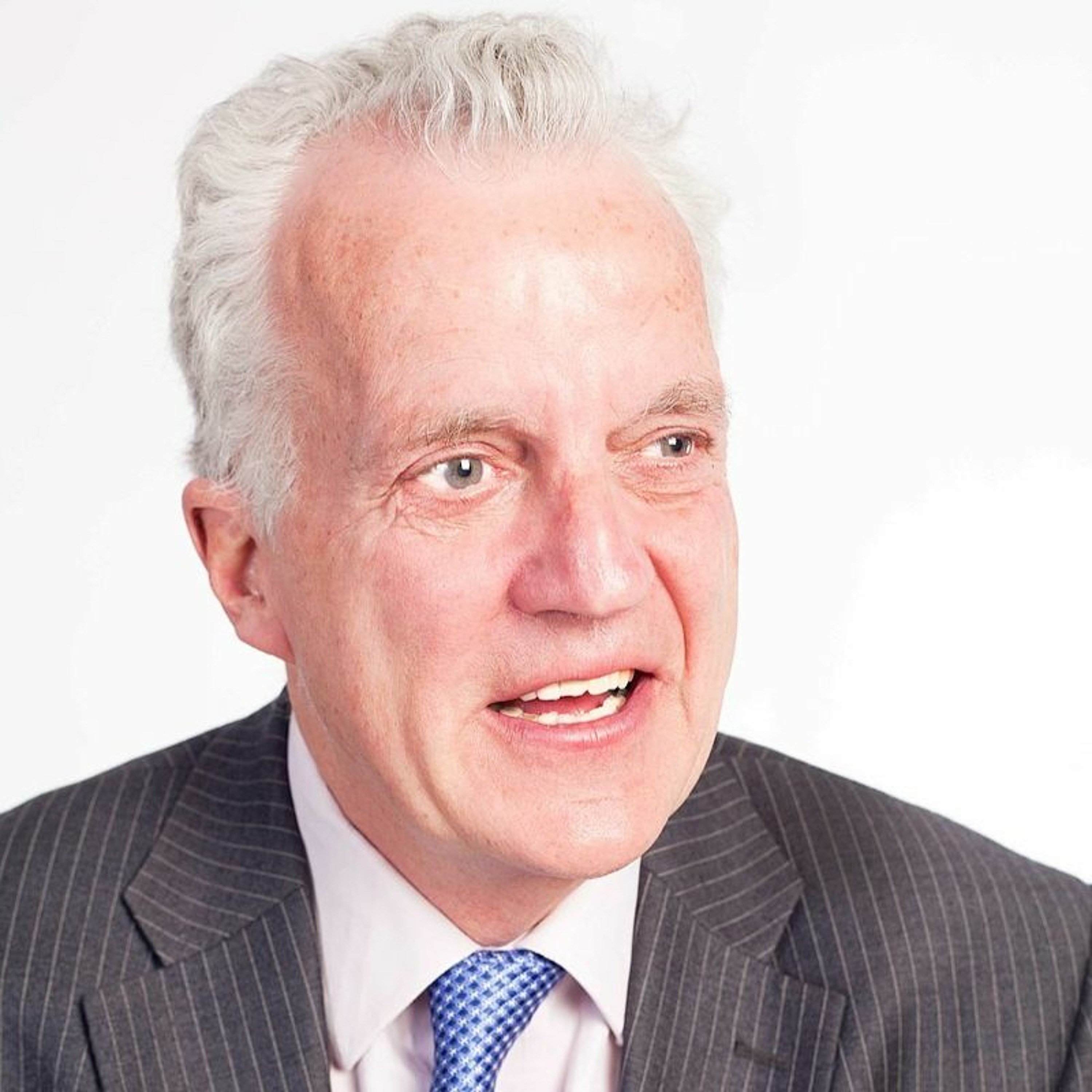
In this episode Prof Graham Currie talks to Christian Wolmar, a prolific author and journalist specialising in transport and railway history. Christian studied economics at Warwick University, but after graduating in 1971 began a career as a journalist. In 1992 he became the transport correspondent at The Independent newspaper. He has since written over 20 books and is a regular contributor to The Times, The Guardian and many other publications. At the start of this episode Graham and Christian briefly discuss the importance of the railways: in wartime; in providing support for city development and growth; and in binding nations together. They talk about how the transcontinental railway had a role in uniting the states of America, and how the trans-Siberian railway linked east and west. Christian’s book “Are Trams Socialist?” is also discussed in the episode, and Christian relates how the book is about public transit and roads being seen as competitors rather than components of the same transport system. Using higher capacity modes, trams and trains rather than cars, to move people around in dense urban environments is an obvious solution. However, as Christian highlights, the reality is that most cities have done away with their (historical) tram networks, and now face challenges related to traffic congestion. Later in the episode, Graham and Christian discuss his book “Driverless Car: A road to nowhere”. Christian talks about: how the technical issues of autonomous vehicles are enormous; why the shared-use model appears to be flawed; and how semi-autonomous vehicles raise safety concerns. He also outlines “the Holborn problem”. This relates to how autonomous vehicles might never be able to get through busy areas (like that around Holborn station in London, UK) because, along the lines of Asimov’s three laws of robotics, driverless cars will always have to stop for pedestrians. Hence, anyone might be able to stop any car at any time, simply by stepping into the street. Graham notes that Christian’s journalism and writing is informed by research, but may often be closer to asking the real questions than texts coming from academia, which might tend to have a narrower focus. Along similar lines, Christian discusses his current book project about the importance of railways for the WW2 D-Day landings, and how this topic is often overlooked by historians. The book will also discuss how the British and USA railway networks were vital for the movement of troops and supplies, and as a component of the wartime logistics systems. Find out more about Christian and his work at: https://www.christianwolmar.co.uk https://www.scopus.com/authid/detail.uri?authorId=8957703600 https://markwalkerg.podbean.com/ Have feedback? Find us on twitter and Instagram @transitpodcast or using #researchingtransit Music from this episode is from https://www.purple-planet.com
What this episode covers
In this episode Prof Graham Currie talks to Christian Wolmar, a prolific author and journalist specialising in transport and railway history. Christian studied economics at Warwick University, but after graduating in 1971 began a career as a journalist. In 1992 he became the transport correspondent at The Independent newspaper. He has since written over 20 books and is a regular contributor to The Times, The Guardian and many other publications. At the start of this episode Graham and Christian briefly discuss the importance of the railways: in wartime; in providing support for city development and growth; and in binding nations together. They talk about how the transcontinental railway had a role in uniting the states of America, and how the trans-Siberian railway linked east and west. Christian’s book “Are Trams Socialist?” is also discussed in the episode, and Christian relates how the book is about public transit and roads being seen as competitors rather than components of the same transport system. Using higher capacity modes, trams and trains rather than cars, to move people around in dense urban environments is an obvious solution. However, as Christian highlights, the reality is that most cities have done away with their (historical) tram networks, and now face challenges related to traffic congestion. Later in the episode, Graham and Christian discuss his book “Driverless Car: A road to nowhere”. Christian talks about: how the technical issues of autonomous vehicles are enormous; why the shared-use model appears to be flawed; and how semi-autonomous vehicles raise safety concerns. He also outlines “the Holborn problem”. This relates to how autonomous vehicles might never be able to get through busy areas (like that around Holborn station in London, UK) because, along the lines of Asimov’s three laws of robotics, driverless cars will always have to stop for pedestrians. Hence, anyone might be able to stop any car at any time, simply by stepping into the street. Graham notes that Christian’s journalism and writing is informed by research, but may often be closer to asking the real questions than texts coming from academia, which might tend to have a narrower focus. Along similar lines, Christian discusses his current book project about the importance of railways for the WW2 D-Day landings, and how this topic is often overlooked by historians. The book will also discuss how the British and USA railway networks were vital for the movement of troops and supplies, and as a component of the wartime logistics systems. Find out more about Christian and his work at: https://www.christianwolmar.co.uk https://www.scopus.com/authid/detail.uri?authorId=8957703600 https://markwalkerg.podbean.com/ Have feedback? Find us on twitter and Instagram @transitpodcast or using #researchingtransit Music from this episode is from https://www.purple-planet.com
NOW PLAYING
RT39 - Christian Wolmar - Researching Rail Transport History
No transcript for this episode yet
Similar Episodes
May 11, 2026 ·47m
May 11, 2026 ·20m
May 10, 2026 ·15m