PodParley PodParley

RT5 - Professor Graham Currie - Long term impacts of COVID-19 on travel demand

The impacts of COVID-19 are felt by individuals, …

An episode of the Researching Transit podcast, hosted by Public Transport Research Group, titled "RT5 - Professor Graham Currie - Long term impacts of COVID-19 on travel demand" was published on May 24, 2020 and runs 41 minutes.

May 24, 2020 ·41m · Researching Transit

0:00 / 0:00

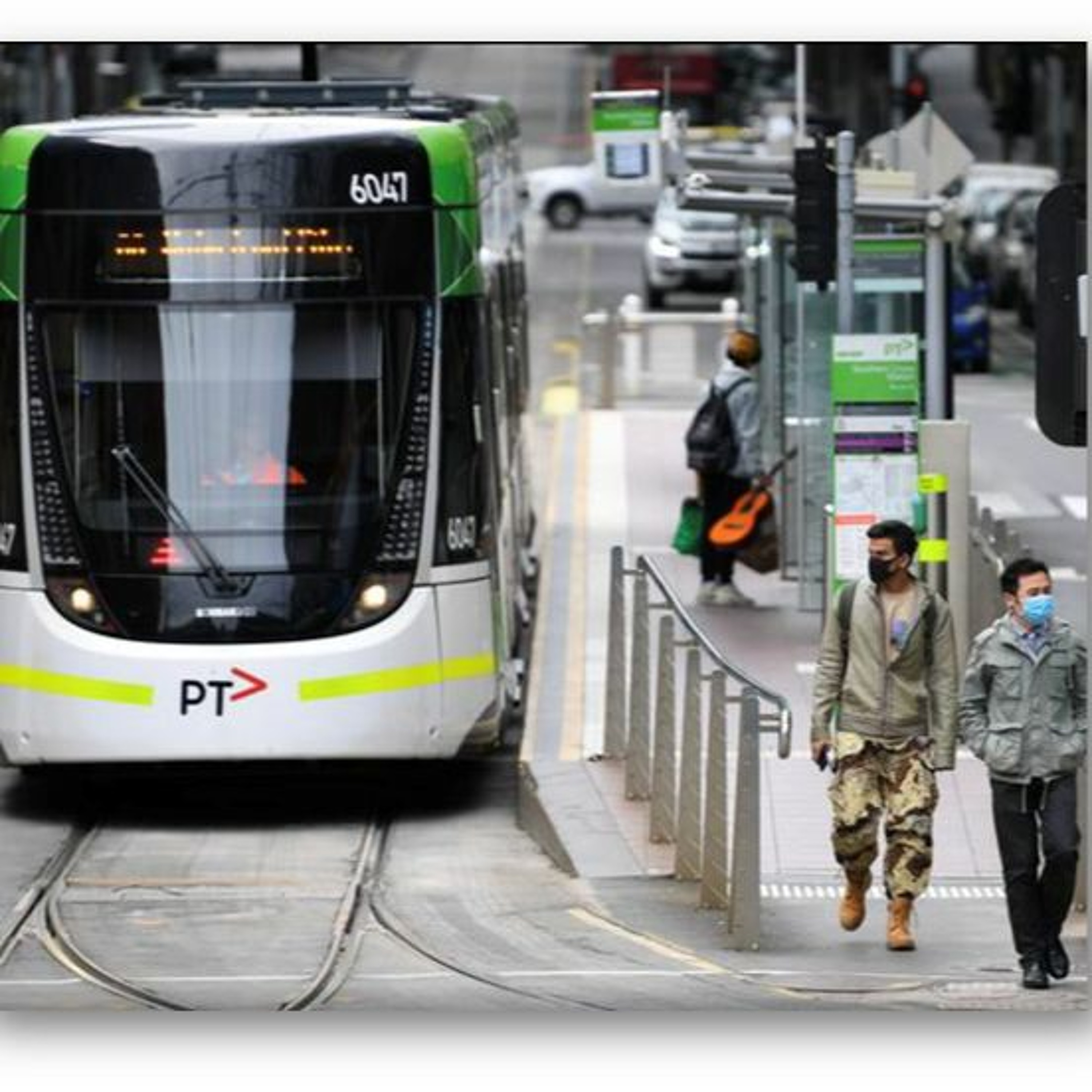
The impacts of COVID-19 are felt by individuals, while also disrupting the macro processes by which society functions. The effects of restricted movements, fear of virus transmission, and reduced economic activity on travel and activity are significant. In this episode of Researching Transit, Professor Graham Currie delivers early findings of research exploring the long-term impacts of COVID-19 on travel demand. Professor Currie’s project seeks to evaluate the likely effects of COVID-19 on long term travel demand, with implications for spending on big infrastructure projects in cities. The shutdown period has seen a reduction in personal travel, leading to a marked reduction in automobile and public transport use as individuals switch to active modes and work from home instead of travelling to work. For a city like Melbourne, with an infrastructure pipeline of $57 billion, this raises questions about the relevance of such large investments in projects including a suburban rail loop and major road expansions. Despite the marked reduction in travel and shifts to alternate modes, early findings suggest that individuals will return to their preferred travel routines once the threat of the virus is gone. “The number one answer from everybody is that they will go back to the activities that they had done before… Fundamentally the land use we have, the activities we have, the employment we have and the transport system we have are all there influencing their travel patterns” The desired “return to normal” poses bigger problems for public transport, which cannot safely accommodate the normal peak capacity while the risk of virus remains. Professor Currie suggests this will encourage us to be flexible: to draw on the full range of travel demand management tools to find ways to facilitate the movement of people that were previously using public transport. With no space available for extra road capacity, this will challenge planners and policy makers to go beyond the conventional approach which has been to predict and provide. In its next phase the project will seek to understand how the population is affected differently by COVID-19, and what the behavioural responses have been. More information about the project is available at the links below. Project scope: https://lens.monash.edu/2020/05/19/1380466/will-covid-19-affect-victorias-57-billion-transport-spend Webinars: - Planning for uncertainty in public transport, Veitch Lister Consulting, https://veitchlister.com.au/webinar-planning-for-uncertainty-in-public-transport/, 13 May 2020 - Reimagining mobility in Melbourne after COVID-19, Committee for Melbourne, [insert link] 19 May 2020. Other research mentioned in this episode: Modelling public transport capacities to support safe social distancing: WSP 2020, COVID-19 & Public transport: From response to recovery, https://www.wsp.com/en-AU/insights/covid-19-and-public-transport-from-response-to-recovery Beck, M.J. and Hensher, D.A.2020, Insights into the Impact of Covid-19 on Household Travel, Working, Activities and Shopping in Australia – the early days under Restrictions, Working Paper, https://ses.library.usyd.edu.au/handle/2123/22247 Marsden, G, Anable, J, Chatterton, T, Docherty, I, Faulconbridge, J, Murray, L, Roby, H & Shires, J 2020, 'Studying disruptive events: Innovations in behaviour, opportunities for lower carbon transport policy?', Transport Policy , https://doi.org/10.1016/j.tranpol.2020.04.008 Music from this episode is from https://www.purple-planet.com

The impacts of COVID-19 are felt by individuals, while also disrupting the macro processes by which society functions. The effects of restricted movements, fear of virus transmission, and reduced economic activity on travel and activity are significant. In this episode of Researching Transit, Professor Graham Currie delivers early findings of research exploring the long-term impacts of COVID-19 on travel demand. Professor Currie’s project seeks to evaluate the likely effects of COVID-19 on long term travel demand, with implications for spending on big infrastructure projects in cities. The shutdown period has seen a reduction in personal travel, leading to a marked reduction in automobile and public transport use as individuals switch to active modes and work from home instead of travelling to work. For a city like Melbourne, with an infrastructure pipeline of $57 billion, this raises questions about the relevance of such large investments in projects including a suburban rail loop and major road expansions. Despite the marked reduction in travel and shifts to alternate modes, early findings suggest that individuals will return to their preferred travel routines once the threat of the virus is gone. “The number one answer from everybody is that they will go back to the activities that they had done before… Fundamentally the land use we have, the activities we have, the employment we have and the transport system we have are all there influencing their travel patterns” The desired “return to normal” poses bigger problems for public transport, which cannot safely accommodate the normal peak capacity while the risk of virus remains. Professor Currie suggests this will encourage us to be flexible: to draw on the full range of travel demand management tools to find ways to facilitate the movement of people that were previously using public transport. With no space available for extra road capacity, this will challenge planners and policy makers to go beyond the conventional approach which has been to predict and provide. In its next phase the project will seek to understand how the population is affected differently by COVID-19, and what the behavioural responses have been. More information about the project is available at the links below. Project scope: https://lens.monash.edu/2020/05/19/1380466/will-covid-19-affect-victorias-57-billion-transport-spend Webinars: - Planning for uncertainty in public transport, Veitch Lister Consulting, https://veitchlister.com.au/webinar-planning-for-uncertainty-in-public-transport/, 13 May 2020 - Reimagining mobility in Melbourne after COVID-19, Committee for Melbourne, [insert link] 19 May 2020. Other research mentioned in this episode: Modelling public transport capacities to support safe social distancing: WSP 2020, COVID-19 & Public transport: From response to recovery, https://www.wsp.com/en-AU/insights/covid-19-and-public-transport-from-response-to-recovery Beck, M.J. and Hensher, D.A.2020, Insights into the Impact of Covid-19 on Household Travel, Working, Activities and Shopping in Australia – the early days under Restrictions, Working Paper, https://ses.library.usyd.edu.au/handle/2123/22247 Marsden, G, Anable, J, Chatterton, T, Docherty, I, Faulconbridge, J, Murray, L, Roby, H & Shires, J 2020, 'Studying disruptive events: Innovations in behaviour, opportunities for lower carbon transport policy?', Transport Policy , https://doi.org/10.1016/j.tranpol.2020.04.008 Music from this episode is from https://www.purple-planet.com
Shawn Blackwood - Becoming A Business Owner Shawn Blackwood This podcast is about finding and creating a business. It is for people who are looking to become first time business owners and or looking to transition from the corporate world to becoming a business owner. Here we share tips for researching and building solid infrastructure to create and scale your business. Interchange Recharged Wood Mackenzie Clean tech, green finance and energy innovation are the three lanes on the road to a successful global energy transition. At the intersection of these lanes is a place where ideas on finance, technology and policy are shared and debated. That intersection is Interchange Recharged.While Sylvia Leyva Martinez, principal analyst at Wood Mackenzie, is on maternity leave, Bridget van Dorsten, a principal analyst on Wood Mackenzie's hydrogen team, will be hosting this podcast, Interchange Recharged. When Bridget is not researching global market dynamics to craft near and long-term forecasts for low-carbon hydrogen and its derivatives she is speaking with visionaries, entrepreneurs, policy-makers and energy analysts to explore the newest developments in renewable technology, explain the ideas on global energy policy that could accelerate the energy transition, and identify new funding and financial models that could solve the biggest challenges we face on the way t Autism Resource Podcast autismresourcepodcast Gilda Evans has spent over 20 years researching and seeking answers for how to get her son with special needs the things he requires for his education, health, and life in general. She became her son’s self-taught advocate and is the creator of the Autism Resource Podcast. Designed for the special needs community and those who support it, the podcast deals with a myriad of topics; from education, to government benefits to housing and almost everything in-between. One of the biggest problems this community faces as a group is not only a lack of certain resources, but also the lack of a singular place to go to discover how to access and use the resources that are out there. Her podcast offers one solution to that dilemma, by providing a one-stop knowledge base for autism and much more. Herbivorize Predators Herbivorize Predators Herbivorize Predators is an organization dedicated to (1) researching how to herbivorize and (2) promoting dialogue about all aspects of this proposal.
URL copied to clipboard!