PodParley PodParley

RT6 - Konstanze Winter - Flexible future mobility and shared automation

Picture this: a future in which shared autonomous…

An episode of the Researching Transit podcast, hosted by Public Transport Research Group, titled "RT6 - Konstanze Winter - Flexible future mobility and shared automation" was published on June 7, 2020 and runs 41 minutes.

June 7, 2020 ·41m · Researching Transit

0:00 / 0:00

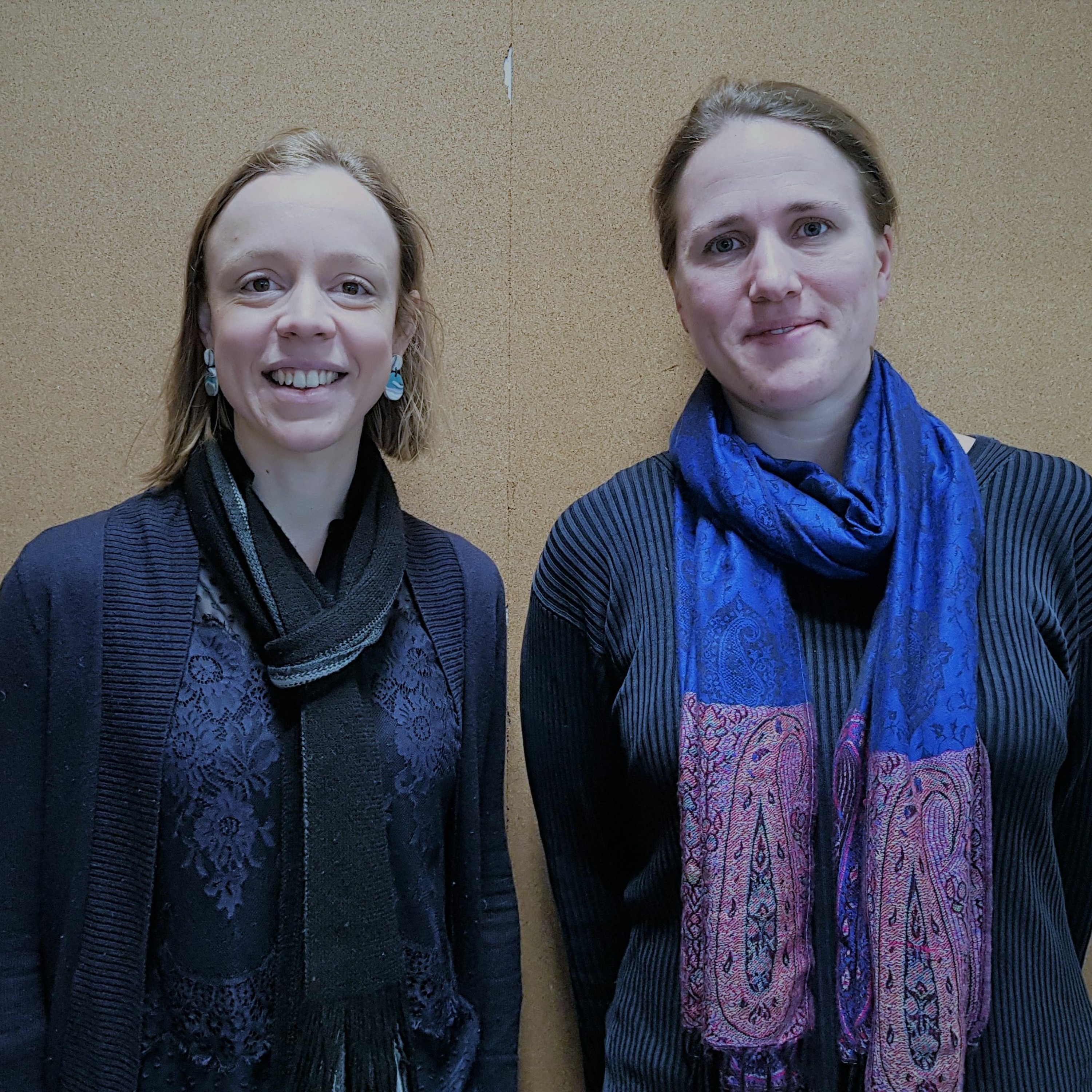
Picture this: a future in which shared autonomous vehicles are run by public agencies, providing equitable transport to address a multitude of travel needs in a city decoupled from car ownership. In this episode of Researching Transit, Konstanze Winter ponders this scenario and the big what-ifs it poses. Konstanze guides us through many of the pointy unknowns of automation - such as how to avoid the transformation of shared public space into parking lots for empty vehicles. “We can learn from other systems, but there’s the difference that automated vehicles can replace themselves” She sets the scene by discussing the multitude of possible technological, individual choices and policy scenarios at play. These complex interactions are being tackled by cities and researchers, trying to guide automation down a path of equity and accessibility. However, with so many questions and no lived experience of automation, how can we really anticipate the outcomes of new technology? “We cannot rely on a single study. We have to combine all studies to get a holistic picture across borders, across scenarios and across specifications.” Konstanze’s research assumes we are more likely to see shared automated vehicles than privately owned ones in our lifetime. Centrally deployed services overcome many of the barriers to automated vehicle adoption, including (1) high investment costs (2) efficient redeployment across multiple users and (3) a market segment of typical tech-savvy early adopters, who are not interested in owning a vehicle. Listen in to hear more about the potential for shared automated vehicles to provide more flexibility in our future transport network. Read Konstanze and her colleagues' published research on shared automation: Winter, K, Cats, O, Martens, K & van Arem, B 2020, 'Relocating shared automated vehicles under parking constraints: assessing the impact of different strategies for on-street parking', Transportation, https://link.springer.com/article/10.1007/s11116-020-10116-w. Winter, K, Cats, O, Martens, K & van Arem, B 'Identifying user classes for shared and automated mobility services', European Transport Research Review, vol. 12, no. 36, https://doi.org/10.1186/s12544-020-00420-y. More on the levels of driving automation (Konstanze’s research focuses on level 4 and 5): https://blog.ansi.org/2018/09/sae-levels-driving-automation-j-3016-2018/#gref More on urban parking policies and why they work: D.Shoup (2018): “Parking and the City”. New York, NY: Routledge More on why parking self-driving vehicles can be game-changer: E. Guerra & E.A. Morris (2018): Cities, Automation, and the Self-parking Elephant in the Room. Planning Theory & Practice, 19:2, 291-297 Konstanze Winter recently complete her PhD at TU Delft’s Smart Public Transport Lab. Her work is bundled in her thesis: M.K.E. Winter (2020): “Providing Public Transport by Self-Driving Vehicles – User Preferences, Fleet Operation, and Parking Management” (Doctoral dissertation). Delft University of Technology, Delft, the Netherlands. She can be contacted at linkedin.com/in/konstanzewinter. Music from this episode is from https://www.purple-planet.com

Picture this: a future in which shared autonomous vehicles are run by public agencies, providing equitable transport to address a multitude of travel needs in a city decoupled from car ownership. In this episode of Researching Transit, Konstanze Winter ponders this scenario and the big what-ifs it poses. Konstanze guides us through many of the pointy unknowns of automation - such as how to avoid the transformation of shared public space into parking lots for empty vehicles. “We can learn from other systems, but there’s the difference that automated vehicles can replace themselves” She sets the scene by discussing the multitude of possible technological, individual choices and policy scenarios at play. These complex interactions are being tackled by cities and researchers, trying to guide automation down a path of equity and accessibility. However, with so many questions and no lived experience of automation, how can we really anticipate the outcomes of new technology? “We cannot rely on a single study. We have to combine all studies to get a holistic picture across borders, across scenarios and across specifications.” Konstanze’s research assumes we are more likely to see shared automated vehicles than privately owned ones in our lifetime. Centrally deployed services overcome many of the barriers to automated vehicle adoption, including (1) high investment costs (2) efficient redeployment across multiple users and (3) a market segment of typical tech-savvy early adopters, who are not interested in owning a vehicle. Listen in to hear more about the potential for shared automated vehicles to provide more flexibility in our future transport network. Read Konstanze and her colleagues' published research on shared automation: Winter, K, Cats, O, Martens, K & van Arem, B 2020, 'Relocating shared automated vehicles under parking constraints: assessing the impact of different strategies for on-street parking', Transportation, https://link.springer.com/article/10.1007/s11116-020-10116-w. Winter, K, Cats, O, Martens, K & van Arem, B 'Identifying user classes for shared and automated mobility services', European Transport Research Review, vol. 12, no. 36, https://doi.org/10.1186/s12544-020-00420-y. More on the levels of driving automation (Konstanze’s research focuses on level 4 and 5): https://blog.ansi.org/2018/09/sae-levels-driving-automation-j-3016-2018/#gref More on urban parking policies and why they work: D.Shoup (2018): “Parking and the City”. New York, NY: Routledge More on why parking self-driving vehicles can be game-changer: E. Guerra & E.A. Morris (2018): Cities, Automation, and the Self-parking Elephant in the Room. Planning Theory & Practice, 19:2, 291-297 Konstanze Winter recently complete her PhD at TU Delft’s Smart Public Transport Lab. Her work is bundled in her thesis: M.K.E. Winter (2020): “Providing Public Transport by Self-Driving Vehicles – User Preferences, Fleet Operation, and Parking Management” (Doctoral dissertation). Delft University of Technology, Delft, the Netherlands. She can be contacted at linkedin.com/in/konstanzewinter. Music from this episode is from https://www.purple-planet.com
Shawn Blackwood - Becoming A Business Owner Shawn Blackwood This podcast is about finding and creating a business. It is for people who are looking to become first time business owners and or looking to transition from the corporate world to becoming a business owner. Here we share tips for researching and building solid infrastructure to create and scale your business. Interchange Recharged Wood Mackenzie Clean tech, green finance and energy innovation are the three lanes on the road to a successful global energy transition. At the intersection of these lanes is a place where ideas on finance, technology and policy are shared and debated. That intersection is Interchange Recharged.While Sylvia Leyva Martinez, principal analyst at Wood Mackenzie, is on maternity leave, Bridget van Dorsten, a principal analyst on Wood Mackenzie's hydrogen team, will be hosting this podcast, Interchange Recharged. When Bridget is not researching global market dynamics to craft near and long-term forecasts for low-carbon hydrogen and its derivatives she is speaking with visionaries, entrepreneurs, policy-makers and energy analysts to explore the newest developments in renewable technology, explain the ideas on global energy policy that could accelerate the energy transition, and identify new funding and financial models that could solve the biggest challenges we face on the way t Autism Resource Podcast autismresourcepodcast Gilda Evans has spent over 20 years researching and seeking answers for how to get her son with special needs the things he requires for his education, health, and life in general. She became her son’s self-taught advocate and is the creator of the Autism Resource Podcast. Designed for the special needs community and those who support it, the podcast deals with a myriad of topics; from education, to government benefits to housing and almost everything in-between. One of the biggest problems this community faces as a group is not only a lack of certain resources, but also the lack of a singular place to go to discover how to access and use the resources that are out there. Her podcast offers one solution to that dilemma, by providing a one-stop knowledge base for autism and much more. Herbivorize Predators Herbivorize Predators Herbivorize Predators is an organization dedicated to (1) researching how to herbivorize and (2) promoting dialogue about all aspects of this proposal.
URL copied to clipboard!