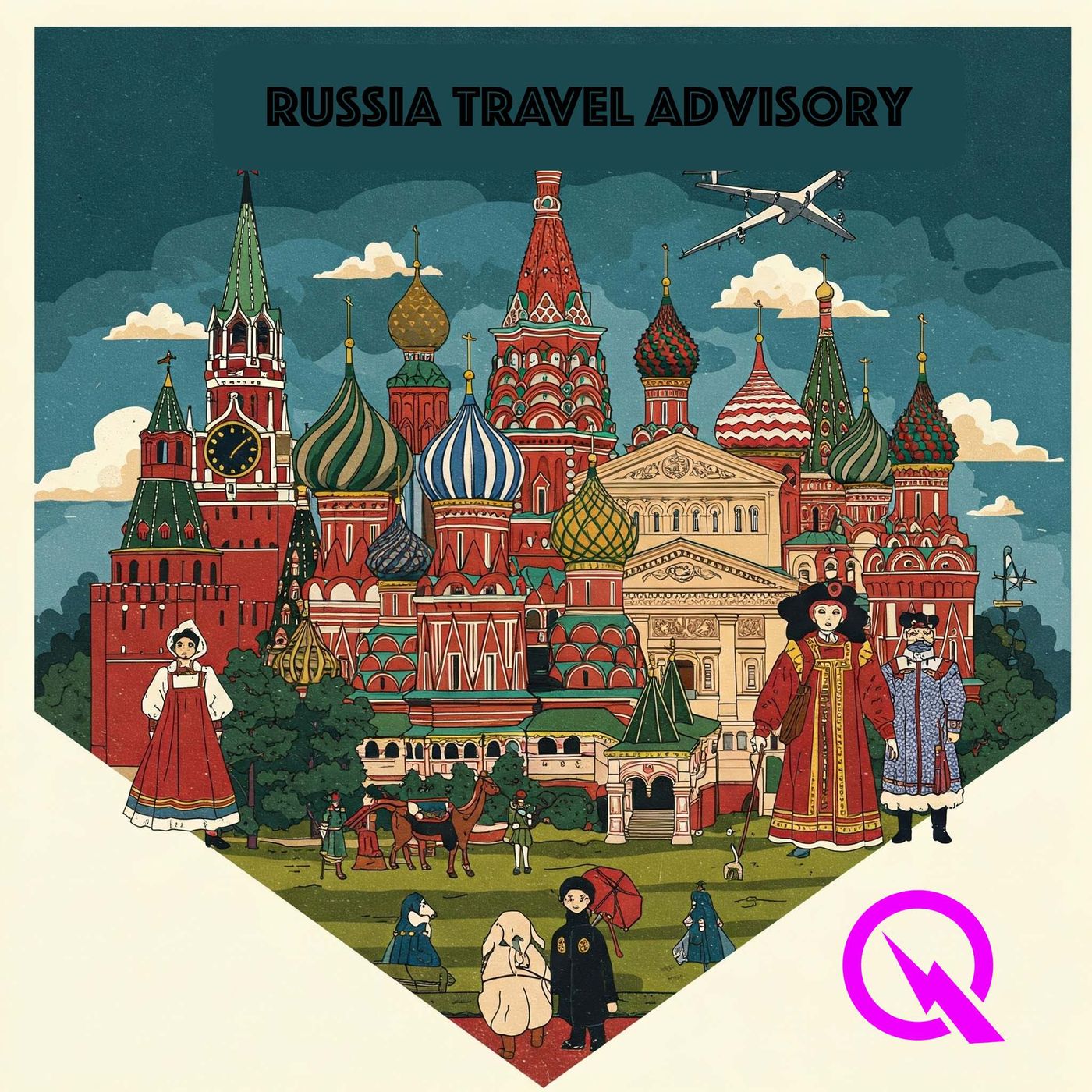
Russia Travel Advisory Level 4 Do Not Travel Warning Safety Risks Consular Limitations episode artwork

EPISODE · Jun 20, 2026 · 7 MIN

Russia Travel Advisory Level 4 Do Not Travel Warning Safety Risks Consular Limitations

from Russia Travel Advisory · host Inception Point AI

Russia is currently one of the highest‑risk destinations in the world for international travel, and multiple governments are explicitly warning against going there except in the most essential circumstances, if at all. According to the U.S. Department of State’s travel advisory system, Russia is designated Level 4: Do Not Travel, the most severe warning, in the same category as active war zones such as Ukraine, Syria, and parts of Sudan. CBS News reports that Russia is among just 21 nations worldwide with this “Do Not Travel” warning, largely due to the ongoing war in Ukraine, the risk of wrongful detention, terrorism, and significant limitations on consular assistance for foreigners. Stanford University’s Global Risk office goes further for its community and states that travel to Russia is prohibited for all of its students, staff, and faculty, reflecting how serious large institutions consider the security and political risks. Since Russia’s full‑scale invasion of Ukraine, governments in the United States, Canada, the United Kingdom, the European Union, Australia, and others have issued strong advisories highlighting a mix of dangers: arbitrary enforcement of local laws, harassment or detention of foreigners, limitations on dual nationals leaving the country, and the possibility of being compelled into military service if a traveler has or is suspected of having Russian citizenship. Western officials have repeatedly warned that Russian authorities have detained foreign nationals on politically motivated or vague charges such as espionage or spreading “false information” about the Russian military, and these cases often result in long periods of detention with limited diplomatic access. For listeners, one of the most important points is that if something goes wrong in Russia, your home government’s ability to help you is far more constrained than in most countries. Many Western embassies have significantly reduced staff in Moscow and have closed consulates in cities like St. Petersburg, Yekaterinburg, and Vladivostok. Sanctions, reciprocal diplomatic expulsions, and strained relations mean consular officers may not be able to reach detained citizens quickly or at all. Access to basic services like international banking, payment cards issued by Western banks, and some foreign airlines is heavily restricted, which complicates both day‑to‑day life and emergency evacuation. On the security front, while Russia is not experiencing the kind of large‑scale internal war seen in some other Level 4 countries, it is directly involved in high‑intensity conflict with Ukraine. There have been repeated reports in international media of drone attacks and other incidents in Moscow and border regions, disruptions to airspace, and heightened military and security presence in major cities. The ongoing conflict also drives unpredictable policy changes: sudden mobilization decrees, new exit restrictions for certain age groups, or changes to visa rules can be announced with little warning, potentially trapping travelers inside the country longer than planned. There are also cyber and surveillance concerns. Western security agencies and academic risk offices note that travelers to Russia should assume that their electronic devices could be subject to monitoring, inspection, or seizure at the border or inside the country. Social media posts, private messages, or comments critical of Russian authorities or the war have, in some cases, been used as grounds for fines, deportation, or criminal charges under Russia’s strict laws on “discrediting” the armed forces and extremism. Listeners who are journalists, activists, researchers, or anyone with a public profile should understand that they may be singled out for heightened scrutiny. From the perspective of universities and corporations that manage global risk, Russia is often treated alongside places with armed conflict or widespread political instability. Stanford International Affairs, for example, places Russia in its highest‑risk category and outright bans institutionally supported travel there, grouping it with locales where kidnap, wrongful detention, and serious legal exposure are major concerns. This kind of institutional stance should signal to ordinary travelers that going for tourism, casual business, or study is considered far outside what is normally acceptable risk. If a listener is still considering travel to Russia despite these warnings, it is crucial to approach the decision as a serious risk‑management exercise rather than a conventional trip. The U.S. government’s Smart Traveler Enrollment Program, available through USAGov, is strongly recommended so that embassies can at least attempt to contact travelers in an emergency and push out security alerts. The State Department and its STEP guidance also emphasize making sure you have robust travel and medical evacuation insurance, understanding that some insurers exclude coverage in sanctioned or Level 4 countries. Travelers are advised to carefully review their own government’s latest Russia‑specific advisory immediately before departure and again while inside the country, because the situation and the legal environment can change rapidly. Listeners should also think about the practical consequences of sanctions. Many Western flights no longer operate to and from Russia, meaning that reaching the country often requires transiting through third states such as Turkey, the Gulf, or Central Asia. Banking sanctions can make it impossible to use foreign credit and debit cards inside Russia, forcing travelers to rely on cash or local systems. Export controls and local restrictions also affect medical supplies, technology, and other goods, which can make it much harder to replace essential items or get specialized medical care if something goes wrong. On top of these tangible issues, there is a broader climate of nationalism, militarization, and information control. Foreigners may encounter suspicion, especially if they speak openly about politics, the war, or Western media narratives. Participation in demonstrations, photography near sensitive infrastructure, or even being present near political events can carry far higher stakes than in most tourist destinations. Western governments consistently tell their citizens to avoid all demonstrations and large gatherings in high‑risk countries because peaceful protests can be quickly reclassified as unlawful and broken up with force. In summary, anyone thinking about traveling to Russia needs to understand that this is no longer a routine destination. Major news organizations like CBS News and official bodies like the U.S. State Department and Stanford’s Global Risk office all treat Russia as a place where life‑threatening and legal risks are substantially higher than normal, where consular help is uncertain, and where political dynamics tied to the war in Ukraine can change the rules overnight. For most listeners, especially those considering tourism or non‑essential travel, the strongest and most up‑to‑date guidance from governments and institutions is to not go.

Russia is currently one of the highest‑risk destinations in the world for international travel, and multiple governments are explicitly warning against going there except in the most essential circumstances, if at all. According to the U.S. Department of State’s travel advisory system, Russia is designated Level 4: Do Not Travel, the most severe warning, in the same category as active war zones such as Ukraine, Syria, and parts of Sudan. CBS News reports that Russia is among just 21 nations worldwide with this “Do Not Travel” warning, largely due to the ongoing war in Ukraine, the risk of wrongful detention, terrorism, and significant limitations on consular assistance for foreigners. Stanford University’s Global Risk office goes further for its community and states that travel to Russia is prohibited for all of its students, staff, and faculty, reflecting how serious large institutions consider the security and political risks. Since Russia’s full‑scale invasion of Ukraine, governments in the United States, Canada, the United Kingdom, the European Union, Australia, and others have issued strong advisories highlighting a mix of dangers: arbitrary enforcement of local laws, harassment or detention of foreigners, limitations on dual nationals leaving the country, and the possibility of being compelled into military service if a traveler has or is suspected of having Russian citizenship. Western officials have repeatedly warned that Russian authorities have detained foreign nationals on politically motivated or vague charges such as espionage or spreading “false information” about the Russian military, and these cases often result in long periods of detention with limited diplomatic access. For listeners, one of the most important points is that if something goes wrong in Russia, your home government’s ability to help you is far more constrained than in most countries. Many Western embassies have significantly reduced staff in Moscow and have closed consulates in cities like St. Petersburg, Yekaterinburg, and Vladivostok. Sanctions, reciprocal diplomatic expulsions, and strained relations mean consular officers may not be able to reach detained citizens quickly or at all. Access to basic services like international banking, payment cards issued by Western banks, and some foreign airlines is heavily restricted, which complicates both day‑to‑day life and emergency evacuation. On the security front, while Russia is not experiencing the kind of large‑scale internal war seen in some other Level 4 countries, it is directly involved in high‑intensity conflict with Ukraine. There have been repeated reports in international media of drone attacks and other incidents in Moscow and border regions, disruptions to airspace, and heightened military and security presence in major cities. The ongoing conflict also drives unpredictable policy changes: sudden mobilization decrees, new exit restrictions for certain age groups, or changes to visa rules can be announced with little warning, potentially trapping travelers inside the country longer than planned. There are also cyber and surveillance concerns. Western security agencies and academic risk offices note that travelers to Russia should assume that their electronic devices could be subject to monitoring, inspection, or seizure at the border or inside the country. Social media posts, private messages, or comments critical of Russian authorities or the war have, in some cases, been used as grounds for fines, deportation, or criminal charges under Russia’s strict laws on “discrediting” the armed forces and extremism. Listeners who are journalists, activists, researchers, or anyone with a public profile should understand that they may be singled out for heightened scrutiny. From the perspective of universities and corporations that manage global risk, Russia is often treated alongside places with armed conflict or widespread political instability. Stanford International Affairs, for example, places Russia in its highest‑risk category and outright bans institutionally supported travel there, grouping it with locales where kidnap, wrongful detention, and serious legal exposure are major concerns. This kind of institutional stance should signal to ordinary travelers that going for tourism, casual business, or study is considered far outside what is normally acceptable risk. If a listener is still considering travel to Russia despite these warnings, it is crucial to approach the decision as a serious risk‑management exercise rather than a conventional trip. The U.S. government’s Smart Traveler Enrollment Program, available through USAGov, is strongly recommended so that embassies can at least attempt to contact travelers in an emergency and push out security alerts. The State Department and its STEP guidance also emphasize making sure you have robust travel and medical evacuation insurance, understanding that some insurers exclude coverage in sanctioned or Level 4 countries. Travelers are advised to carefully review their own government’s latest Russia‑specific advisory immediately before departure and again while inside the country, because the situation and the legal environment can change rapidly. Listeners should also think about the practical consequences of sanctions. Many Western flights no longer operate to and from Russia, meaning that reaching the country often requires transiting through third states such as Turkey, the Gulf, or Central Asia. Banking sanctions can make it impossible to use foreign credit and debit cards inside Russia, forcing travelers to rely on cash or local systems. Export controls and local restrictions also affect medical supplies, technology, and other goods, which can make it much harder to replace essential items or get specialized medical care if something goes wrong. On top of these tangible issues, there is a broader climate of nationalism, militarization, and information control. Foreigners may encounter suspicion, especially if they speak openly about politics, the war, or Western media narratives. Participation in demonstrations, photography near sensitive infrastructure, or even being present near political events can carry far higher stakes than in most tourist destinations. Western governments consistently tell their citizens to avoid all demonstrations and large gatherings in high‑risk countries because peaceful protests can be quickly reclassified as unlawful and broken up with force. In summary, anyone thinking about traveling to Russia needs to understand that this is no longer a routine destination. Major news organizations like CBS News and official bodies like the U.S. State Department and Stanford’s Global Risk office all treat Russia as a place where life‑threatening and legal risks are substantially higher than normal, where consular help is uncertain, and where political dynamics tied to the war in Ukraine can change the rules overnight. For most listeners, especially those considering tourism or non‑essential travel, the strongest and most up‑to‑date guidance from governments and institutions is to not go.

NOW PLAYING

Russia Travel Advisory Level 4 Do Not Travel Warning Safety Risks Consular Limitations

0:00 7:44

No transcript for this episode yet

We transcribe on demand. Request one and we'll notify you when it's ready — usually under 10 minutes.

Breaking News Show | eTurboNews Juergen Thomas Steinmetz News is relevant to the global travel and tourism industry, human rights and global issues.Breaking news when it happens and only from the source. Living Out Loud Podcast: Entrepreneurship | Blogging | Work-Life Balance | Travel Lifestyle Valerie Fidan: Online Entrepreneur, Social Media Expert, Blogger Living Out Loud (LOL) is a podcast about living vibrantly with health and wellness blogger, digital strategist Valerie Fidan. Each week, LOL is bringing you episodes with interesting interviews and guests in the health and wellness industry. We discuss everything from Millennial entrepreneurship, wellness hacks and topics, key industry advice while keeping it a fun, light-hearted conversation, inviting to feel like you are having out with friends. This is a breeding ground for ideas and excitement for a balanced and inspired lifestyle for living out loud! Submit your questions and topics of interest to [email protected]. And, for more fun, healthy recipes, blog posts and travel visit www.livethelittlethings.com // social media: craveablesocial.com / [email protected] Destination Cosmo Travel Podcast HD: Rick Steves Europe like Video Podcast, We Bring You to Beautiful Places in HD! Jason Diaz: Filmmaker, Traveler, Foodie, Podcast Host Destination Cosmo Travel Podcast is a Rick Steves Europe like Video Podcast. We bring you to Beautiful Places in HD! We cover Food like we're part of Food Network! Our podcast brings Serial, This American Life, Stuff You Should Know, Radio Lab like production to Travel Video Podcast! Whether you are a Pro Traveler, an Amateur Traveler, or even a Disney Podcast Radio Show Lover, we think we can show you a thing or two! So join Jason and Michelle and you may experience National Geographic Type Wanderlust! Dont forget to leave us a review! It will really help us out! Travel Nursing & Allied Life TravCon: The Travelers Conference Travel Nursing & Allied Life is a podcast about all things related to Healthcare Travel. TravCon and The Gypsy Nurse team bring you current information about the healthcare travel industry so you can stay updated and connected throughout the year. TravCon is here to help guide and connect all healthcare professionals from all specialties, navigate their travel careers, and stay current with the trends and changes.Don't forget the Travelers Conference takes place 9/22/24 -9/25/24 at the Paris Hotel in Las Vegas! Visit TravCon.org for more information!

Frequently Asked Questions

How long is this episode of Russia Travel Advisory?

This episode is 7 minutes long.

When was this Russia Travel Advisory episode published?

This episode was published on June 20, 2026.

What is this episode about?

Russia is currently one of the highest‑risk destinations in the world for international travel, and multiple governments are explicitly warning against going there except in the most essential circumstances, if at all. According to the U.S....

Can I download this Russia Travel Advisory episode?

Yes, you can download this episode by clicking the download button on the episode player, or subscribe to the podcast in your preferred podcast app for automatic downloads.
URL copied to clipboard!