
EPISODE · Dec 23, 2022 · 6 MIN
S1:Ep2 - Love, marmalade and Henry VIII
from Off-grid and Ignorant in Portugal · host Alastair Leithead
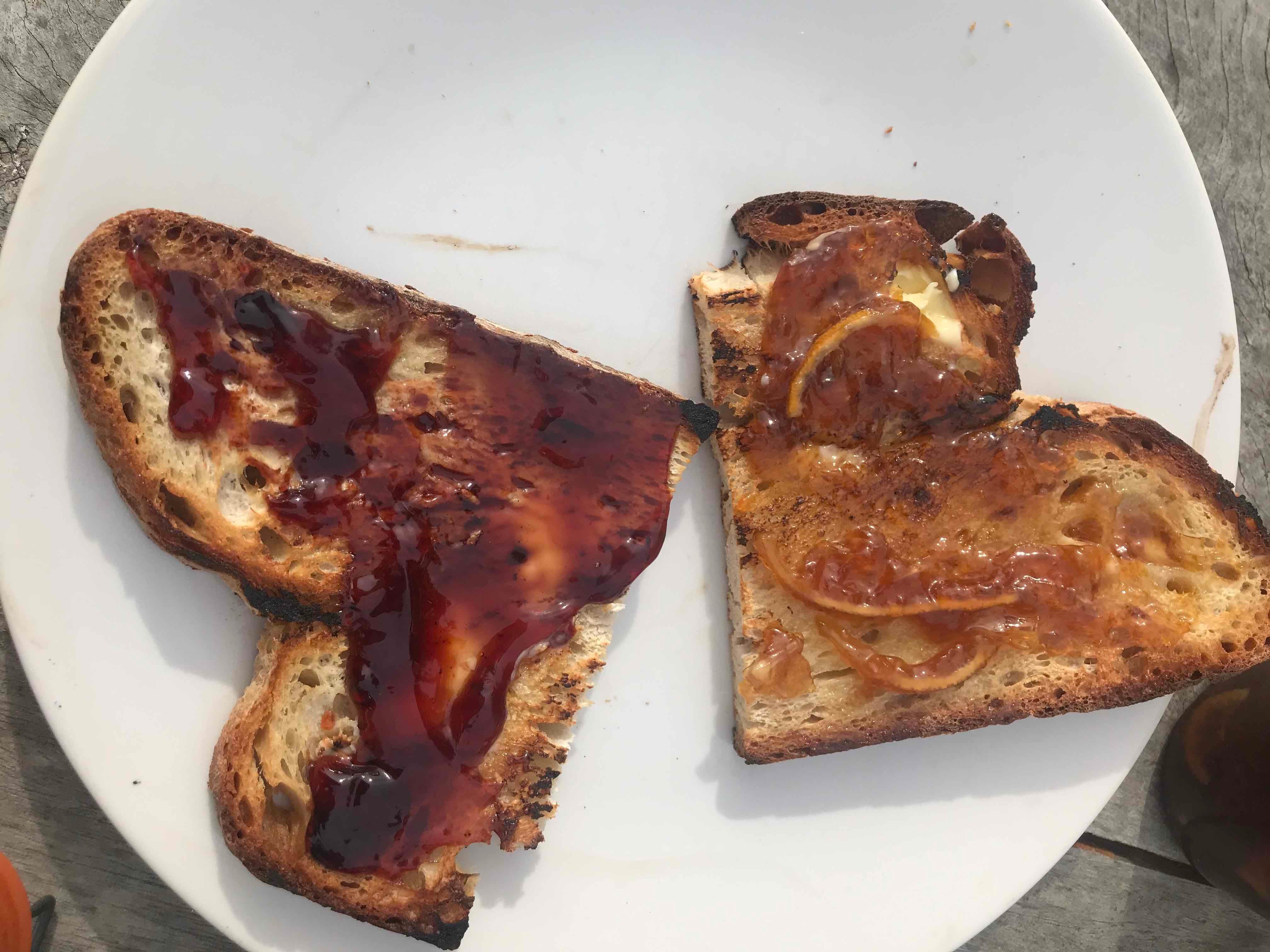
A foray into the bushes and a window into our new life of making and discovering in rural Portugal from November 2020.TRANSCRIPT…So. I could tell you about the mysterious bite – most likely from an angry centipede – which has left my entire left leg swollen and generating heat, four days after I didn’t notice I was bitten (while saving broad beans from the onslaught of the oxalis plant invasion). Or I could bang on about the cost of the new solar batteries, the generator and a gas boiler backup which we may need. Or just how much fun it is clearing a sewage pipe blocked by tree roots.But no.Today’s post is about love, marmalade and Henry VIII.Love is, Ana tells me, delving deep into a thorn bush to collect marmelos for your wife.They weren’t easy to reach – I had to fight off bramble (a local enemy known here as silvas) while balancing on a 2m high earthen ridge with questionable stability.But she really, really wanted them.Marmelos are quince: gnarled, yellow fruit, something between an apple and a pear, but a little smaller and quite furry while they are growing.And there’s something very magical – and historical – about them.I remember quince growing in the garden of the BBC house in Kabul and thinking that they were apples coated in the city’s apocryphal faecal-dust pollution.I asked Bashi about them. He was the gardener – 70 or so at the time – and I was horrified when next he was level with me at the top floor window and still climbing up the tree picking them and throwing them down.Sadly, they tasted terrible. Quince are bitter and fibrous – pretty much inedible raw.But adding a lot of love, care, patience (and sugar) is how the magic happens.Ana has developed something of an obsession with marmelos, or perhaps I should say marmeleiros – quince trees.My Portuguese needs a lot more work, but I love the efficiency (explained by Ana to my great linguistic excitement) of replacing pear tree, or lemon tree, with a tweaked ending of -eiro (m) or -eira (f): peireira, limoeiro…and marmeleiro.She has developed an eye for marmeleiros like a safari guide can spot a real lion from a lion-shaped rock at two kilometres.She sees them as we drive through the countryside and forces me to turn around and stop.I have stolen a lot of marmelos, but boy was is worth it.If you love a slice of toast and some traditional English marmalade – maybe you’re even crunching down into a bitter-sweet chunk of orange or lemon peel as you read – then this story is only going to get better.Portugal is where British marmalade originates and the Portuguese word for quince is where the name comes from.Strictly, as Atlas Obscura informs us in a fantastic article that will tell you all you need to know, the word goes back even further from “the Latin melimelum, a derivative of the Greek word for honey apple, melimelon.”The Greeks and the Romans were making preserves by boiling quince – known then as honey apples – at least as long ago as the first century BC.It contains a lot of the natural solidifying agent pectin and so was poured into moulds to set. The deep red solidified cakes of marmalade were then sliced and served up originally as a medicine.The explorers Vasco de Gama and Magellan apparently took a boatload on expeditions and the vitamin C may – by accident or design – have helped protect sailors from scurvy.That’s how Henry VIII received some as a gift in the 1500s (I bet you were wondering how he was going to appear in the story), and how Britain’s interest in marmalade began to take its own steady path towards citrus.And back to love. It’s not just the love of gathering them, it’s the love of preparing them.Rather than going the hard-set, traditional Portuguese marmalade route, Ana opted for making quince jelly…in industrial quantities…and what an amazing process.It was at this point she announced you could buy quince in the supermarket really cheaply and your legs wouldn’t be torn to shreds (through your trousers) on the way from the vegetable section to the checkout.Who would have thought?But the difference in taste was remarkable…the smaller, field-grown ones are far more tasty than the bigger and prettier store-bought ones.Yes, the kitchen was very sticky for a couple of weeks and there were angry outbursts when one batch caught slightly on the bottom, but the transformation of quince can teach us a lot.First they were diced and slowly boiled with pips and skin and all.When the yellow and white flesh is boiled up with water it starts to turn a rich, rose-pink colour.The fruit is then slowly mashed by hand until it’s the consistency of runny apple sauce.Then it takes hours – sometimes more than a day – for the liquid to seap through a tea towel or muslin cloth.The juice goes back on the boil with a load of sugar (and Ana adds a couple of our halved limes for a tang), and as the hours pass and the liquid gradually reduces, the colour steadily deepens to a rich, dark red and everything begins to clarify from cloudy to clear.Gradually it moves towards solidifying. I was wondering why there was a side plate in the freezer, but apparently a drop of jam on a cold plate wrinkling at the touch of a finger marks the moment it is done. Magic (and a top tip).After all the waiting, the love, the effort and preparation, it’s the final transformation of an ugly yellow fruit into a rich, sweet, clarified thick ruby red jam which is absolutely delicious.Hopefully the story of quince jelly’s clarification, refinement and development into something truly amazing can be a positive analogy for our lifestyle choice of living off the grid! (Maybe we’re currently at the pulping phase?)We have quite a bit of it, but you’ll have to visit to try some. The Facebook page for our farms is and on Insta is: @Vale_das_EstrelasOh, and Ana’s made lemon and lime marmalade too – yes, the traditional British kind.I’m spoiled for choice at breakfast, and I love it. This is a public episode. If you would like to discuss this with other subscribers or get access to bonus episodes, visit alastairleithead.substack.com
NOW PLAYING
S1:Ep2 - Love, marmalade and Henry VIII
No transcript for this episode yet
Similar Episodes
Mar 26, 2026 ·1m
Mar 19, 2026 ·34m
Feb 18, 2026 ·11m
Feb 11, 2026 ·45m