
EPISODE · Jun 26, 2026 · 20 MIN
S9 Ep35: The success of the embedded state
from VoxTalks Economics · host VoxTalks
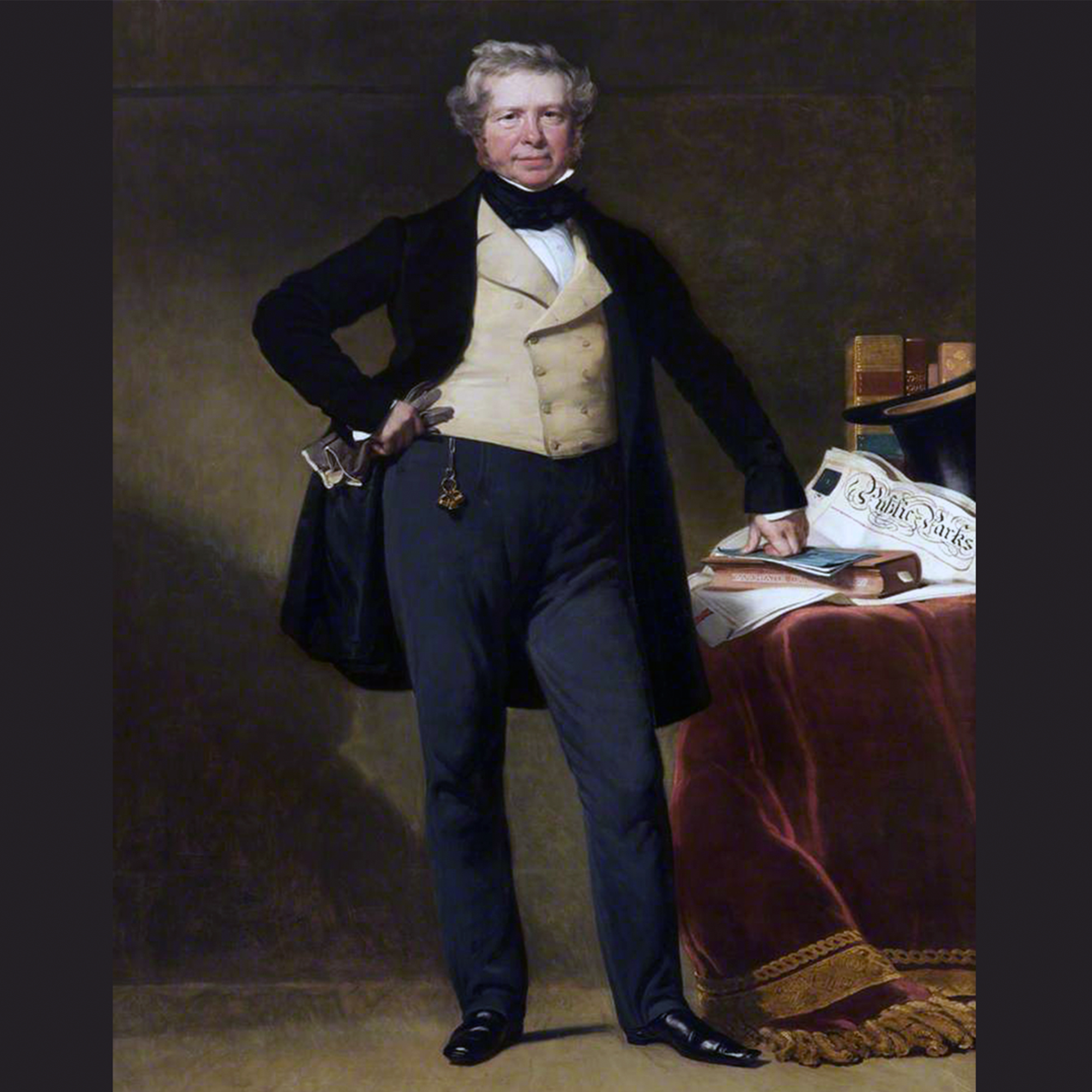
Who kept the courts sitting and the streetlights lit when the state had almost no money to pay anyone?Two hundred years ago, British local government ran on unpaid labour. In a parliamentary survey of the boroughs from 1835, two in three of the people doing local government work were not paid at all.James Robinson (University of Chicago, CEPR) explains how this succeeded in this week's episode of VoxTalks Economics. Robinson and his co-authors call this the "embedded state". Members of the elite willingly took the unpaid jobs because the postings carried prestige and led to Parliament, promotion or a paid post. Less glamorous or dead-end postings -- the jailer for example -- had to be paidBut the unpaid officers were more productive than the paid ones.Robinson argues this is not a quirk of England at that time. Rwanda runs a high-capacity state today on much the same basis, without ever raising the taxes the IMF says a proper government needs. The lesson for anyone trying to make government work: start with the society, not the tax code.New episode of VoxTalks Economics. Link in bio.Image: William Benjamin Watkins by George Patten / Manchester Town Hall.The research behind this episode:Heldring, Leander, Davis Kedrosky, James A. Robinson, and Matthias Weigand. 2026. "The Success of the Embedded State in England." CEPR Discussion Paper No. 21460. Centre for Economic Policy Research, London. To cite this episode:Phillips, Tim, and James A. Robinson. 2026. "The success of the embedded state." VoxTalks Economics (podcast). Assign this as extra listening. The citation above is formatted and ready for a reading list or VLE.About the guestJames A. Robinson is University Professor at the Harris School of Public Policy and the Department of Political Science, University of Chicago, and a Research Fellow at the Centre for Economic Policy Research. His research spans comparative political and economic development, state capacity, and the long-run relationship between institutions and prosperity, with fieldwork across sub-Saharan Africa and Latin America. He shared the 2024 Nobel Memorial Prize in Economic Sciences with Daron Acemoglu and Simon Johnson.Research cited in this episodeThe 1835 parliamentary report. After the 1832 Reform Act, Parliament sent lawyers to roughly three hundred of the largest boroughs to record who worked for each borough government, what they did, whether they were paid, how much, and how well the job was done. The commissioners graded public goods directly; whether a jail existed, and if so whether its condition was satisfactory. The 3,500-page report is the factual basis for the paper, and it survives because Parliament itself did not know how these idiosyncratic, often medieval borough governments worked.The fiscal-military state. The dominant account of British state formation comes from John Brewer's The Sinews of Power (1989), which traces the rise of a tax-raising, salaried fiscal state after the Glorious Revolution of 1688. Robinson's point is that this describes 20,000 officials in London; across the rest of the country, where fiscal resources were thin, most government work was done for free.Mark Goldie and the unpaid office-holder. The historian and political theorist Mark Goldie documented the scale of unpaid local office-holding in earlier work; Robinson and his co-authors took that observation and asked how to study it systematically, which led them to the 1835 report.The embedded state. A state has high capacity when it can implement policy and provide public goods. The embedded state does this without the fiscal resources to fund a modern bureaucracy, by drawing on the social structure of the society it governs to motivate people to do government work unpaid. Because that social structure differs from place to place, embedding looks different in 1830s Britain, in modern Rwanda, and in 1970s South Korea; understanding the state means understanding the sociology beneath it.Rwanda's state capacity. Robinson and Leander Heldring also study the organisation of the state in Rwanda, where most government workers are unpaid and the country has never raised the 15% of national income in taxes that the International Monetary Fund treats as the threshold for a functioning state, yet implements policy effectively.Elinor Ostrom and the commons. Elinor Ostrom won the 2009 Nobel Memorial Prize for showing that communities can organise to provide and govern shared resources without the state. Robinson's argument is that the interface between such collective provision and the state is productive rather than antagonistic.Somaliland and the Guurti. Somaliland has an elaborate clan structure, and its upper house, the Guurti, represents the clans. Robinson offers it as a case where anyone trying to improve public good provision should start from the existing social structure rather than from tax reform.The History of British Local Government. Beatrice and Sidney Webb's nine-volume history of English local government documents the medieval charters, inherited land and bequests that determined how much fiscal capacity each borough had. That historically determined variation in whether a borough could afford to pay its officers is what the paper uses to identify the effect of pay on performance.More VoxTalks Economics episodesNobel Special - James Robinson on antisocial norms. The saying “don’t be a toad” in Colombia tells people to mind their own business and not to tell on others. The warning that “snitches get stitches” is common to many societies. It’s easy to imagine why groups adopt prosocial norms like sharing and volunteering. But what sustains an “antisocial” norm?
NOW PLAYING
S9 Ep35: The success of the embedded state
No transcript for this episode yet
Similar Episodes
Jun 23, 2026 ·35m
Jun 16, 2026 ·100m
Jun 9, 2026 ·83m
May 26, 2026 ·94m
May 19, 2026 ·50m