
EPISODE · Mar 20, 2026 · 1H 5M
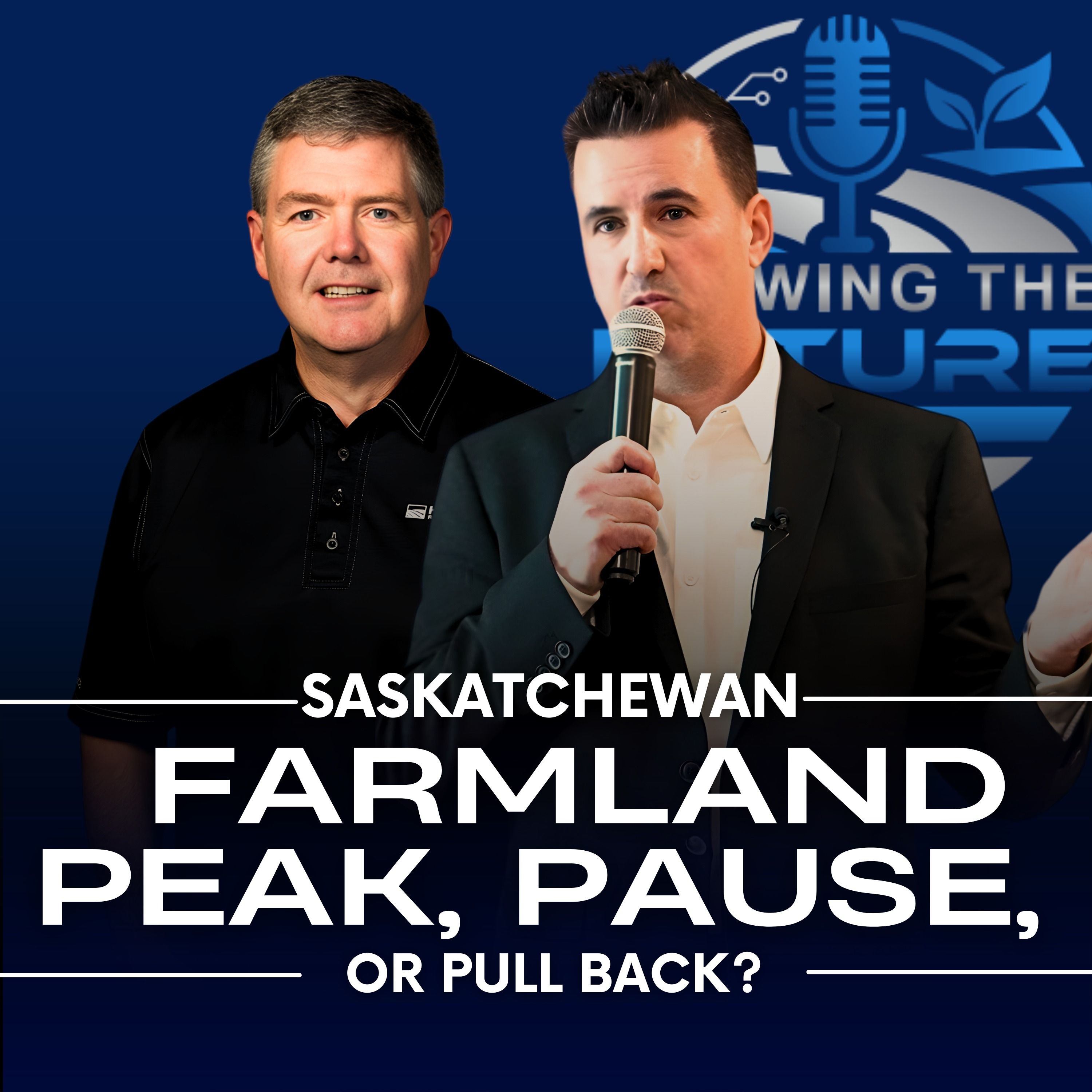
Saskatchewan Farmland: Peak, Pause or Pullback?
from Growing the Future · host Dan Aberhart
Back in June 2025, Trent Klarenbach of Klarenbach Research did something nobody had done before. He charted Saskatchewan farmland values going back a hundred years and applied technical analysis to what he found. The chart went viral on YouTube. 52,000 views. And for good reason. The RSI had been signaling overbought conditions for over thirteen years. Previous times the market crossed that line and broke below the two-year exponential moving average, the results were not subtle. A 54% drop after 1922. A 22% drop after 1968. A 60% drop after 1982. Those aren't predictions. That's the historical record. Most people buying land today have never seen it. Tim Hammond runs Hammond Realty. He's been on the floor of the Saskatchewan farmland market since 2002. He manages 80,000 acres for investors, negotiates rental agreements, and watches the bid sheets on every tender. What he's seeing right now is something he hasn't seen before. A split market. Good land in a good area still moving. Average land struggling. Inventory quietly doubling. The spread between the top bid and the second bid widening from close together to five, ten, fifteen percent apart. The top bid is still setting records. But Tim's point is that land is only worth what the second highest bidder will pay. And that depth is getting thinner. This is not a doom and gloom conversation. Saskatchewan farmers hold somewhere around 65 billion dollars of farmland free and clear. The balance sheets are strong. The ag lenders are still positive. If there's a correction, Tim thinks agriculture can absorb the first 15 to 20 percent without a cascade. The question is where it goes from there. That's the conversation this episode holds. What the chart says, what the ground says, and what it means for the decisions you're making right now. Guests Trent Klarenbach — Klarenbach Research. Technical analyst. The first person known to have charted Saskatchewan farmland values across a hundred years of data. Tim Hammond — Founder and CEO, Hammond Realty. Agricultural real estate specialist, former ag lender, manages land for sophisticated investors across Saskatchewan. Timestamps 00:00 — Dan sets the stage. The Robert Angelic webinar in January, tightening capital conditions, and why this conversation needed to happen. 04:00 — The Klarenbach Research farmland study. 52,000 YouTube views. What happens when you apply a hundred years of technical analysis to land values for the first time. 05:00 — Introducing Trent Klarenbach and Tim Hammond. 08:34 — Live audience poll: where do you think Saskatchewan farmland values are headed? Results reveal a split room. 11:50 — Trent walks through the chart. RSI, the two-year exponential moving average, and what the historical pullbacks actually looked like. 54% in 1922. 22% in 1968. 60% in 1982. 13:00 — What overbought actually means and why the RSI can stay elevated for years before anything moves. 15:00 — Tim on what the chart means personally. His great-grandfather handed back the keys in 1933 when land values had halved. The Hammond family's hundred years of farming mapped almost exactly onto Trent's cycle lines. 17:00 — What Dan took from the chart that nobody talks about at the kitchen table. 18:00 — Tim on what he's seeing on the ground right now. The split market. Good land still competitive. Average land going sideways or down. The first split he's seen since 2002. 20:00 — Second live poll on local market conditions. 52% say steady but not as aggressive. 30% still seeing competitive multiple-bid situations. 12% starting to see softening. 21:30 — Inventory. How much farmland has come to market since January and what the doubling of listings actually means in context of one per rural municipality. 23:00 — The bid depth problem. Tenders that used to get ten offers are now getting two or three. The spread between top bid and second bid is widening. What that means for actual land values beneath the headline numbers. 26:00 — Trent on the catalysts that could trigger a trend change. Credit tightening, geopolitics, commodity cycles, retiring farmers reconsidering their position. 30:00 — The long-term buyer question. Tim's dad bought land in 1981 at 80,000 a quarter. It took 27 years to look like a great investment. He still has it. 33:00 — What a 33-year wait looks like depending on your age and whether you can survive the cycle. Trent on what happened to the people who couldn't. 34:00 — If there is a pullback, what does buying the dip actually look like and who has the dry powder to do it. 38:00 — Tim's cell signal. What price movement would actually constitute a sell signal on Trent's chart and how close we may or may not be to that line. 39:00 — The retired farmer wildcard. 30 to 40 percent of Saskatchewan farmland is held by retired farmers and farm families who stopped selling when the asset kept appreciating. What happens if that calculus changes. 42:00 — Audience poll: do you believe technical analysis has value for farmland decisions? 64% say somewhat useful but not definitive. 20% say yes, charts reveal important signals. 16% say farmland is different from other markets. 43:00 — The shift from expansion to efficiency. Why buyers are getting stronger instead of bigger. 45:00 — Rental rates. Poll results: 43% say increasing, 40% holding steady, 11% starting to soften. Tim on managing 80,000 acres of rental agreements and what he's seeing in renegotiations this year for the first time. 49:00 — Rent versus land value. When you're getting 1% on an asset that might start declining, when does the math change? 51:00 — How much Saskatchewan farmland is rented versus owner-operated. Tim's gut on the percentage turns out to be almost exactly right. 53:00 — Rent versus purchase in a tighter market. Why locking in for three years looks different than committing for twenty. 54:00 — Credit conditions and balance sheets. Tim on whether he's seen lenders kill deals yet and what the equity cushion actually looks like. 57:00 — Nutrient mining clauses in rental agreements. Are landlords enforcing them? 58:00 — 42.1% of Saskatchewan farmland is free and clear. What that number means in dollars. 59:00 — Are boomers selling? Why the transfer of farmland may matter as much to the market as new buyers entering it. 01:01:00 — Trent on where he's taking the research next. An announcement coming. Subscribe to find out. 01:02:00 — The next generation question. What happens to the land when the people who said they didn't want it are the ones who inherit it. Connect with Trent Klarenbach klarenbachresearch.com — subscribe to the free newsletter to receive the farmland study directly Connect with Tim Hammond and Hammond Realty hammondrealty.ca Connect with Growing the Future growingthefuture.ca Register for the Convergence Conference at convergence.ag and stay updated by subscribing to the Growing the Future Podcast at growingthefuturepodcast.ca.
Embed this episode
What this episode covers
Saskatchewan farmland has been in overbought territory for over a decade according to a hundred years of technical analysis. This conversation asks what happens next.
Ready to play
Saskatchewan Farmland: Peak, Pause or Pullback?
No transcript for this episode yet
Similar Episodes
No similar episodes found.
Similar Podcasts
No similar podcasts found.