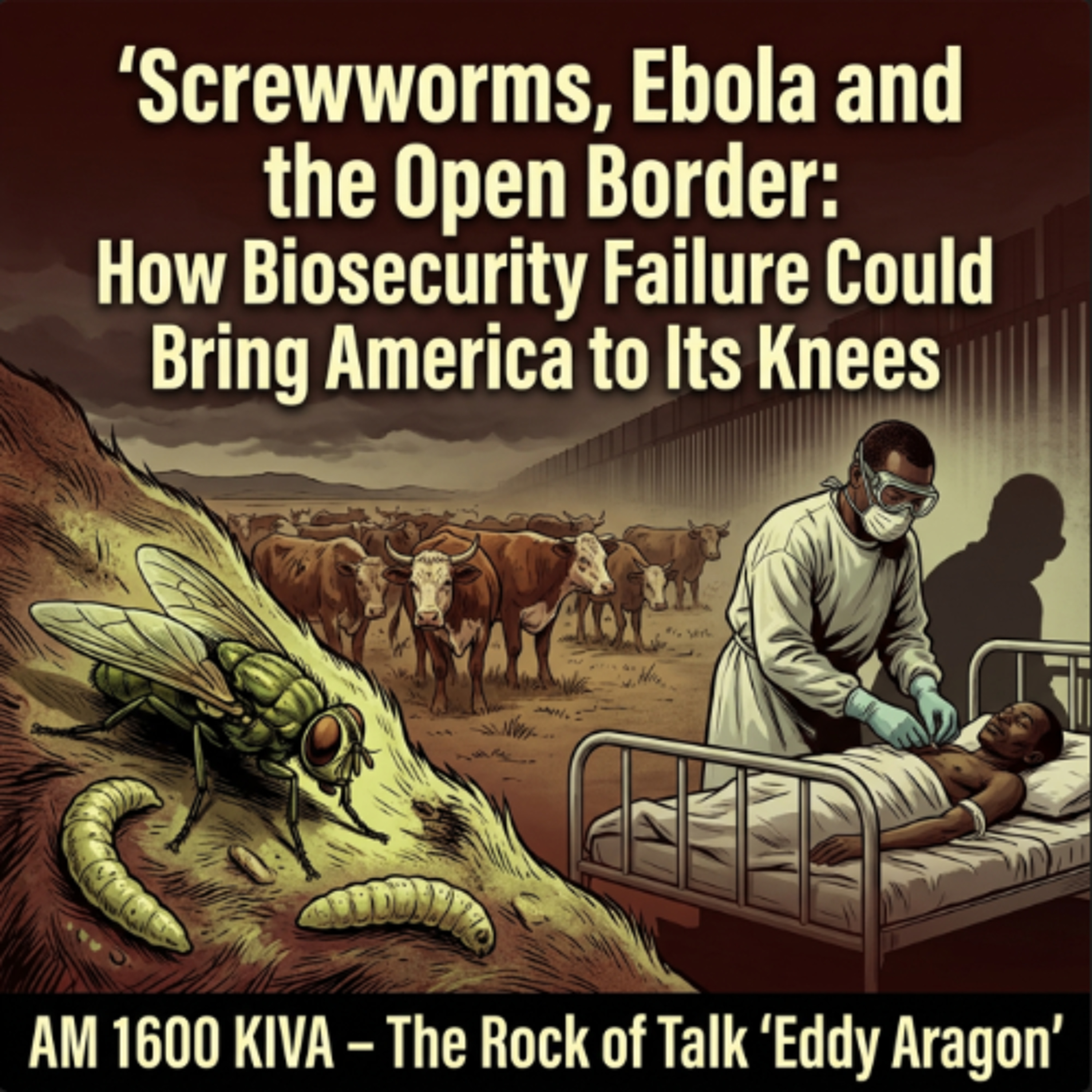
Screwworms, Ebola and the Open Border:  How Biosecurity Failure Could Bring America to its Knees episode artwork

EPISODE · Jun 10, 2026 · 7 MIN

Screwworms, Ebola and the Open Border: How Biosecurity Failure Could Bring America to its Knees

from The Rock of Talk · host Eddy Aragon

Border biosecurity is the real weak point: the reappearance of New World screwworm in a New Mexico dog and ongoing Ebola outbreaks in Africa highlight that biological threats exploit operational gaps, not political narratives. Screwworms threaten livestock and wildlife via flesh-eating larvae seeded in wounds; history shows eradication requires sterile insect release, surveillance, and movement controls, not case-by-case treatment. Ebola, while unlikely to cause a U.S. pandemic, could still seed high-stakes clusters via symptomatic travelers during mass events; containment depends on disciplined infection control, isolation, PPE, and credible coordination. The causal link is straightforward: pests and pathogens move with animals, people, and cargo; surveillance and rapid response are the only durable defenses. We are a nation that depends on rural agricultural systems and public health systems that must act before CNN cameras roll; if we fail to treat border biosecurity as a technical mission—funded, resourced, and operationally empowered—we will pay in livestock losses, hospital strain, economic panic, and political paralysis.

Border biosecurity is the real weak point: the reappearance of New World screwworm in a New Mexico dog and ongoing Ebola outbreaks in Africa highlight that biological threats exploit operational gaps, not political narratives. Screwworms threaten livestock and wildlife via flesh-eating larvae seeded in wounds; history shows eradication requires sterile insect release, surveillance, and movement controls, not case-by-case treatment. Ebola, while unlikely to cause a U.S. pandemic, could still seed high-stakes clusters via symptomatic travelers during mass events; containment depends on disciplined infection control, isolation, PPE, and credible coordination. The causal link is straightforward: pests and pathogens move with animals, people, and cargo; surveillance and rapid response are the only durable defenses. We are a nation that depends on rural agricultural systems and public health systems that must act before CNN cameras roll; if we fail to treat border biosecurity as a technical mission—funded, resourced, and operationally empowered—we will pay in livestock losses, hospital strain, economic panic, and political paralysis.

NOW PLAYING

Screwworms, Ebola and the Open Border: How Biosecurity Failure Could Bring America to its Knees

0:00 7:59

No transcript for this episode yet

We transcribe on demand. Request one and we'll notify you when it's ready — usually under 10 minutes.

No similar episodes found.

No similar podcasts found.

Frequently Asked Questions

How long is this episode of The Rock of Talk?

This episode is 7 minutes long.

When was this The Rock of Talk episode published?

This episode was published on June 10, 2026.

What is this episode about?

Border biosecurity is the real weak point: the reappearance of New World screwworm in a New Mexico dog and ongoing Ebola outbreaks in Africa highlight that biological threats exploit operational gaps, not political narratives. Screwworms threaten...

Can I download this The Rock of Talk episode?

Yes, you can download this episode by clicking the download button on the episode player, or subscribe to the podcast in your preferred podcast app for automatic downloads.
URL copied to clipboard!