
EPISODE · Feb 28, 2018 · 1H 2M
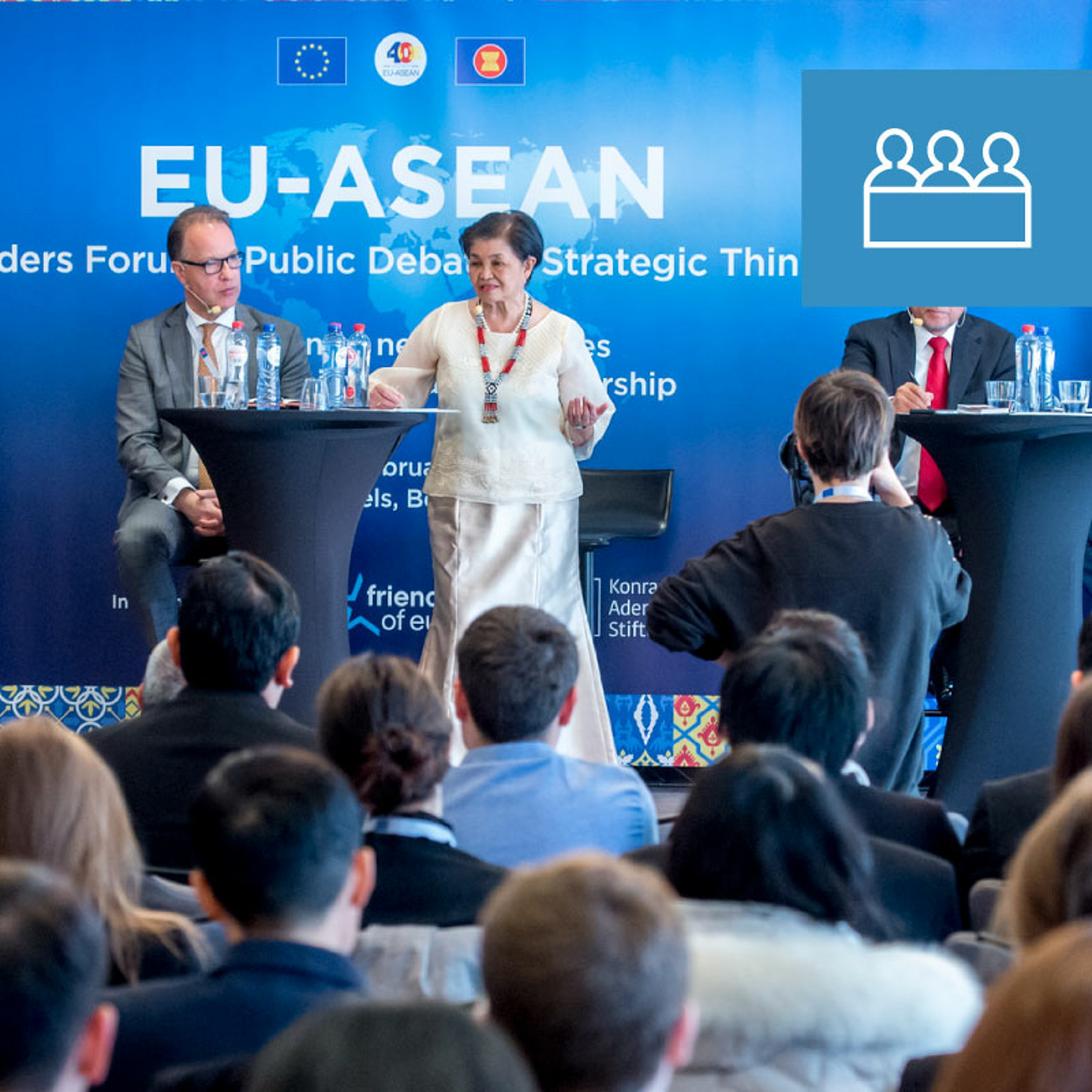
Session II: Will EU-ASEAN Relations Still Matter in Forty Years?
from Friends of Europe podcasts · host Friends of Europe
ASEAN-EU relations have grown and evolved steadily over the years, with both sides inter-acting on a range of economic, political and social issues. Meeting in Manila last August, ASEAN and EU ministers crafted an extensive and multi-faceted plan of action for a further upgrade of cooperation with a focus on bilateral ties, including security issues and connectivity, as well as on the wider global agenda including climate change, counter-terrorism and sustainable development. Ministers and the European Parliament have come out in favour of a resumption of negotiation on an EU-ASEAN free trade agreement. Contacts between ministers, policymakers, business leaders and civil society representatives are increasing. It hasn’t always been plain-sailing, however. Differences over human rights and the application of EU standards in sectors such as palm oil and fisheries as well as the EU’s long-standing quest to become a permanent member of the East Asia Summit continue to cast a shadow over relations. - ASEAN-EU relations have shown a remarkable degree of resilience so far but will the relationship survive – and if it does will it still matter in forty years? - In a volatile world, what can the ASEAN and EU do better and/or differently to reinforce relations in the coming years? - Given their differences on key issues like human rights, can the EU and ASEAN forge a true strategic partnership and negotiate a free trade agreement? - What can be done to promote greater people-to-people contacts – especially among young people – in ASEAN and Europe?
What this episode covers
ASEAN-EU relations have grown and evolved steadily over the years, with both sides inter-acting on a range of economic, political and social issues. Meeting in Manila last August, ASEAN and EU ministers crafted an extensive and multi-faceted plan of action for a further upgrade of cooperation with a focus on bilateral ties, including security issues and connectivity, as well as on the wider global agenda including climate change, counter-terrorism and sustainable development. Ministers and the European Parliament have come out in favour of a resumption of negotiation on an EU-ASEAN free trade agreement. Contacts between ministers, policymakers, business leaders and civil society representatives are increasing. It hasn’t always been plain-sailing, however. Differences over human rights and the application of EU standards in sectors such as palm oil and fisheries as well as the EU’s long-standing quest to become a permanent member of the East Asia Summit continue to cast a shadow over relations. - ASEAN-EU relations have shown a remarkable degree of resilience so far but will the relationship survive – and if it does will it still matter in forty years? - In a volatile world, what can the ASEAN and EU do better and/or differently to reinforce relations in the coming years? - Given their differences on key issues like human rights, can the EU and ASEAN forge a true strategic partnership and negotiate a free trade agreement? - What can be done to promote greater people-to-people contacts – especially among young people – in ASEAN and Europe?
NOW PLAYING
Session II: Will EU-ASEAN Relations Still Matter in Forty Years?
No transcript for this episode yet
Similar Episodes
Mar 26, 2026 ·1m
Mar 19, 2026 ·34m
Feb 18, 2026 ·11m
Feb 11, 2026 ·45m