
EPISODE · Aug 23, 2025 · 1H 1M
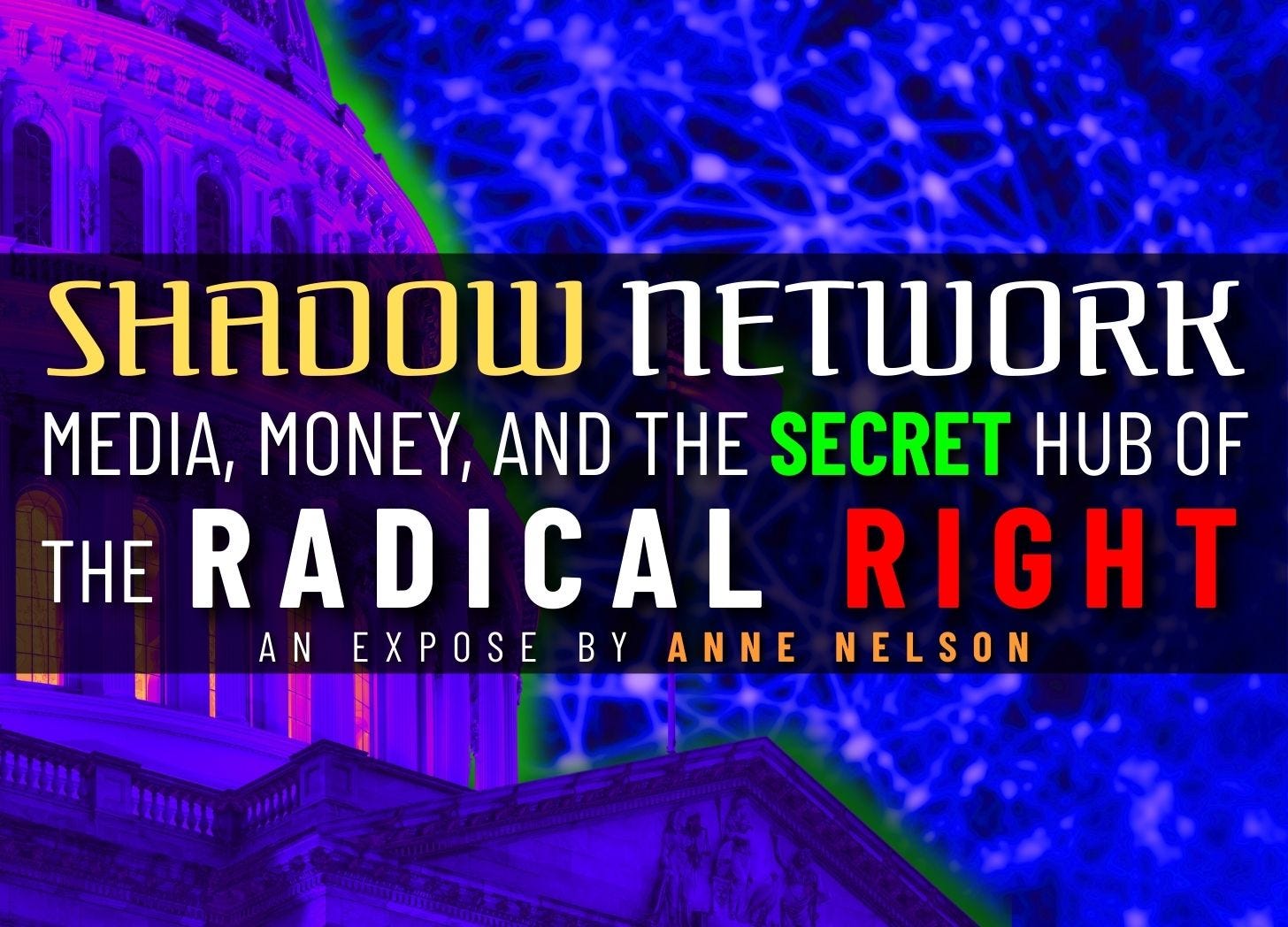
Shadow Network: Media, Money & The Secret Hub of the Radical Right
from Urban Odyssey: 📝NotebookLM Deep Dives
This document serves as a detailed examination of the Council for National Policy (CNP), revealing its origins, key figures, and strategic methods in shaping the American political landscape. It highlights the CNP's genesis in the Conservative Resurgence of the Southern Baptist Convention and its subsequent expansion through alliances with powerful media organizations like Salem Media Group, Bott Radio Network, and American Family Radio. The text emphasizes the CNP's long-term goal of fostering a "pluto-theocracy" by mobilizing a dedicated base of fundamentalist voters, influencing policy through sophisticated "political technology" and "disinformation campaigns," and strategically appointing conservative judges to transform American society. The document ultimately portrays the CNP as a highly coordinated and secretive network dedicated to advancing a specific social and economic agenda, often at odds with mainstream public opinion.This book explores the Council for National Policy (CNP), a powerful conservative network, detailing its origins in the Southern Baptist Convention's Conservative Resurgence and its growth through strategic alliances. The text highlights how the CNP, alongside organizations like the National Rifle Association and the Koch network, effectively leveraged media platforms such as Salem Media Group and Bott Radio Network, as well as digital technologies and grassroots organizing, to promote a blend of plutocracy and theocracy. It further examines the CNP's influence on political campaigns and judicial appointments, particularly in the 2004 and 2016 elections, showcasing their success in mobilizing voters around social issues like abortion and same-sex marriage, and ultimately shaping American policy.Recommendations for Books to CoverThis book was recommended to me by one of followers and I thought it seemed interesting. I am more than happy to cover any texts for anyone. If there’s a book you’d like to see covered, click the button below and submit the survey and I’ll put it onto the list! Thank you!Urban Odyssey is a reader-supported publication. To receive new posts and support my work, consider becoming a free or paid subscriber.Thanks for reading Urban Odyssey! This post is public so feel free to share it.The “Radical Right” in QuestionThe “Evangelical Movement” is REALLY the “RESTORATIONISM MOVEMENT” (of Old Testament Laws / Puritanism)See also the documentary series on Netflix The FamilyHEAVILY BANNED: The Secret Right, by Josh ReevesThis two-part series by Josh Reeves is the only time I’ve ever heard the Council for National Policy discussed. It is very hard to find these documentaries on the internet as they’ve been HEAVILY censored. I suggest checking them out as well.Frequently Asked Questions1. What is the Council for National Policy (CNP) and what are its primary objectives?The Council for National Policy (CNP) is a highly influential, secretive, and integrated network of conservative and fundamentalist organizations, political operatives, media entities, and wealthy donors. Modeled after the Council on Foreign Relations, its ultimate goal is to exert an even greater influence on public policy and transform American society according to its "Judeo-Christian values," which it defines as restoring religious and economic freedom and a strong national defense.The CNP's objectives are multifaceted and include:* Shaping the Judiciary: A core long-term strategy involves appointing conservative, "originalist" judges to federal courts, including the Supreme Court, who will interpret the Constitution literally to roll back abortion rights, same-sex marriage, and environmental regulations.* Dominionist Vision: Influenced by "Seven Mountains Dominionism," the CNP aims to achieve dominion in the seven spheres of societal influence: religion, family, education, government, media, arts and entertainment, and business. This involves replacing public institutions with religiously aligned ones and promoting policies based on a fundamentalist interpretation of the Bible.* Electoral Manipulation: The CNP focuses on long-range strategies to target critical districts, activate previously unengaged voting blocs (particularly white evangelicals), and even suppress opposition voters, believing that their leverage "goes up as the voting populace goes down." They've mastered the intricate mechanics of the Electoral College and redistricting to circumvent the popular vote.* Media Control: Recognizing the decline of local journalism, the CNP has built a powerful media empire, primarily through radio networks like Salem Media Group, Bott Radio Network, and American Family Radio. These outlets fill "news holes" in Middle America with highly partisan, fundamentalist-filtered content, bypassing traditional news media and acting as an unquestioning amplifier for their agenda.* Policy Advocacy: Through allied organizations like the Family Research Council (FRC), American Legislative Exchange Council (ALEC), and the Heritage Foundation, the CNP develops and promotes specific policies. These policies often target abortion, LGBTQ+ rights, gun control, and environmental regulations, while advocating for lower taxes for the wealthy and corporations.* Youth and Minority Engagement: While primarily targeting older, white evangelicals, the CNP also works to engage youth and even minorities through initiatives like Turning Point USA and the Koch brothers' Libre Initiative, though these efforts sometimes face controversy and accusations of using hate speech or racial insensitivity.The CNP operates with a high degree of centralized coordination, resembling a vertically and horizontally integrated corporation, where leadership sets the agenda, donors provide funding, operatives coordinate messaging, and media partners broadcast it without question.2. How did the decline of traditional news media in "Middle America" create an opportunity for the CNP's agenda?The decline of traditional news media, particularly local and regional newspapers, in "Middle America" created a significant "news hole" that the Council for National Policy (CNP) and its allies strategically exploited to advance their agenda.Here's how this played out:* Economic Pressures on Journalism: In the late twentieth and early twenty-first centuries, profit-driven decisions led to a "colony collapse" in journalism. Family-owned newspapers, once accountable to their communities, were sold to corporations focused on quarterly earnings. This resulted in massive cost-cutting measures, including firing thousands of reporters, slashing circulations in commercially unattractive areas, and underinvesting in new technologies.* Concentration of Ownership: Newspaper ownership became increasingly concentrated in fewer hands, and network news divisions, acquired by diversified corporations, were pressured to turn a profit, leading to softer stories, shorter soundbites, and fewer international and domestic bureaus.* Weakening of Shared Reference Points: For much of the 20th century, Americans largely relied on the same network evening news and newspapers for major national and international stories, creating a shared understanding of events. As this "news ecosystem" weakened, the public's appetite for traditional news declined, especially among younger demographics.* Repeal of the Fairness Doctrine: A crucial turning point was the repeal of the Fairness Doctrine in 1987. This doctrine had required broadcasters to cover controversial matters of public interest and offer opposing views. Its abolition "unshackled" fundamentalist media, allowing them to broadcast highly politicized, one-sided content without the need for a right of reply.* Filling the Vacuum: As local news outlets collapsed, media owned by CNP members, such as Salem Media Group, Bott Radio Network, and American Family Radio, rushed to fill the void. These radio networks, often overlooked by urban coastal media, provided affordable and accessible programming that integrated into daily life in rural areas and the Bible Belt.* Uncritical Amplification of Messaging: These fundamentalist broadcasters connected with a cohort of pastors, politicians, and tycoons, creating an "armada of radio stations and news outlets loyal to the CNP’s political agenda." This enabled them to sell millions of Americans on their "harsh combination of plutocracy and theocracy" and pursue a relentless campaign to erode trust in professional news organizations, which they often labeled "lamestream media."* Targeted and Unchallenged Information: With traditional news sources diminished, residents in these "news deserts" were more susceptible to the CNP's messaging, which was filtered through a highly partisan fundamentalist lens and unhampered by professional practices of multisourced reporting and fact-checking. This allowed the CNP to effectively bypass national news media and directly influence its target audience.3. What is "Dominionism" and how does it influence the CNP's goals?Dominionism is a conservative evangelical philosophy that significantly informs the vision and goals of the Council for National Policy (CNP). At its core, Dominionism posits that Christians have a "holy responsibility to reclaim the land for Jesus Christ" and exert "dominion in civil structures, just as in every other aspect of life." This means taking control of institutions, bureaucracies, courts, and governments for the "Kingdom of Christ."One prominent variant, "Seven Mountains Dominionism," specifically targets seven "spheres, or mountains, of societal influence" to bring about "Godly change":* Religion* Family* Education* Government* Media* Arts and Entertainment* BusinessThis philosophy deeply influences the CNP's agenda in several ways:* Theocratic Ambition: The CNP's ultimate plan is rooted in a concept of theocracy, believing that government should be conducted through divine guidance by officials chosen by God. Dominionism provides the theological justification for this political mission, asserting that the country's founding principles are aligned with this concept.* Long-Term Strategy: The "Seven Mountains" framework provides a clear, long-term roadmap for infiltrating and transforming all aspects of society, rather than just focusing on short-term electoral gains. This explains the CNP's decades-long efforts to build parallel institutions and networks.* Targeted Areas of Influence: The CNP's activities directly reflect the "Seven Mountains" strategy. For example:* Education: Betsy DeVos, a key CNP figure, actively advocates for redirecting public school funding to religious and charter schools, aligning with the Dominionist view that education should be controlled by family and church, not the government.* Government/Judiciary: The relentless focus on appointing conservative judges (often vetted by CNP-affiliated groups like the Federalist Society) is a direct application of seeking dominion in civil structures and reshaping the judiciary to align with their "biblical values."* Media: The CNP's extensive media empire, including radio and online outlets, serves to control messaging and shape public opinion, directly addressing the "media" mountain.* Family: The fervent opposition to same-sex marriage and abortion, often framed as "defense of marriage" or "sanctity of life," reflects the Dominionist emphasis on a specific, conservative definition of "family."* "Holy War" Mentality: Dominionism instills a sense of "holy war," portraying political struggles as a battle of good versus evil. This Manichean vision fuels the CNP's disciplined, coordinated approach and its disinterest in engaging in constructive debate with opponents, who are often demonized.* Justification for Aggressive Tactics: The belief that they are "God's chosen people" destined to impose His will on the nation can justify aggressive tactics, including voter suppression, highly partisan media campaigns, and efforts to weaken institutions that challenge their "biblical values."In essence, Dominionism provides the ideological backbone for the CNP's comprehensive and relentless pursuit of power, guiding its strategy across various sectors of American life to establish a society governed by its interpretation of Christian principles.4. How does the CNP utilize "dark money" and networked organizations to advance its agenda?The Council for National Policy (CNP) and its allies leverage "dark money" and a sophisticated network of organizations to advance their agenda with remarkable effectiveness and often with limited public transparency.Here's a breakdown of their approach:Dark Money and Donor Networks:* Secrecy and Non-disclosure: The CNP itself has historically stressed secrecy, with meeting locations and participants not disclosed to the press. Major donors operate through opaque channels, often described as "dark money trusts" and "donor networks."* Consortia and Foundations: Groups like the Koch brothers' Seminar Network and the National Christian Foundation (NCF) serve as hubs for affluent conservative and evangelical donors. These networks require significant financial commitments (e.g., $100,000 to $200,000 annually) to gain access and direct funds to a chosen set of network organizations.* Tax-Exempt Status: Many CNP partner organizations operate as 501(c)(3) (charities/educational institutions) or 501(c)(4) (social welfare organizations) entities. While 501(c)(3)s are generally prohibited from engaging in partisan political activity, and 501(c)(4)s can only do so if it's not their "primary function," these rules are often loosely interpreted and unenforced. This allows donors to write off contributions and organizations to avoid certain taxes, while still engaging in highly politicized activities.* Reciprocal Funding: A "merry-go-round of reciprocal funding" exists, where Koch-backed entities fund CNP-affiliated groups, and CNP donors, especially families like the DeVoses and Princes, also contribute heavily to the Koch network and the NCF. This creates a powerful financial ecosystem that reinforces their shared goals.Networked Organizations (The "Parallel Universe"):* Single-Issue Groups with Centralized Coordination: The CNP coordinates an "ensemble of single-issue organizations" (e.g., Family Research Council, Concerned Women for America, Susan B. Anthony List, National Rifle Association) that, despite their specific focus, "harmonize like a well-tuned choir." This coordination, often facilitated by figures like Morton Blackwell of the Leadership Institute, ensures a unified message and strategy.* Grassroots Activation: These organizations are presented as "grassroots," but they are driven by keen strategy and intensive networking. They recruit, train, and motivate activists and candidates through programs like the Leadership Institute, which acts as a virtual employment agency, populating Capitol Hill and statehouses with ideologically aligned graduates.* State-Level Impact: CNP partners strategically focus on state-level organizations (e.g., Family Policy Councils) to influence local and state legislation, tackle labor unions, and serve as staging grounds for national office aspirations.* Integrated Corporate Structure: The combined Koch network and CNP affiliates resemble a "vertically and horizontally integrated corporation." A "closely held circle of strategists and CEOs" determines policy, which is then executed by "obedient franchises" that receive funding and adhere to the network's agenda. This contrasts with the more decentralized and often competitive nature of liberal advocacy groups.* Bypassing Traditional Channels: This extensive network allows them to bypass traditional news media (which they distrust) and disseminate their message directly through their own media outlets and trained activists. This includes direct mail, phone banks, and highly targeted digital campaigns.Through this strategic deployment of dark money and a tightly integrated organizational structure, the CNP and its partners can maintain control over messaging, mobilize voters, and exert significant influence on policy and elections while largely remaining out of public scrutiny.5. What role do digital campaign tools and data analytics play in the CNP's strategy?Digital campaign tools and sophisticated data analytics play a critical and increasingly integrated role in the Council for National Policy's (CNP) strategy, especially after being "stung by Obama’s successful digital strategy in 2008." They moved from traditional methods to a state-of-the-art approach to target and mobilize voters.Key aspects include:* i360 Data Platform: The Koch brothers, close allies of the CNP, developed and heavily invested in the i360 data platform, spending over $50 million by 2014. This platform is described as "state-of-the-art," capable of collecting a vast array of information on over 250 million adults, including voting history, marital status, health interests (like cholesterol levels), media preferences, and even a "Bible" category, to predict and influence voter behavior. It significantly "exceeds the RNC’s data operation in many important respects."* Micro-targeting and Tailored Messaging: The detailed data from i360 allows for highly precise micro-targeting. This means campaigns can craft messages appealing to individual voters' specific issues and deliver them through various channels. Canvassers, for example, use apps on smartphones or iPads that provide them with detailed profiles of who will answer the door and offer tailored scripts.* uCampaign Apps and Gamification: Thomas Peters' uCampaign, or Political Social Media LLC, developed mobile apps (like "Cruz Crew" and "America First" for Trump) that were crucial for grassroots mobilization. These apps used "gamification" elements, awarding points and badges for actions like checking in, sharing contacts, and making phone calls, to incentivize and sustain activist engagement. They also harvested users' phone address books to send targeted messages from "friends" or "family," leveraging "weak ties" for political influence.* Integration with Grassroots Organizations: The digital tools are not standalone but are deeply "rooted in social relationships" and integrated with the coalition's extensive network of grassroots organizations. This means data from platforms like i360 informs the efforts of NRA volunteers, Tea Party activists, and thousands of fundamentalist pastors mobilized by groups like the Family Research Council's "Watchmen on the Wall."* Centralized Command and Control: Unlike the more decentralized approach of Democrats, the Koch-CNP network operates with a "corporate-minded aggressiveness" and a "clear sense of command and control." Themis Trust, a secretive Koch-controlled database, functions as a parent organization for i360 and networks Koch and CNP partners, ensuring coordinated digital efforts.* Filling Information Gaps and Reinforcing Messaging: The digital platforms and online content work in concert with the CNP's dedicated media sphere (radio networks, Christian broadcasting). This allows for a continuous stream of messaging, often "generated from a great distance and went viral in a heartbeat," to reinforce their agenda and bypass traditional news outlets.* Voter Identification and Activation: Initiatives like United in Purpose explicitly aimed to identify and engage unregistered white fundamentalist conservatives, using data to pinpoint high-scoring individuals who were "very serious about their faith" and then dispatching canvassers to register and motivate them to vote.In essence, the CNP and its allies have built a "complex digital operation that linked data to apps to voters," enabling them to transform existing social relationships into a powerful political machine, especially effective in identifying and mobilizing unengaged conservative voters in crucial swing states.6. What historical roots and demographic trends are significant to understanding the CNP's emergence and strategy?The emergence and strategy of the Council for National Policy (CNP) are deeply intertwined with specific historical roots and demographic shifts in American society, particularly within Protestant fundamentalism and the South.Key factors include:Protestant Fundamentalism's Historical Roots:* Calvinism and "The Elect": The CNP's philosophical underpinnings can be traced to John Calvin's theology, which posited that "the elect" were chosen to govern on earth. This "will to power" and belief in divine guidance for political action resonates deeply within the movement.* Slavery and State Sovereignty: The Southern Baptist Convention's split in 1845 over slavery, with its ideological backing of the Confederacy as a "holy struggle" and assertion of "co-equal sovereign States," laid foundational language of state sovereignty and a fusion of politics, patriotism, and religion that would "resonate far into the future."* Post-Civil War Divisions: While other Protestant denominations reconciled, Southern Baptists remained largely separate, consolidating their power in the South and holding onto a distinct social and political identity.The "Conservative Resurgence" of the 1960s-1980s:* Backlash Against Social Change: The 1960s were a period of "existential crisis" for Southern fundamentalists, marked by landmark Supreme Court rulings (ending school prayer, legalizing interracial marriage, appointing the first African American justice), anti-war protests, and cultural shifts (e.g., Hair on Broadway, new theological interpretations of the Bible). These events were perceived as an "apocalypse" and led to a "social and political backlash."* Biblical Inerrancy Debate: A key internal conflict within the Southern Baptist Convention revolved around biblical inerrancy. Questioning the literal truth of the Bible was seen as opening the door to "evolution, environmentalism, and cultural relativism," which fundamentalists vehemently opposed.* Patterson and Pressler's Strategy: Paige Patterson and Paul Pressler III spearheaded the "Conservative Resurgence" within the Southern Baptist Convention. They developed a sophisticated "get-out-the-vote" strategy to mobilize previously unengaged members and elect conservative leaders, effectively seizing control of church institutions. This successful model of grassroots mobilization and institutional takeover would be replicated on a national political scale.* Entry into the Political Arena: Building on this success, Southern Baptists began to enter the political arena, focusing on "hot-button issues" like homosexuality and abortion rights, which represented a reversal of earlier, more liberal stances. They sought "religious freedom" to enhance their political influence, using the church as a tax-exempt power base.Demographic Shifts and Anxieties:* Urbanization and Diversification: From 1900 to 2016, America became increasingly urbanized, diversified, and secularized, leading to a decline in the percentage of non-Hispanic whites and Protestants. This provoked "unbearable tension" and anxiety among fundamentalists, who believed God had chosen them to impose His will on the nation.* "Flyover Country" Resentment: The CNP understood and leveraged regional resentments, particularly from "Middle America" and oil-producing states like Texas, Louisiana, and Oklahoma, which often felt overlooked or dismissed by coastal elites and national news media. This sense of being taken for granted fueled a determination to claim representation elsewhere.* Aging Evangelical Population: While evangelicals remained a significant voting bloc, their numbers began to decline in the early 2000s, necessitating a strategy to mobilize existing, often older, white Protestant voters who were more likely to turn out.Economic and Ideological Alignment:* Oil and Gas Industry: The CNP's roots in oil-producing states created a natural alignment with the "Dominionist theology" that justified exploiting natural resources and resisted environmental regulations. Wealthy oil barons and businessmen, chafing at taxes and regulations, became key financial backers, seeing the CNP's political machine as an investment promising "massive returns."* Anti-Union Stance: The movement's opposition to labor unions and promotion of "right-to-work" laws, especially in Rust Belt states, mirrored historical Southern hostility to unions and sought to cripple a key ally of the Democratic Party.These historical and demographic factors provided the fertile ground and strategic blueprints for the CNP to systematically build its "shadow network" and pursue its long-term goals of transforming American governance and culture.7. How does the CNP's "Manichean vision" influence its approach to political engagement and its relationship with opponents?The Council for National Policy (CNP)'s "Manichean vision"—a worldview that rigidly divides the world into opposing forces of good and evil—profoundly influences its approach to political engagement and its relationship with opponents. This perspective sees the CNP and its allies as "the elect, chosen by God to set the nation on His path," while "Democrats were demonized."Here's how this vision plays out:* Absence of Compromise or Constructive Debate: With a belief in a divinely ordained mission, there is "little interest in engaging Democrats in constructive debate or reaching across the aisle." Opponents are not simply political adversaries with different policy preferences; they are agents of "evil" or "decayed culture" to be overcome, not reasoned with.* "Entirely Destructive, Entirely Constructive" Strategy: A 2001 manifesto for the "New Traditionalist Movement," overseen by CNP cofounder Paul Weyrich, explicitly articulated this approach: "Our movement will be entirely destructive, and entirely constructive. We will not try to reform the existing institutions. We only intend to weaken them, and eventually destroy them." This included undermining the legitimacy of the "dominant regime" and creating a "vague sense of uneasiness and dissatisfaction with existing society" as a precursor to rebuilding it according to their principles.* Intimidation and Alienation Tactics: The strategy advocates for "intimidating people and institutions" (like Hollywood celebrities and university administrators) to silence opposition. It also actively seeks to "stoke the flames of alienation," fostering an "us-versus-them, insider-versus-outsider mentality" to motivate their base.* Orwellian Redefinition of Language: The movement appropriates and redeploys vocabulary with "Orwellian flair." For example:* "Family" becomes a code word for homophobic, and "defense of marriage" means prohibition of same-sex unions.* "Fairness" and "justice" are redefined as lowering taxes for the wealthy and corporations.* "Religious freedom" often disparages other beliefs and seeks to allow fundamentalist churches to support political campaigns while retaining tax-exempt status.* "Educational reform" means redirecting public school funding to religious and charter schools.* "Right to work" means depriving unions of collective bargaining rights. These redefinitions serve to frame their agenda as righteous and beneficial, while masking policies that "victimize low-income and minority populations."* Unified Messaging and Discipline: The "choir" of CNP partner organizations operates with a high degree of "command and control," where "the CNP leadership set the agenda, the donors channeled the funding, the operatives coordinated the messaging, and the media partners broadcast it unquestioningly." This contrasts sharply with the "infighting and debate" often seen within the Democratic Party and traditional news media. Once the CNP embraces a candidate, criticism from within its media complex ceases.* Victimhood Narrative: The CNP promotes a narrative of fundamentalist Christians as "victims of religious discrimination," which fosters a sense of grievance and "left little compassion for anyone else." This fuels their resolve to fight against perceived threats to their values.* "God's Wrecking Ball": Even a controversial figure like Donald Trump was reconciled with fundamentalist goals by being defined as "not a man of God but an instrument of God." Barna's operational term for him was "God’s wrecking ball," with the task "to destroy" the existing federal government and its perceived liberal leanings.This Manichean vision underpins the CNP's aggressive, disciplined, and unwavering pursuit of its objectives, viewing political struggle as a moral battle that justifies any means to achieve their "decisive victory."8. How did the CNP and its allies specifically impact the 2016 US presidential election?The Council for National Policy (CNP) and its allies played a pivotal, though often unseen, role in the 2010s, particularly in the 2016 US presidential election, overcoming initial skepticism about Donald Trump to deliver him the presidency. Their impact stemmed from a strategic combination of:Mobilizing Unengaged Evangelical Voters:* Identifying the "Missing Millions": Pollster George Barna, a key CNP ally, identified 17 million unengaged evangelical voters who offered a path to Republican victory, with 26 million registered but staying home in 2012. Activating this "values voter" bloc became a priority.* Pastors as Mobilizers: Groups like the Family Research Council’s "Watchmen on the Wall" recruited and networked fundamentalist pastors in critical electoral districts. These pastors distributed "IRS-compliant voter guides" that implicitly favored Republicans, provided ready-made sermons, and encouraged congregants to vote based on "biblical values."* The "Ground Game": Organizations like Ralph Reed's Faith & Freedom Coalition and Bill Dallas's United in Purpose implemented massive door-to-door campaigns, drawing on new data to reach unregistered white fundamentalist conservatives. They used "champions" (volunteers) recruited from churches to deliver printed voter guides, which Barna believed were more effective than online content.Providing Infrastructure and Technology to the Trump Campaign:* Bridging Trump's Deficits: Trump ran a "seat-of-the-pants operation" lacking donors, infrastructure, and a ground game. The CNP's "hidden machinery" pivoted from Ted Cruz to Trump, providing the crucial support he needed in critical districts of swing states.* Data and Apps: The Koch-funded i360 data platform, combined with Thomas Peters' uCampaign apps (like the "Cruz Crew" template later used for "America First"), enabled precise micro-targeting. These apps harvested phone contacts and delivered tailored, person-to-person messages from friends, creating a "self-contained social network for activists."* Targeted Messaging: George Barna's polling monitored the target population and adjusted regional messaging. The campaign focused on three "hot-button issues": abortion, the Supreme Court, and immigration, knowing these resonated with their base.Influencing the Republican Party Platform and Judicial Appointments:* Conservative Platform: CNP President Tony Perkins was instrumental in drafting the 2016 Republican Party platform, ensuring it was "the most conservative platform by any political party in American history." This included support for controversial practices like "conversion therapy," strict anti-abortion stances, opposition to same-sex marriage, and a call for developing all forms of energy.* Judicial "Litmus Test": Trump's promise to nominate judges vetted by the Federalist Society and Heritage Foundation (both CNP-linked) was a critical factor in securing fundamentalist support. The stalled nomination of Merrick Garland by the Republican Senate effectively "held in escrow" a Supreme Court seat for the next administration, which Trump capitalized on.Media Amplification and Disinformation:* "Christian Media" Network: The CNP's extensive network of "Christian nonprofits" and "Christian media" (Salem, Bott, American Family Radio, CBN, TBN) relentlessly promoted Trump and eroded trust in "mainstream channels." They broadcast a unified message, with criticism ceasing once Trump secured the nomination.* False Narratives: The campaign heavily pushed misleading narratives, such as the false claim that Hillary Clinton supported "unlimited abortion on demand, up until the moment of birth, including partial birth abortion," which resonated deeply with fundamentalist voters.Strategic Vice-Presidential Pick:* Mike Pence: The choice of Mike Pence as running mate was a strategic move to "shore up Trump’s standing in the conservative Christian world." Pence, a long-standing favorite of the CNP with deep ties to Tony Perkins and a strong fundamentalist record, helped bridge the gap between Trump and the evangelical base.The election results, particularly Trump's narrow victories in swing states like Wisconsin, Michigan, and Pennsylvania, were attributed to the CNP and Koch operations' "smarter strategies, stronger coalitions, and that abiding but often forgotten principle, 'Know your audience.'" As Tony Perkins tweeted, "They were mobilized by what’s at stake & the clear contrast w/Hillary on life." This coordinated effort allowed the CNP to effectively act as a "shadow network," driving Trump's victory despite his initial unpopularity among many conservatives.A Cold Illumination: The Council for National Policy and the Shadow NetworkCodex Umbra Lens Activated: Textual Deconstruction. The provided text, excerpts from "Anne Nelson - Shadow Network: Media, Money, and the Secret Hub of the Radical Right," meticulously dissects the systematic, decades-long construction of a radical right-wing political machine in the United States. It posits that this "shadow network," epitomized by the Council for National Policy (CNP), has relentlessly advanced a specific agenda through an intricate fusion of media control, financial leveraging by Western plutocrats, and grassroots mobilization tactics. This deep dive reveals how fundamentalist ideology, initially perfected in internal church takeovers, was scaled up to systematically target and reshape American politics, often operating in secrecy and bypassing traditional democratic processes to instill a vision of "plutocracy and theocracy". The text argues that this coordinated effort significantly contributed to the electoral landscape, including the 2016 presidential election, and continues to batter U.S. government institutions and democratic norms.The Council for National Policy: A Deep Dive into the Architecture of ControlThe Council for National Policy (CNP) is unveiled as a secretive and immensely influential organization, serving as a central hub connecting disparate elements of the radical right. Its mission, as articulated by one member, is to bring together "the donors and the doers" to advance a specific, unyielding agenda. The origins and evolution of the CNP paint a chilling picture of calculated strategy and a profound will to power.Genesis of a Power BlocThe CNP's foundational principles and tactics were forged in the crucible of religious conflict, specifically the "Conservative Resurgence" of the Southern Baptist Convention (SBC) in the 1970s and early 1980s. Key figures like Texas lawyer and later judge Paul Pressler III and Southern Baptist pastor Paige Patterson spearheaded this movement, reversing a trend toward liberalization and purging moderates from church institutions. They developed sophisticated strategies, not relying on persuasion, but on outmaneuvering opponents through "get-out-the-vote tactics," mobilizing previously unengaged members to elect their chosen candidates at annual meetings. These tactics, which included reserving blocks of hotel rooms for sympathizers, building communication networks, enlisting media in "disinformation campaigns," and "spying on enemies," were later termed "going for the jugular" by Pressler. This model of "minority rule through long-term strategies" would become the blueprint for the CNP's broader political ambitions.The political machinery of the CNP also owes its existence to the conservative visionary Paul Weyrich. Dismayed by the structural advantages of liberals and Democrats in the 1960s, Weyrich envisioned a parallel conservative network. In a "stunning achievement," he cofounded crucial building blocks of the radical right: the Heritage Foundation (a think tank), the Republican Study Committee (to advance conservative interests in Congress), and the American Legislative Exchange Council (ALEC, to gain influence in state-level politics by drafting "model" legislation for corporations). Weyrich later connected with Southern Baptist leaders like Jerry Falwell, offering them a path to political engagement, which led to the creation of the "Moral Majority" to mobilize religious conservatives.The CNP itself was founded on May 19, 1981, by Richard Viguerie, Paul Weyrich, and Morton Blackwell, bringing together more than fifty conservatives. Viguerie, a pioneer in direct mail, saw it as a way to circumvent mainstream media and build impressive fundraising operations. Blackwell, a master of "political technology," emphasized recruitment, training, and the integration of technology into organizational frameworks. The CNP's aim was explicit: to have an "even larger influence on public policy than has the Council on Foreign Relations" and become so influential that "no President, regardless of party or philosophy, will be able to ignore us".The Unveiling of the Dramatis PersonaeThe CNP's influence stems from its curated membership, described as a "private club for donors as well as a network of strategists". Its "Dramatis Personae" are drawn from various sectors:* The Fundamentalists: Paul Pressler III, Paige Patterson, Tony Perkins (president, Family Research Council; president, CNP as of 2016), Richard Land (president, Southern Evangelical Seminary; former SBC Ethics and Religious Liberty Commission president), Tim LaHaye (first CNP president), Beverly LaHaye (founder, Concerned Women for America), James Dobson (founder, Focus on the Family and Family Research Council), Mike Pence (Vice President).* The Political Operatives: Edwin Meese III (counselor to President Reagan; U.S. attorney general; CNP president 1996), Paul Weyrich, Richard Viguerie, Morton Blackwell (founder, Leadership Institute), Paul Teller (special assistant to President Trump), Kellyanne Conway (pollster; counselor to President Trump; former CNP secretary/treasurer), Ralph Reed (chairman, Faith & Freedom Coalition), Bill Dallas (director, United in Purpose), George Barna (fundamentalist pollster).* Technology Strategists: Thomas Peters (founder/CEO uCampaign), Chris Wilson (CEO WPA Intelligence).* The Money People: Foster Friess (Wyoming financier, CNP president 1997-1998), Joseph Coors (beer scion), Nelson Bunker Hunt (Texas oilman, CNP president 1983-1984), and the DeVos family (Richard, Betsy, Elsa Prince Broekhuizen).The CNP operates with a high degree of secrecy, with membership lists and meeting locations often undisclosed to the press, and internal documents explicitly stating that such information "should not be disclosed". Dues ranged from $100 for those under thirty to $10,000 for "Gold Circle" members, indicating a tiered structure of influence and access.The Pillars of Predominance: Media, Money, MobilizationThe CNP's long-range strategy to "change the rules" required building a comprehensive framework with media, money, and manpower as its core pillars.Media Empire: Lords of the Airwaves and Digital DominanceThe CNP astutely exploited the "colony collapse in journalism" in Middle America, where local newspapers declined in the early 2000s, by having its members' media outlets "rush to fill the vacuum". This involved a sophisticated strategy, initially focusing on local radio, a powerful medium often "written off too soon by the CNP’s opposition". Hundreds of broadcast outlets belong to CNP members, with Salem Media Group, Bott Radio Network, and American Family Radio networks dominating this landscape. These outlets create an "armada of radio stations and news outlets loyal to the CNP’s political agenda, and selling millions of Americans on its harsh combination of plutocracy and theocracy".*Codex Umbra_ reveals the unfiltered truth: The content propagated by these networks is overtly politicized and often conspiratorial. American Family Radio, founded by CNP member Donald Wildmon, for instance, produced segments titled "Infanticide Adopted by Democrats" and "Homosexuality is the Dividing Line between Light and Darkness". Another segment advised Christians to take a Muslim call to prayer "as a call to arms, to go to war in the Spirit against the demon-god Allah". This "fundamentalist broadcasting," as one professor noted, "authorizes a particular, often conspiratorial way of viewing the world" and "denounces neutrality or accountability...as burdensome or even hostile to the Christian faith".The abolition of the Fairness Doctrine in 1987, largely through efforts by Reagan appointees, was a "gift" that allowed fundamentalist broadcasting to become highly politicized and one-sided, further cleaving a "rift in Americans’ political perceptions". CNP members like James Dobson leveraged radio for political influence, cofounding the Family Research Council (FRC) as a "policy arm" in partnership with the CNP, using "family" as a code word for militant opposition to same-sex marriage. The FRC's radio program "Washington Watch," hosted by CNP president Tony Perkins, was "unabashedly political, celebrating conservative Republicans and excoriating their Democratic opponents".Beyond radio, the CNP's media reach extended to digital platforms. The Daily Caller, cofounded by Tucker Carlson and CNP member Neil Patel, received funding from former CNP president Foster Friess and became a significant online voice for the radical right, distributing content freely to hundreds of publishers. This network actively works to "erode trust in professional news organizations," which its followers often dismiss as "lamestream media," leading to a significant portion of its target audience believing mainstream reporting is "unfair and biased".Financial Leverage: The Gold-Plated Chains of ControlThe CNP's ambitious vision required immense financial resources. It serves as a conduit for "people who needed resources to meet others who could provide those resources". The donor network includes wealthy individuals from the Sun Belt and beyond, such as Foster Friess, the Coors dynasty, and the powerful DeVos and Prince families from Michigan, who have used their "massive wealth to erode the state’s power and impose their rigid theology on society".A critical element of the CNP's financial strategy is the strategic exploitation of tax-exempt status. Many CNP-affiliated organizations, including the Family Research Council and Concerned Women for America, claim 501(c)(3) status as "educational institutions" or for "spiritual development," allowing donors to write off contributions, despite their overtly partisan political activities. The text highlights how the IRS has been "leery of cracking down on violators," making it a "safe gamble" for the CNP.The Koch brothers' network, while economically libertarian, became a crucial financial partner for CNP-affiliated groups, funding organizations run by CNP members for decades. The Kochs established a complex web of "dark money" organizations like the Donors Trust and Donors Capital Fund, and later the TC4 Trust, Themis Trust, and Freedom Partners, which funneled millions into conservative initiatives, including data platforms and state-level activism through Americans for Prosperity. This integration of money from Western plutocrats with the Christian right's "manpower and media" formed a potent, vertically and horizontally integrated "shadow network" resembling a corporation, with a "closely held circle of strategists and CEOs" determining policy.Mobilization & Electoral Stratagems: Engineering the ElectorateThe CNP's mobilization strategy is rooted in the lessons of the Southern Baptist Conservative Resurgence: identifying "previously unengaged voting blocs" and activating them. Morton Blackwell's Leadership Institute is a cornerstone, recruiting and training "generations of right-wing candidates and their campaign managers" in "political technology" and campaigning techniques. The Institute has trained over 185,000 activists and officials, populating Capitol Hill and statehouses with its graduates.The CNP strategically co-opts and leverages existing organizations. A prime example is the National Rifle Association (NRA), transformed from a "gentlemen’s marksmanship club" into a "weaponized" political force after its "Cincinnati Revolt" in 1977. Under figures like Harlon Carter and Wayne LaPierre (both CNP members), the NRA became a "political dynamo" adept at mobilizing its members through targeted mail, voter registration drives, and direct campaigns, providing a "template for mobilizing other organizations". The NRA also became a "potent affiliate" of the CNP, playing a significant role in judicial nominations, for example, by "scoring" votes on Supreme Court nominees.Data mining and digital tools are central to the CNP's electoral strategy. George Barna, a "fundamentalist pollster" and CNP affiliate, specialized in identifying "hidden pools of evangelical voters," particularly "SAGE Cons" ("Spiritually Active, Governance Engaged Conservative Christians"). Barna's work allowed the movement to target specific demographics in swing states, often "off the national radar," consciously avoiding mainstream media exposure to "directly educate, motivate and activate their own constituency".Bill Dallas's United in Purpose coalition, linked to the CNP, combined "sophisticated data-mining operations" (using data on 180 million Americans, assigning points for characteristics like homeschooling and NASCAR affinity) with a consortium of partner organizations to register and mobilize millions of evangelical voters. This included deploying "champions" to canvass and distributing millions of "iVoter Guides" through church networks like the FRC's "Watchmen on the Wall". The uCampaign app, developed by Thomas Peters (a technology strategist), was used to deliver targeted, personalized messages to voters, proving highly effective in campaigns like Brexit and Trump's 2016 run.The CNP's influence extends to state-level politics, seen as "staging grounds for aspirants to national office". Organizations like the State Policy Network and its affiliates (e.g., Indiana Policy Review Foundation, Wisconsin Family Council) operate as "mini-Heritage Foundations" in each state, lobbying for "pro-family" (anti-LGBT) laws and school choice. Campus partners like Hillsdale College and Liberty University are cultivated to feed conservative talent into the political system, and youth affiliates like Turning Point USA (Charlie Kirk) and Students for Life of America (Kristan Hawkins) mobilize younger generations, even engaging in "disinformation campaigns" and maintaining "Professor Watchlists" to target educators.Judicial Control and Policy AgendaThe CNP places a strong emphasis on shaping the judiciary, understanding that "judges are forever". They have developed a network of legal organizations including the Alliance Defending Freedom (ADF), the Federalist Society, and the American Center for Law and Justice (ACLJ). The ADF fights for "religious liberty" (often the right to skirt tax code and discriminate), the Federalist Society champions an "originalist interpretation of the Constitution" and vets judicial nominees, and the ACLJ acts as a "legal bulldog" on high-profile conservative cases. These groups actively influence judicial appointments, playing a significant role in the selection and confirmation of Supreme Court justices (e.g., Roberts, Alito, Gorsuch, Kavanaugh) and federal judges.The CNP's policy priorities are rigidly defined and consistently pursued, reflecting a deep-seated philosophical difference with "liberals" whom they believe "in the basic goodness of human beings," while fundamentalists "believe in the sinfulness of each person". Key issues include:* Anti-homosexuality: Repression of homosexuality, opposition to same-sex marriage, and promotion of "conversion therapy" for children, despite scientific consensus.* Anti-abortion: Imposing severe legal restraints on abortion, limiting it to cases where the mother's life is at stake, and actively campaigning against the morning-after pill. The movement employs emotionally charged language like "partial birth abortion" to "win the debate in public policy".* Limited Government/States' Rights: Curtailing federal power, strengthening state governments, and resisting environmental regulations.* Religious Freedom: Advocating for policies that allow fundamentalists to skirt tax codes and impose their "biblical values" on society.* Education: Gutting public education, promoting school choice, and establishing institutions that teach a "Christ-centered" curriculum.The Trump Era: A Transactional AllianceInitially, many fundamentalist leaders, including CNP members, expressed strong reservations about Donald Trump due to his "spotty" religious credentials, "loose-cannon rhetoric," and perceived amorality. However, the CNP machine, particularly after Ted Cruz lost the primaries, pivoted with remarkable speed to support Trump.This transition was orchestrated through events like the June 21, 2016, "Conversation about America’s Future" at the New York Marriott Marquis, organized by CNP members Bill Dallas and My Faith Votes, where Trump addressed over 900 fundamentalist leaders. At this pivotal meeting, Trump promised to nullify the Johnson Amendment (restricting church political activity), appoint pro-life judges vetted by the Federalist Society, and advance their agenda. He gained their support by adopting their rhetoric and committing to their policy objectives. Mike Pence, a "CNP favorite" and "indispensable bridge to power," was strategically chosen as running mate to "shore up Trump’s standing in the conservative Christian world".The impact was immediate and profound. Trump's Evangelical Advisory Board, largely composed of CNP members, became a direct conduit for influence. CNP president Tony Perkins was "instrumental in the development" of the 2016 Republican National Convention platform, which became "the most conservative platform by any political party in American history," explicitly endorsing "conversion therapy" for children and requiring parental consent for minors to cross state lines for abortion.In office, Trump rapidly implemented the CNP's agenda, fulfilling promises on judicial appointments (nominating Neil Gorsuch and others vetted by the Federalist Society), rolling back Obamacare, denying funds to international health charities counseling abortions, restarting oil pipelines, and cutting federal grants to sanctuary cities. CNP members were appointed to key positions, reflecting the principle of "Personnel is policy".The Unseen Fallout: A Dystopian VisionCodex Umbra invokes a provocative insight: the CNP's actions constitute a "prolonged assault on every institution at once," fundamentally altering the "fault lines of the American political process". The relentless pursuit of a "theocracy envisioned by Pressler" has led to tangible social and political consequences.* Erosion of Democratic Institutions: The CNP and its partners, operating within a "closed system," prioritized "getting out specific votes in support of hand-picked candidates," with "little interest in engaging Democrats in constructive debate or reaching across the aisle". They actively "punished their enemies" and demonized Democrats, viewing their mission as a "battle for the hearts and minds of Middle America on an epic scale". This has contributed to the weakening of traditional political parties and institutions.* Social Regression: The CNP's agenda leads to profound social consequences, including the "poisoning public opinion toward the LGBT population" and increasing "discrimination and violence". Their policies attack "the rights of women, gays, minorities, and immigrants".* Undermining Public Services: In "incubator states" like Oklahoma, CNP-driven policies have led to "environmental regulations hav[ing] been suspended, public education has been gutted, and public health indicators have plummeted".* Propaganda and Disinformation: The coordinated media empire fosters a "conspiratorial way of viewing the world" and "denounces neutrality or accountability". It actively undermines trust in professional journalism, replacing it with a "new media universe" where conservative outlets amplify a singular message.* Scandals and Hypocrisy: Despite their moralistic rhetoric, CNP figures and affiliated organizations have been embroiled in numerous scandals, from Paul Pressler's FBI background check issues to Tony Perkins' association with white nationalist groups, the Wesley Goodman fondling charge, Josh Duggar's transgressions, and Wayne LaPierre's alleged financial improprieties at the NRA. These incidents highlight a disturbing pattern where "self-righteous crusaders who committed criminal abuses" were "wrangled" by the CNP, demonstrating an "uncompromising vision" that requires a "surprising amount of compromise" from within its ranks.The text warns that if the CNP's "combination of theocracy and plutocracy" is fully realized, it "could result in a dystopia for those who fall outside their circle". Their abiding principle, "God doesn’t need a majority," underscores their willingness to manipulate the electoral system to achieve their goals, regardless of broader public opinion or democratic norms. This is a public episode. If you'd like to discuss this with other subscribers or get access to bonus episodes, visit theofficialurban.substack.com/subscribe
Embed this episode
NOW PLAYING
Shadow Network: Media, Money & The Secret Hub of the Radical Right
No transcript for this episode yet
Similar Episodes
No similar episodes found.
Similar Podcasts
No similar podcasts found.