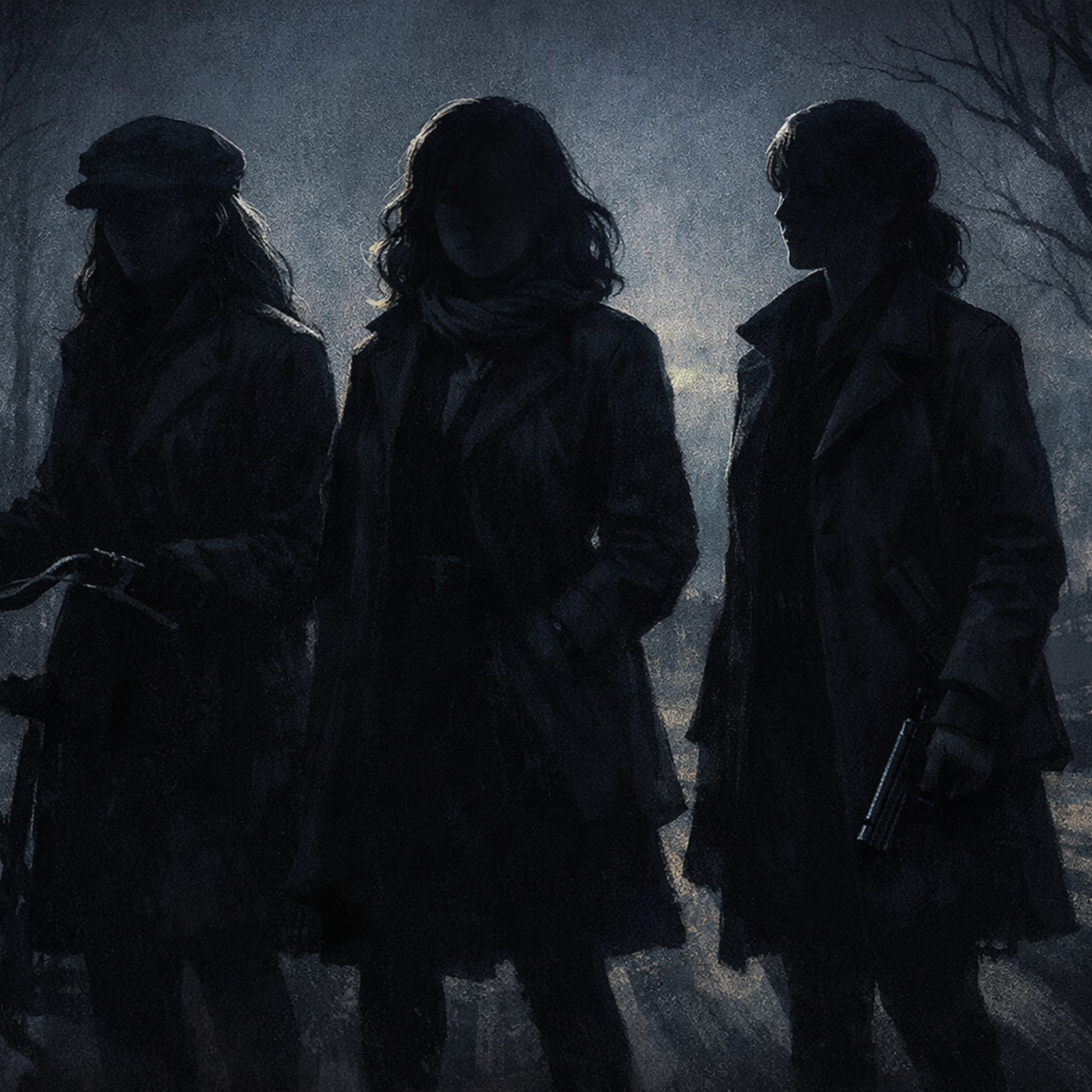
Shadows Before Liberation: Freddie, Hannie, Truus, and the Children Forced to Fight episode artwork

EPISODE · Jan 12, 2026 · 15 MIN

Shadows Before Liberation: Freddie, Hannie, Truus, and the Children Forced to Fight

from Time Machine Diaries: Ancient Civilizations & Future World Predictions. · host CNC Productions

They were teenagers when the world collapsed around them. Not symbols. Not myths. Not side characters in someone else’s war.Freddie Oversteegen, her sister Truus, and Hannie Schaft came of age inside a system designed to erase people quietly and efficiently. The Nazi occupation of the Netherlands did not begin with gunfire in the streets. It began with paperwork, compliance, neighbors staying silent, and children learning far too quickly that adulthood had arrived early.This episode traces the slow suffocation of Dutch society under occupation, the mechanics of how resistance actually worked, and why teenage girls became some of its most effective weapons. It confronts the uncomfortable truth that child soldiers are not an anomaly of distant wars but a recurring outcome of systemic collapse, propaganda, and moral failure.Freddie did not choose violence because she wanted to. She chose it because the alternatives disappeared one by one. Her story forces a modern reckoning with how radicalization happens, how children adapt to survive when adults fail, and why history keeps pretending this is someone else’s problem.This is not a story about hero worship.It is a story about pressure, necessity, and the cost of living through occupation.Sources:de Jong, Loe. The Netherlands and Nazi Germany. Harvard University Press, 1990.Moore, Bob. Victims and Survivors: The Nazi Persecution of the Jews in the Netherlands 1940–1945. Arnold Publishers, 1997.Warmbrunn, Werner. The Dutch under German Occupation 1940–1945. Stanford University Press, 1963.Schaft, Hannie. In the Shadow of the Gallows. Translated editions, Dutch Resistance Archives, various printings.Singer, P. W. Children at War. University of California Press, 2005.Netherlands Institute for War, Holocaust and Genocide Studies (NIOD). Women in the Dutch Resistance. NIOD, archival research collections.Dutch Resistance Museum. Freddie Oversteegen and Truus Oversteegen Oral Histories. Amsterdam, museum archival materials.Anne Frank House. Dutch Resistance and Civilian Life Under Occupation. Anne Frank House Research Division, Amsterdam.United Nations Office of the Special Representative for Children and Armed Conflict. Children and Armed Conflict: Recruitment and Radicalization. United Nations, thematic reports.Netherlands Public Broadcasting (NPO). Women of the Dutch Resistance. Documentary series, NPO Archives.

They were teenagers when the world collapsed around them. Not symbols. Not myths. Not side characters in someone else’s war.Freddie Oversteegen, her sister Truus, and Hannie Schaft came of age inside a system designed to erase people quietly and efficiently. The Nazi occupation of the Netherlands did not begin with gunfire in the streets. It began with paperwork, compliance, neighbors staying silent, and children learning far too quickly that adulthood had arrived early.This episode traces the slow suffocation of Dutch society under occupation, the mechanics of how resistance actually worked, and why teenage girls became some of its most effective weapons. It confronts the uncomfortable truth that child soldiers are not an anomaly of distant wars but a recurring outcome of systemic collapse, propaganda, and moral failure.Freddie did not choose violence because she wanted to. She chose it because the alternatives disappeared one by one. Her story forces a modern reckoning with how radicalization happens, how children adapt to survive when adults fail, and why history keeps pretending this is someone else’s problem.This is not a story about hero worship.It is a story about pressure, necessity, and the cost of living through occupation.Sources:de Jong, Loe. The Netherlands and Nazi Germany. Harvard University Press, 1990.Moore, Bob. Victims and Survivors: The Nazi Persecution of the Jews in the Netherlands 1940–1945. Arnold Publishers, 1997.Warmbrunn, Werner. The Dutch under German Occupation 1940–1945. Stanford University Press, 1963.Schaft, Hannie. In the Shadow of the Gallows. Translated editions, Dutch Resistance Archives, various printings.Singer, P. W. Children at War. University of California Press, 2005.Netherlands Institute for War, Holocaust and Genocide Studies (NIOD). Women in the Dutch Resistance. NIOD, archival research collections.Dutch Resistance Museum. Freddie Oversteegen and Truus Oversteegen Oral Histories. Amsterdam, museum archival materials.Anne Frank House. Dutch Resistance and Civilian Life Under Occupation. Anne Frank House Research Division, Amsterdam.United Nations Office of the Special Representative for Children and Armed Conflict. Children and Armed Conflict: Recruitment and Radicalization. United Nations, thematic reports.Netherlands Public Broadcasting (NPO). Women of the Dutch Resistance. Documentary series, NPO Archives.

NOW PLAYING

Shadows Before Liberation: Freddie, Hannie, Truus, and the Children Forced to Fight

0:00 15:14

No transcript for this episode yet

We transcribe on demand. Request one and we'll notify you when it's ready — usually under 10 minutes.

No similar episodes found.

No similar podcasts found.

Frequently Asked Questions

How long is this episode of Time Machine Diaries: Ancient Civilizations & Future World Predictions.?

This episode is 15 minutes long.

When was this Time Machine Diaries: Ancient Civilizations & Future World Predictions. episode published?

This episode was published on January 12, 2026.

What is this episode about?

They were teenagers when the world collapsed around them. Not symbols. Not myths. Not side characters in someone else’s war.Freddie Oversteegen, her sister Truus, and Hannie Schaft came of age inside a system designed to erase people quietly and...

Can I download this Time Machine Diaries: Ancient Civilizations & Future World Predictions. episode?

Yes, you can download this episode by clicking the download button on the episode player, or subscribe to the podcast in your preferred podcast app for automatic downloads.
URL copied to clipboard!