
EPISODE · Jan 7, 2026 · 1 MIN
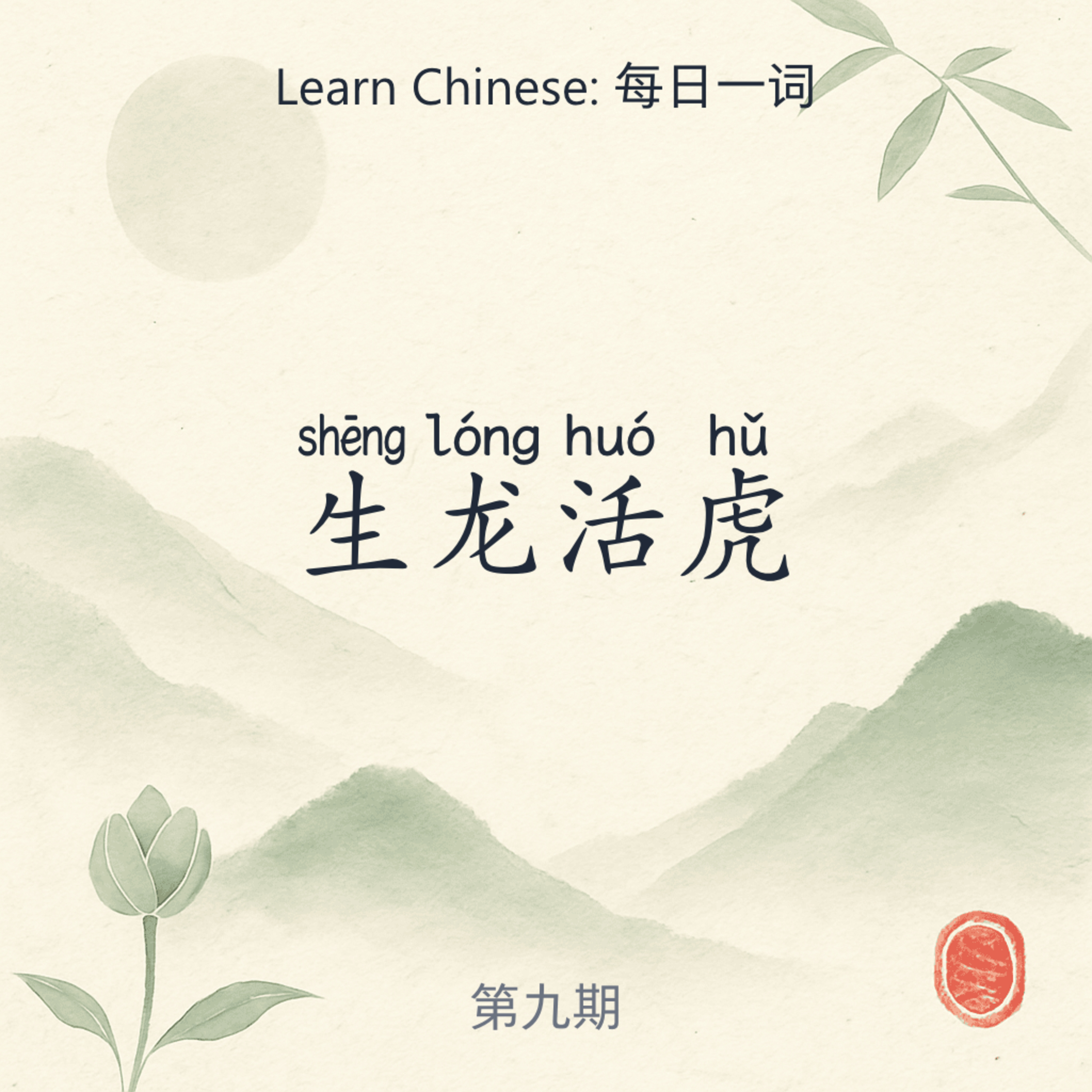
生龙活虎 (shēng lóng huó hǔ)
from Chinese Word of the Day | 每日一词 · host Gallant Guo
特师的每日一词,2026年1月8日的词汇是:生 shēng 龙 lóng 活 huó 虎 hǔ释义 Definition生龙活虎的意思是精力充沛、充满活力的样子。The meaning of '生龙活虎' is a state of being energetic and full of vitality.例句 Example2026年1月3日的明报中,有篇标题为《车厢变成自修室》的文章,作者马家辉是这样用这个词的:「在北京4天,摄氏零下5度的气候,我仍生龙活虎,只因很少在外面行走,出入皆跳上暖气充足的网约车。」这里说的是作者在北京寒冷天气下依然精神饱满的状态。In the Ming Pao newspaper on January 3, 2026, an article titled 'The Carriage Turns into a Study Room' by author Ma Jia Hui used this term as follows: 'In Beijing for 4 days, with temperatures at minus 5 degrees Celsius, I was still full of energy, only because I rarely walked outside, hopping in and out of well-heated ride-hailing cars.' This describes the author's spirited state despite the cold weather in Beijing.你知道吗? Did You Know?你知道吗?生龙活虎和“龙精虎猛”意思相近,都形容人很有精神。但生龙活虎更强调像龙和虎一样生机勃勃的状态。这个成语来自古代对龙虎的崇拜——龙能飞天呼风唤雨,虎是山林之王,组合起来就表示充满原始生命力。比如运动后可以说“他跑完步还是生龙活虎的”,或者形容小朋友“孩子们在游乐场玩得生龙活虎”。Did you know? '生龙活虎' is similar in meaning to '龙精虎猛', both describing someone as very energetic. However, '生龙活虎' emphasizes a lively state akin to dragons and tigers. This idiom originates from ancient worship of dragons and tigers—dragons can soar through the sky and control wind and rain, while tigers are kings of the mountains and forests, combining to represent primal vitality. For example, after exercise, one might say 'he was still full of energy after running', or describe children as 'the kids played with great vitality on the playground'.
Embed this episode
Ready to play
生龙活虎 (shēng lóng huó hǔ)
No transcript for this episode yet
Similar Episodes
No similar episodes found.
Similar Podcasts
No similar podcasts found.