
EPISODE · Oct 30, 2025 · 10 MIN
Sleeping Animal
from Soundwalk · host Chad Crouch
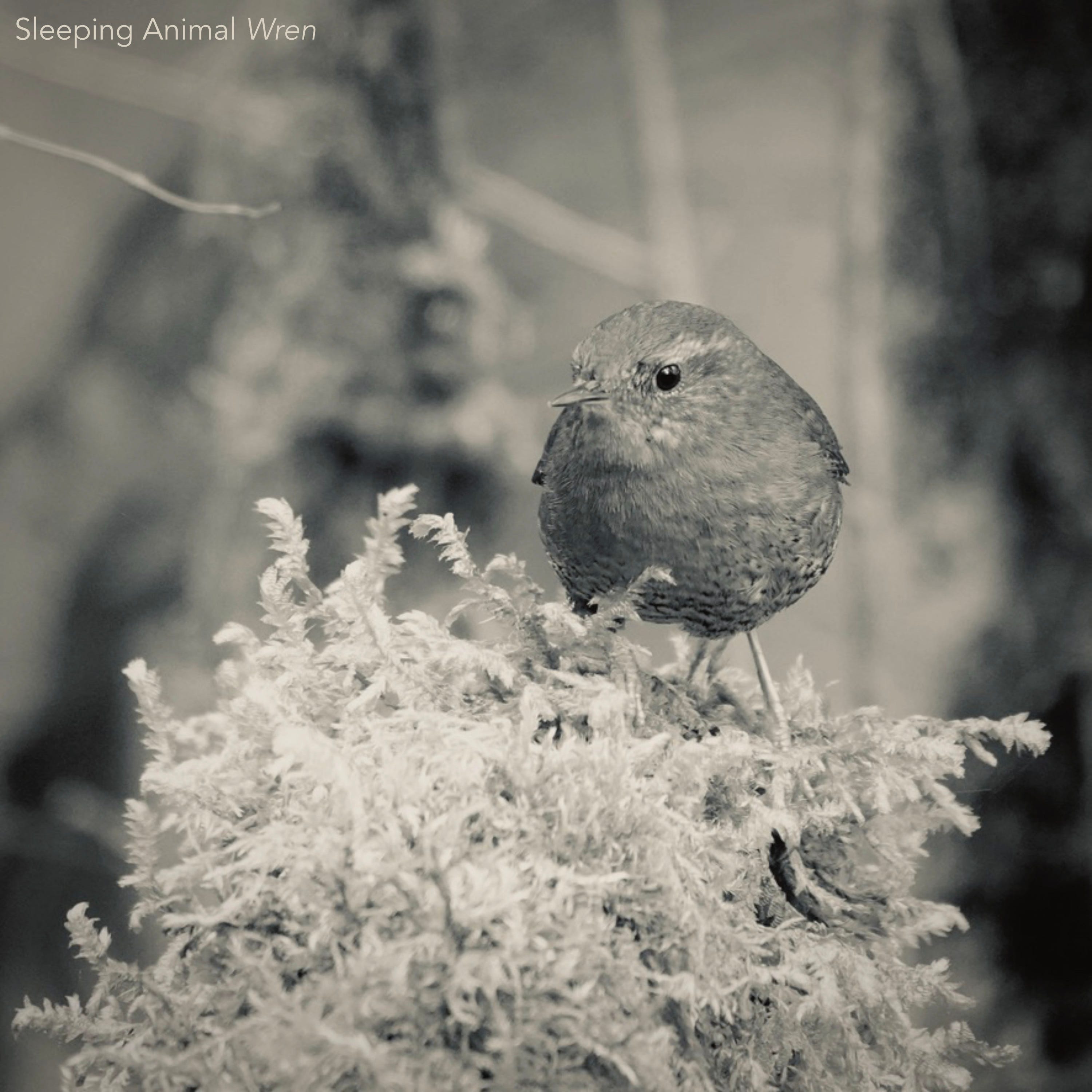
I hadn’t planned to write a post for Wren. In fact, just yesterday I was thinking about how I could skip even writing a Substack Note, which I had been mulling over. What to say? And then I found myself returning to the interesting thing I learned earlier in the week: how the Cherokee traditional calendar ended and started in the fall, and how that made intrinsic sense to me. A time of harvest and reflection. So, I’m feeling inclined to reflect because this is the last Sleeping Animal release from a slate of several this year. As a brief recap, Sleeping Animal came about as a solution for two of my concerns: first, I was swamping my own name with too many releases, and second, I’d long feared my preoccupation with incorporating environmental recordings was seen as little more than a gimmick. So Sleeping Animal became my repository for instrumental works, destined to succeed or fail on their own birdsong-less merits. Let’s turn the clock back to 1994. Having re-enrolled at the University of Oregon after a stint at community college, I was edged out of upper level fine arts courses that I needed for my degree. They were all full. The solution was Independent Study. I would pay the university for credits I needed with the minimum amount of instruction. No problem, I thought. I’d already done that in high school by completing an International Baccalaureate art portfolio, a boon to my college credit tally going in. I wanted to impress my professor/mentor, so I put a lot of hours into having what amounted to a full exhibit’s worth of paintings to show at our first meeting. The oil paintings were monochromatic—raw umber primarily—using a medium to essentially mimic a watercolor technique. The subject matter was figurative, featuring simple, almost abstracted backgrounds. So there I was, in the little-used art school room I’d been using for a studio, with all my paintings spread out, only weeks into the term. I imagined my mentor would be surprised. He might say something like, “Well you’ve been busy!”What happened was he entered the room, said almost nothing, ranged around with a pained expression on his face, seemingly finding nothing worth examining closely, asking few if any questions, and then proclaimied—in so many words—that the work was thin and cartoony. Those were the words I specifically remembered anyway, because they cut. They hurt. There was not the slightest scrap of praise offered for my work ethic. If anything, it seemed like the number of paintings was taken as an affront; evidence for their thin-ness. I did not mount much of a defense, and was relieved when I was again by myself in the quiet room. In the following weeks I painted over every one of them. Though hard to hear, it was true. The paintings were essentially drawings, rendered with paint. You could see the gesso brush strokes under the washier areas. In my second act of Independent Study I turned to landscapes and still life. A little bit Rothko, a little bit Morandi. A completely different path. Now, looking at the gallery of album art that has swiftly assembled for Sleeping Animal—all monochrome and seemingly in service of a neoclassical trope—how could I not be reminded of that formative season thirty years ago?Now, in the peak of fall with my body of work on display, for all to hear, I’m drawn back to that quiet classroom in my mind. What is the verdict?Well, I’ll be the first to say they all look and sound more or less the same. Having said that, it’s not a matter of if you’ve heard one, you’ve heard them all. More like if you heard one and didn’t find it at all useful, you can skip the others. But, isn’t it like that for most artists?When I first imagined Sleeping Animal, I thought I would revisit a type of work I made that was built up with arpeggiated synthesizers. I also thought that I would leave an opening for vocals, at first just dipping my toe in those waters. Alas, I never came round to those programmed arpeggios. The vocal layers, however, are a unique attribute, mixed at a whisper. I wanted them to be felt more than heard. What I’m proud of is how naive, imperfect and unvarnished these works are. And, for this first act, I’m happy that I didn’t come out with arpeggiated synths blazing. The thing I prize most about them, as compositions, is how they breathe. They expand and contract. They are expressive not through dexterity or dynamics, but in their relationship to time.Now for act two! Thanks for joining me on this trip down memory lane. It only took me a few decades to be able to tell the story. Find Wren filed under Sleeping Animal today Oct. 30th, 2025 on all streaming services. I rely on word of mouth to find my audience, so if you find my music or my storytelling entertaining, useful or relatable, please do share it with someone. This is a public episode. If you'd like to discuss this with other subscribers or get access to bonus episodes, visit chadcrouch.substack.com/subscribe
NOW PLAYING
Sleeping Animal
No transcript for this episode yet
Similar Episodes
Mar 27, 2026 ·46m
Nov 28, 2025 ·25m
Nov 28, 2025 ·20m
Nov 28, 2025 ·23m
Nov 28, 2025 ·22m
Sep 9, 2025 ·28m