
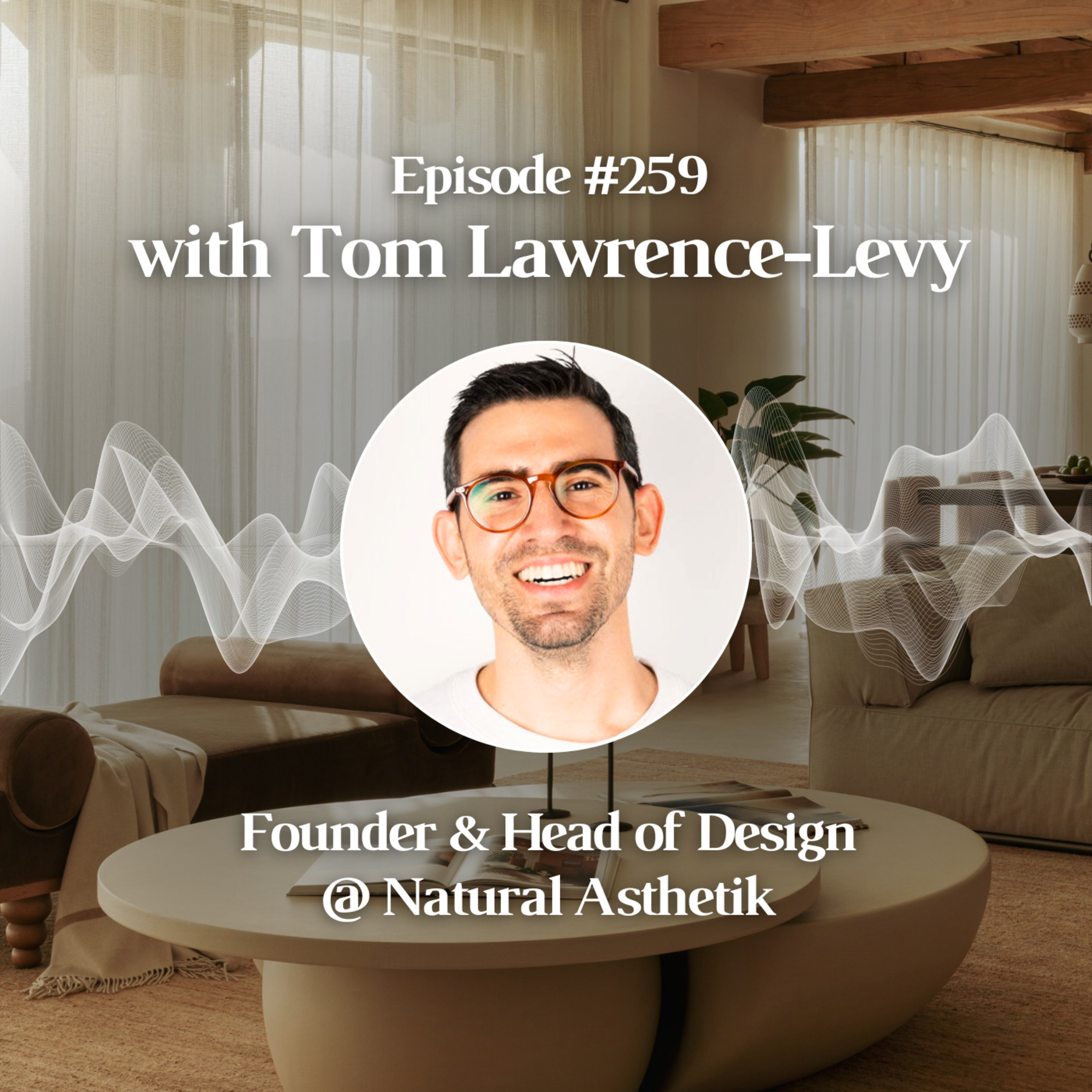
Ladies and gentlemen, welcome back to another S.L.D. Meetup, your host, Alvar and Union, to bring you another successful and interesting guest in the luxury space today we have with us, the founder and interior designer of Natural Static, Sami's Tom Lorenz Levi, and they are based between Miami and London doing some incredible projects worldwide, and he's gonna tell us all about the latest trends and interior design and some of the projects that he's been working on. There he is, that's good, Tom, how are you? How are you?
Amazing, amazing, glad to have you here today with us. Thank you for having me. And you're joining us live from London or where are you at the moment? Yeah, now I'm in London, it's freezing, but I actually heard Miami is pretty cold now too.
I was gonna say, it's not too far from how you guys are feeling in London. We're having a very interesting few days in here, that's for sure. Yeah, no, it's, I don't know, it hasn't been that bad of a winter, I feel like, I feel like it could have been worse. Well, look, it's always nice when you are surrounded by beautiful homes and doing some of the great projects that you are involved in, so congratulations.
Thank you, thank you so much. Well, I've seen some of your recent projects that also got featured in Vogue, Living and other magazines, which is phenomenal, but at the end of the day, when I meet an interior designer, I always have this curiosity on how do you envision to become an interior designer? Oh, honestly, my story is very weird. So I'm actually a lawyer, like I licensed in Florida and I was licensed in New York and basically I was working at an interior designer during school during law school and during college.
My story is an assistant and it was just, it was, I worked with a guy Camila Alvarez is unbelievable still in Miami Beach. And it just really like, I got interested in it and things just sort of rolled into into place and then I was working as a lawyer and then I thought that I was going to be a lawyer. I thought design was done. I moved to London, COVID happened.
I was just like, they know what to do. I was like, I started an Instagram account. I was working at a law firm here at the time, then I got let go like everyone during COVID. And I got let go.
People started asking me to do their houses, like from Instagram. That's crazy. And then from there, just one after the other after the other after the other. But then I had, I was really lucky because I also had some friends in Miami that were doing their homes and they're like, I just wanted to get my name out there so I took on projects for free, just to sort of like start here and there and sort of build momentum.
But yeah, I mean, I mean, I mean, to be honest, I was so cool because a lot of people always when they see your work and they see that big following that you've built on social media and the projects that you're currently working on, it looks like you've been doing this for many, many years. And the fact that you've been doing it for this last few years, and you've been putting so much of your passion into it is just a testament that sometimes hey, it's all about the stake in action, regardless of your background and sometimes I find that's very cool. The background that you bring into this new industry is just really finds who you are as a designer. So it's pretty cool and I congratulate you for that.
Thank you. I mean, it's definitely, you know, I'm sure you know, it's a lot of work in the industry that we work in. It's your network is everything and pushing to sort of put yourself in front of the right audience and and putting your name out there and having and building relationships and having people trust you and you trust people and you know, that's really how being started to roll for me. Like I said, like I took on free projects.
They took on like a project here there in the beginning. You don't say no to anything. Like if you want something, you have to be consistent and you have to go after it. And it's just every day.
Until now, every day is like, you know, you want to be put into a new market in front of other eyes, you know, I won't say no to any project in a new location, just be in front of a new market. It's interesting. Right. And I have a few questions that I'm sure the audience will resonate with.
But just before we jump into that, it is really good to hear that because a lot of people that have been doing something for many, many years, they don't even share that with their community or their audience. Like, at the end of the day, your network is your network. Like you want to make sure that everybody that you have in your community knows that you are a designer and that you're here for work and that you're here to give your best. And as you said, like, eventually someone is going to trust you because of that relationship that you already have and it will give you that first job.
And then from there, you start building momentum. So that's a great reminder for a lot of people that they don't put their the scollet role out there to the world, like say who you are. And one thing that I've noticed is that you've actually developed your unique brand and style over these last few years, which is not easy, right? So did you find inspiration on other designers?
Is it something that you kind of like blend throughout the years? How do you find that style that differentiates you? I do think initially it's a lot of inspiration that you see a lot of, you can see even on my seat, I share a lot of inspiration from other designers because I do think that we all learn from each other. Like there's designers that sometimes I think, wow, like, how did they think of that?
Like, just it's so their designs are crazy. But at the same time, I think, I think context is really everything. So I think like a house in Ibiza, for example, like, isn't a house in New York. Right.
It's, I think you really have to tailor a house to its location to make sure that it will be timeless and like stand the test of time. So I think it evolves with the location of the projects. And I guess also, I just like things to look clean. More I love there are some people who are like maximalists and do it very, very well.
I can't do that. Yeah. But I could blend, you know, some of it depends on like the client's needs, but everything comes down to who's living in the house. How do they live?
You know, what's their goal? Because who's the end user and how they want to, you know, how they want to host who they want to have? Like, it's just so many factors going to play. But I think that my style specifically, I do like neutrals, but now, you know, we see a shift in design, like, people are wanting color again.
People are wanting to be a little bit more have had more interest to their homes. So I do think it's like a process that like evolves over time. I think that like constantly evolving and I'm also constantly trying to push myself to like do the next thing. Right.
So talk about that. We're talking about the evolution, the next thing. So where do you see these upcoming trends for the next few years in the design space? You know, it's, it's like, we see a lot of metals coming back.
Like there's a lot of steel coming back, which is, and people are going, leaving a little bit more of the brass and the brush browns and going back to nickel and chrome, which is like really nice. And again, I think that anything could look good. If you do it right, like, you know, there are traditional homes that are standing like, I was just in Paris this week for, for the design, we can we go to these homes into these establishments that are so, like, they're so old. But so well taken care of and it's done so well that, you know, I wouldn't put a modern sofa in that kind of atmosphere.
Right. I just think that you have to be confident in your style and plan things accordingly. And I think people really, the biggest issue I see in some homes of people who don't have a designer or don't, you know, is just, they don't think of space planning and space planning makes the biggest difference ever. Like, it doesn't matter which home you have big, small, like space planning could make your home feel much more elevated.
And if you think about like this circulation space and the lighting is lighting also like a whole, another lighting could change the whole house. So, I don't know, I think, I think it's just being very true to your style and keeping a home cohesive like someone told me a home needs to feel like this. How did you say it? I say a home needs to feel like different parts of the same space.
So it's like, when one room is like completely different, like, you know, and then the other room, it just has to be elements that tie them together. I love that. That's pretty cool. Space living.
Now, what would you say has been the most challenging part for you as a designer transitioning into doing all these projects? Where, why? I think really it's been the hardest part was, like I said, expanding your network. I think people undervalue how much time actually needs to go into networking.
And I think your talent could get you very far, but I think at the end of the day, you need to build relationships because people like to work with people they like. That is so true. And so it's, I'll never say no to a networking event. I'll never say no to, you know, it's like I go to an opening of an envelope.
Tell me about that. So why are some of your go to improve or increase your network? Honestly, I'm on the cusp of I get like emails and invites to events, like either from furniture brands or from, you know, you sign up to mailing lists and you go, you go like openings of hotels. If I see, if I know a hotel is opening, I'll message them on Instagram or have or send an email to like the manager or director.
I love that. We want to come to the event. And it's really like we push. Also, it's like if I hear of an event that's interesting, like, you know, I push or charity events also are very good.
We get involved with charities and go and even if it's to provide, sometimes we've put up our services for free as an option for for people to pick on for charity and not with another group and another group and another group and it's just, that's how you expand and get people to know you. Well, I love that. It's so important. A lot of people, they stay in their comfort zone right.
They just want to expect that things are going to come their way where you need to actually go there and get yourself in front of the right people. I wish it was like that. But yeah, I mean, you know, honestly, even with Miami, at least like I know a lot of real estate agents and, you know, if there's like showings or open houses, like you could go also and you see prospective clients, people that, you know, might need help with decorating or, or if they're interested in the home might not know what to do with it or how to improve it. I go like sometimes I go or someone from our team goes and like we just to be out there.
I like all of that. And look, I think that once you get to the right audience and you start working with clients, it also something that I want to ask you because the authority, right? Like you're building a brand that gives you the authority, but also the projects that you've been already involved. But at some point, you got to start somewhere and how do you establish that authority, right?
And also sometimes, as you mentioned, you're saying yes to everything you're saying, basically, like whatever comes my way, I'll take it. But how do you start controlling the narrative when it comes to projects? Like how do you become the authority and the client listens to you and trust you throughout the process rather than just like doing what they say? I think there's a lot of teaching involved in our job.
I think that we constantly, you know, a client might want something and sometimes our team will dry up for them the way they want it, but then the example of what we know is right and explain why they're way doesn't. But people, you know, especially when it's a residential home, people have an idea of what they want sometimes. And I think a lot of it has to do a lot of education and sort of like we can't always change the complete structure of a home or we can't always do exactly what they want. So we have to show them this is actually a lot smarter.
This will make your home feel better. This will be more functional. And you're constantly educating people in like a nice way, but you're showing them like this is why we do what we do and, you know, they have their jobs that they're much better at than me. I think that's how we really navigate it.
Sometimes really have to explain because when people have an idea stuck in their mind about something they want, it's very hard to get them to change. Even if you know, even if you know it's wrong, you have to show them why. Well, I like that approach, right? And it's a good reminder for a lot of people out there because sometimes when you are overconfident about wanting to say something, it might come as arrogant.
And that's where you break that trust. And what you said right there is not so much about explaining but educating, making sure that you're adding like honestly knowledge is power. So you're able to apply all that knowledge to the conversation. That's going to always put you in a more authority state.
But that's pretty cool. Yeah, no, and listen, there's always going to be people that regardless of you teaching them want something specifically, they are the end user. It's their home. So of course you got to respect them too and they're what they want.
So it's like a balance. But I think for the most part, people when they come to us, they know what they are hiring us for. And I think luckily until luckily until now, I put a lot of trust in us. So it's been very like, thank God, a few pushbacks.
It's been pretty good in that regard. So tell me about those pushbacks. I mean, what's been your biggest lessons being in this industry for all these years? The biggest lesson is that like until you don't make a mistake yourself, like it's basically mistakes are inevitable.
So I'm but once you make that mistake once, you know, you won't repeat it. Like just an example, like we were doing an install and some of my team forgot to order like two of the sconces. So like the house was going to be done completely. And now we're missing too.
Right. It's just believe me like after that happens, I will never. Never. Yeah.
So I think challenges and pushbacks. I mean, there's every project is different. I mean, and I think one of the biggest challenges about working internationally is that every place you go, you sort of have to build a new team from the ground up. And so I think that's the hardest part.
But once you get a good team, it's it could move very well. Like in our visa project, we worked with BlackSag and their team is unbelievable. Like amazing professional really just top like they were just so such an amazing experience to work with them. So it ends it once you have a good everything comes down to building a good team, no matter where.
I love that. But while any exciting or dream projects ahead for you. I mean, I have an exciting project in Dubai, but it's going to be a few years. And we've been working on already for a while.
And then dream project. I mean, I would really want to work. Do something in Paris. There I do like the idea of having the old architecture with a little bit like a more contemporary interpretation, but I would like to leave the trims and leave every everything traditional in that like to sort of respect the buildings.
Hey, you're putting it out there in the world. Yeah, other dream project would be to do like, you know, something like a hotel, like a boutique hotel, a restaurant, like that's all would be amazing. We look forward to seeing that journey. I really hope so.
Well, we always have this question for all of our guests and I'm very curious why it is to you. What does luxury mean to you? To me, honestly, luxury is craftsmanship. And like, I think, I think you could have so many different types of homes.
But I think the finish of the homes is really what tells you what what what like luxury is to that's like for me, I like, I like the end finish to be perfect. Like, like seeing less like things need to feel so well planned and thought out that to me, that's luxury. So I like, even with furniture and you could tell the quality of something well made versus something that is just, you know, mass produced. And so yeah, I love that word by the way, craftsmanship.
Like it's a very well word to associate with luxury. I appreciate that. You see, I don't know if you're familiar with the four seasons in Surfside. Yeah, of course.
I love that place. Yeah. The designer Joseph Durant. It's the most beautiful, like understated luxury, but everything there is very well made, very well planned, very, and it's not loud.
It's not loud, like loud luxury. It's just very, very well made and put together. Yeah, I agree. That is beautiful.
Actually, I was there just not too long ago. And I had a percent. Well, I look, my friend, I actually look forward to seeing you in Miami because I know you come here often you are from Miami. Actually, we definitely have some exciting thing that we could do in here.
But one thing that I just want to wrap this up with is something inspirational for our audience. Like, if you have to go back to those lawyer years when you were like transitioning during COVID, if you will have to start over again, is there something that you will do differently. I think I would have started building my personal network a lot earlier. A lot earlier.
I think I would have probably volunteered more during college. I probably would have just really, I only understood the benefits of networking very late on. I was really a homeboggie. I love home.
But, you know, once you sort of once I learned how powerful a network is, it really pushes me to keep going. And I think anyone who's starting consistency is everything. You have to expect in the beginning, there are failures along the way for everyone. Like for me too, I mean, there were times I was super frustrating, but consistency is everything.
Like, if you're in it in whatever you do, you will see. Good. I love that. I mean, it's so true.
John Maxwell is the one that said consistency compounds. So definitely stay in the game. Stay in the game for us. And start early, right?
So even if it's with your personal network key and personal branding, whatever it is that you want to do stay consistent. I'm sorry. I appreciate that. Exactly.
Thank you so much. Thank you, Tom, again, for all the insights that was very helpful. And for those that want to check what you're doing, what's the best way to connect with you? And either via our website, naturalisthetic.com or our Instagram at naturalisthetic.
That's beautiful. I mean, definitely very inspiring projects. I'm looking forward to seeing all these upcoming ones that you have. And we're here to support you.
So keep on going well. And you think we'll see each other very soon? Yes, in Miami. All right, I think.
Take care. Bye. Bye. And thanks again for everybody tuning in today.
We hope you enjoyed it. And remember, embrace it's beautiful success in life. My name is Alvaro, and I'll see you next time.