
If you're tired of endless scrolling to figure out where to eat, same. I'm Stephanie Wu, editor-in-chief of Eater. We've just launched the new-ish and way better Eater app. It has all the restaurants we love, gives you personalized texts wherever you are, and serves as smarter search results just for you.
You can find my list of the best places for martinis and fries in New York City. And save your favorite spots, share lists, follow editors, and look right in the app. Download the Eater app at Eaterapp.com. It's free for iOS users.
Switched on pop. Welcome to Switched on pop. I'm songwriter Charlie Harding. In the last few weeks, there's been this meme circulating of major pop stars, Halsey, FK Twigs, Florence Welsh, Charlie XCX, all lamenting that their labels are requiring them to become TikTok content creators.
The conversation TikTok hang up at all, right? So I'm like TikTok. Well, I didn't really want to be here, so obviously I'm just wanting to get this over with and get on with my life. I just hate this.
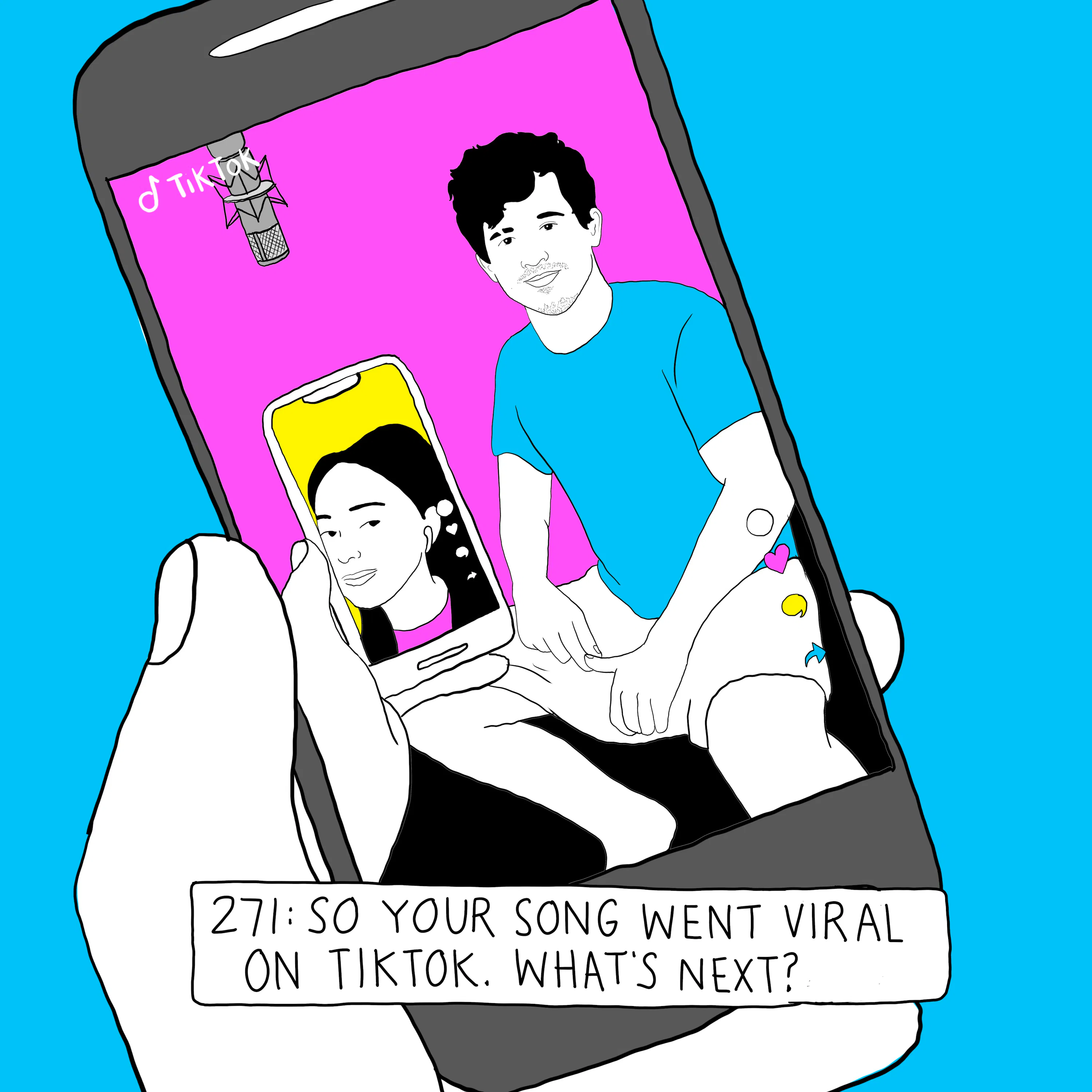
It sucks. You know, in just two years, the short-form video social media platform has utterly upended music discovery, in many cases giving unknown musicians a pathway to enormous audiences, and it's become increasingly important, especially during the pandemic, as people flocked to their phones over going to concerts. I've even reported stories about Ty Verde and Benny, artists who seemingly came out of nowhere to burst into mainstream pop because of TikTok. But I wasn't aware of how prevalent this trend really has been until I spoke with two journalists who've uncovered the extent of how TikTok has changed music in a multi-month-long data investigation into what has happened to the pandemic 2020 class of TikTok viral stars in a documentary video for the Vox.com Earworm series.
Honestly, the numbers were not what I was expecting, and so I invited them on the show to break it down for y'all. My name is Sel Castle. I'm a video producer at Vox.com. My name is Matt Daniels, and I am a journalist at The Putic.
So the two of you in the fall of 2021 started this project investigating the relationship between TikTok and music. What was it that you were wanting to know? It seems like every time I scroll through TikTok, there is an artist that I've never seen before that song is going viral, and then like five posts later, I have an announcement, I got a record deal. Do you have a favorite example of someone this happened to?
Oh, man. I mean, I think the first time is when Charlie Puth showed up on Jake's TikTok. Okay, let's pull that up. Here is pop star Charlie Puth performing with Jake, stylized J-V-K-E on Jake's TikTok.
Hey, Charlie, you ever heard this song before? Oh, yeah, that's upside down. You still down top on the remix? Yeah, absolutely.
Let's get it. Wait, so what does a top 40 pop star slash TikTok champion like Charlie Puth want to collaborate with some random kid on the internet named Jake? How did Jake get this kind of attention? Jake, previous to the pandemic, was trying to break into the music industry as a songwriter, so when the pandemic happened, he started doing these remixes.
He was doing all these videos with his mom, remixing viral TikTok songs. Hey, mom, have you ever heard this song before? I want you to make a fire remix. You got this?
I got it. Whoa. This is sweet. It's like Jake and his mom collaborating on TikTok.
Kind of looks like she's making the beats, even though he's clearly doing it in post-production. And it, like, really worked. Every video he released, like, was going gangbusters viral. And then finally he was like, I'm just gonna, like, put my vocals on these remixes, make videos showing me making the song, like, this is a cool format on TikTok.
Until finally he released a song that just, like, exploded. It's called Upside Down. Now, hey, your mom's gonna make this a pop. So Charlie Puth working the system in some way wants to get in on that, basically.
You basically have an artist who has no public music career go from making small, semi-viral hits on TikTok and major artists want to collaborate with them. That is exactly what happened. And then as the story goes, Jake's music career explodes. He has songs that cross over to Spotify.
He starts to tour. He gets label offers. And this is not the only instance. And it was just, it just felt like it kept happening.
I was like, there's got to be a way to quantify this as opposed to just seeing, like, anecdotal stories. There had to be a way to, like, see if this was as prevalent as it felt. Matt, you're a data journalist. Let's get into some of those findings.
How many songs went viral on TikTok in 2020? Yeah, we were able to find about 1,500 songs that had surpassed 100,000 posts. So that's 100,000 people making a video with that song in it. Yeah, and that's a really, really high threshold.
Like, 100,000 seems small on the internet right now. But 100,000 people making a post, making a video, we're talking hundreds of millions of views at that point. So these songs are globally popular if they're hitting that threshold for sure. So your measure of what's viral on TikTok is not views or likes or whatever.
It's the number of videos posted by other people that have the song in it. So 100,000 other TikToks that use a song as the soundtrack. But that's everything from WAP by Cardi B to, like, Fleetwood Mac songs. So these are not all kind of interesting to us, which is where a lot of the work came in, is we have to go through manually and say, like, these are artists that weren't touring, didn't have a label signing, were making music in their basement, like Jake, basically just starting out, hadn't had their big break.
You know, that's where the data work really came in. And so you end up slicing and dicing this data to figure out the number of artists that were new, that were not established artists. What does that data look like? What's the proportion of those 1,500?
How many of them are new artists? A lot. A lot fewer than we thought. Around 150.
So we're talking about 10%. Maybe that's a lot if you think about it as a percentage. But if you think about all the viral songs that happen, it feels like it's coming from a lot of new artists. That TikTok was the great equalizer that allowed anybody to go viral.
But the predominant amount of music was coming from established, signed, already touring artists. Which is not exactly surprising. But the data set we landed on was about 150. Yeah, round numbers.
In the video, you said it was exactly 125. Yeah. You're bursting the bubble. Come on.
I want to believe in the TikTok American dream. The international anyone can do it dream. So these 125 artists who are breakout new artists who have a viral hit on TikTok in 2020, what happens after you go viral on TikTok? Out of all of the artists that I talked to, they said that in comparison to any other social media platform like Instagram or YouTube or SoundCloud, TikTok, there's so much more engagement on the viral music.
The song might go viral on TikTok and the song isn't even on Spotify. And it might be that that artist didn't realize it was going viral until like 50,000 posts in. And then they're scrambling to figure out how can I actually make money off of this. And a lot of people just like begging the artist to release the song on Spotify so they can stream it.
Matt, when you dig into the data, do you observe that phenomenon? Yeah. So the problem of just looking at 2020 for artists who charted on Spotify from TikTok is what if someone went viral in December and it took a while for their song to chart? So we ended up just expanding the window, knowing there isn't like a one-to-one relationship of go viral, then hit Spotify chart.
Also, we want to consider whether this artist might have had a huge moment on TikTok, but actually took a couple releases before they had a song do well outside of TikTok. There's no shortage of songs that have a slow burn, takes time for them to build that. Yeah, yeah, exactly. Okay, that makes sense.
Break down for me the numbers that you see in the TikTok to Spotify pipeline. So about 1,250 artists started between 2020 and 2021. But a lot of those artists were well-established. They charted in the past.
They charted pre-TikTok. So we didn't really want to look at those. That takes out artists like Drake. Gotta dance, but it's really on the street.
I'ma show you how to get it to go right. That leaves us with about 500. We then cleaned artists who had maybe not necessarily charted before, but probably shouldn't be on our list. That would include artists like Fleetwood Mac, who oddly had never charted on Spotify until they went viral on TikTok.
But we knew that they had a career before that, so they weren't really of interest for us. We cleaned those out. And after really settling on a list of like, these are artists who really charted for the first time. This was their big first moment on a big platform, like the top 200.
The number of those artists were 332. So then we went through each one of those artists and said, well, how do they end up charting on the top 200? Did they have a moment on TikTok? About 25% of those artists, that 332, clearly from our perspective, had TikTok as one of their big moments in their career that eventually ended up landing them on the top 200.
Or this was literally a song that was going viral on TikTok at that moment. Okay, so let's break this down. You're looking at the Spotify top 200 of 2020 and 2021. There are about 1,500 total artists on that list.
332 of them are new. You said 25% of them are coming from TikTok. That's about 80 artists. That means established artists are still dominating people listening.
Legacy artists still have such a big role in music. Any song Drake releases is going to show up in the top 200 no matter what. And like, regardless of how big TikTok is, until we get over Drake, he's going to be popular and guaranteed. Yeah.
We were sort of like filtering. Not only did the song come from TikTok, but the artist kind of got their break on TikTok. As opposed to like Fleetwood Mac streams. The origin for that landing on Spotify 200 in 2021 is TikTok.
But they wouldn't be included in this data set because obviously they were popular already. If you just look at songs as opposed to artists, it's more. But if you look at like the artists being broken on TikTok and then landing on Spotify 200, it's a quarter across the board. And then in 2021, like 36%.
Yeah, we argued a lot about this. Because if you take the current Lizzo song that's blowing up. It's a major song that would be popular regardless of TikTok existing. So what we really wanted to do was focus on artists or songs that were clearly coming from the platform and wouldn't otherwise be popular without it.
So these are often artists who effectively had their big break off of TikTok. I definitely want to know how frequently a TikTok hit turns into lasting success. What indicators were you looking for in terms of an artist developing a fan base that will sustain a music career? We were looking at touring.
Out of all of these artists, the 125 that we saw go viral on TikTok, was that enough to then allow them to play a show? Just like one show, basically, and have people show up to it. Were they able to move from the internet to real life? Yeah, artists go viral on TikTok, but haven't gone through the traditional steps of building a fan base that will show up, add a concert, pay for a ticket, and buy your merch.
None of that has basically been tested yet. I mean, if you're selling a really good meme, I would assume you'd have a really good t-shirt. You just sell the meme as a meme as a meme. Memes all the way down.
Obviously, with the huge caveat that this number might be much more if we weren't in a pandemic when shows are like not happening. And the reason that TikTok is so important to the music industry right now is because shows are not happening. Live music is the predominant moneymaker in the music industry, though. Yeah.
So what did you find? Break down the numbers for me. Well, the first thing we looked at was just where they were getting signed. About half of them ended up signing with a major label.
Of the artists who had never played a show before, about a third of them had played at least one show after going viral. And 14% of them actually played a festival. But on the flip side, that means about two-thirds of these artists who had this viral moment have yet to play a live show, which has to be caveated with the fact that we are still in a pandemic and many artists might not be comfortable playing shows, or playing shows is just economically infeasible. Okay, so you're saying that in addition to a third of artists having played a show after their viral hit, labels are also using TikTok as an indicator about who to sign.
And it seems to be happening more and more. I'm Maria Sharapova, and I'm hosting a new podcast called Pretty Tough. Every week, I'm sitting down with trailblazing women at the top of their game to discuss ambition, work ethic, and the ups and downs that come on the path to achieving greatness. We'll dive into their stories and get valuable insights from top executives, actors, entrepreneurs, and other individuals who have inspired me so much in my own journey.
Follow Pretty Tough wherever you get your podcasts. So we are 250 years into this American experiment, and I say it's going okay. I give us like a C+. There is no perfect past, but there is also no exclusively negative past.
First, because humans are going to be human. That's what we do. I think the story of America is the struggle of people who have not been included in the promise of America to expand those principles to include more people. What's going to determine the next 250 years of America?
And how do we write a new social contract that can give us the democracy we deserve? Okay, so I'm just going to be a jerk here because I'm a historian, so we have to have a prologue explaining, you know, we the people. Okay, you guys, you still remember it from Schoolhouse Rock. We the people, I don't know the form of warfare for you yet, I establish justice.
What is it? Insurance, domestic, tranquility. So you're talking about a foundational document. So I'm building a document that will protect American democracy.
That's this week on America Actually. So break it down for me. What does your reporting tell us about how the major labels have changed in response to TikTok? I think a lot of people look at TikTok and the way the music industry has sort of latched onto it, the same way, like, stockbrokers would.
Or what is trending upwards? Can we get it at the right time? Can we get it before this tiny artist has actual leverage? And can we sort of sell ourselves as the person who is going to make this blow up as opposed to it just blowing up on its own?
Which is pretty much what's going to happen. The songs, the second they're trending upwards, are, like, taking time bombs. Like, they're going to do well the second that they sort of get pushed out into the algorithm the way they are. And the music industry knows that.
Like, they are data analysts. They're hiring data researchers to do A&R. This is the perfect storm of an opportunity. And so you see all these stories about artists having a song go viral one day and then, you know, they're in a bidding war the following week between every single major record label.
That's a very well-documented phenomenon. And so one of the things we want to look at is, like, yes, anecdotally, that's a very well-documented phenomenon. But, like, is it as pervasive as it seems? I think that was a huge question that we had, especially because the music industry and record deals and things like that are just inherently really complicated and opaque.
There is no database that tells you, you know, all these record deals that happened on Wednesday, January, or whatever it is. But what I do know is that there's just way more record deals happening than there were, you know, 10, 15 years ago. There's a lot of turnover on major label rosters. So record labels are signing artists left and right.
And the question is, like, how many of those artists are coming from TikTok? You actually found the answer to this question by tracking all the deals that happened over the last couple of years. Who signed who didn't come from TikTok? What did you find?
Yeah, believe it or not, there's no universal list of label signings. So I had the idea of basically looking at cached versions of labels artist lists. So if you go to, like, Excel recordings, you look up who their artist roster was, and then pretend to go back in time and do that at the beginning of 2020 and just look at the difference. You look at a user website like archive.org, it shows you older versions of websites, and then you actually compare it over different time frames what the artist rosters were.
Because there are artists that were added that were signed before 2020. There are artists who never got added because the labels are maybe lazy. And then there's artists who haven't been added because they're lazy as well, even though they got signed in those past few years. But we use that as basically our corpus of data to just say, all right, knowing that they're probably consistently added or not added, what can we pull from this data?
I'm obviously double checking that they were signed within the time frame as well. Conspiracy theory alert. There's probably also plenty of ghost signings that we are not witnessing in that probably the most predominant consumer criticism of music is someone in industry plant. You don't want to be an industry plant.
So there's probably people that don't even want you to know that they're signed to a major. I wouldn't be surprised if there are some artists who you don't know are signed to a major. Yeah. But that is how opaque it is.
Like... There's just, like, this veil of secrecy that seems to, like, exist in the music industry that is just so hard to wrap your head around. So are they signing a lot from TikTok? Yeah.
There were some record labels that seemed like this was a concerted effort. Warner and Republic come to mind as very TikTok-oriented, especially in 2020 and 2021. Yeah, in Republic, we landed on 33%. Warner was 40%.
Some of them were in the single digits. I think the actual average across these 12 labels was about a third. Wow, so 30% to 40% of artists signed were coming from TikTok. Again, there's a lot of subjectivity here.
Like, was this artist signed to come to TikTok? I mean, we'll never know, but just based on them having a viral hit, TikTok being cited in the press release, we kind of had to give it a call. And when we did that, we landed on about a third across all the major labels over the past couple years. Why do they want to sign TikTok stars?
It seems obvious, but I think that's actually not a simple question. Well, it isn't, because I think this also gets to exactly who these stars are and what their brand is. We looked at viral songs, for instance, but there are also artists on TikTok who are building their own following on TikTok, and they might not have a viral song that has gotten 100,000 posts, but they might have a viral video that has gotten 500 million, however many views. And that was what the music industry saw as basically an artist primed with a built-in following on TikTok to then carry that into a career.
They're looking at TikTok as a way to poach talent. But then there's also another way the music industry looks at TikTok, which is viral songs, that they know they can make a ton of money off of very quickly. And I think that would be sort of like the difference between somebody trying to cash in really like a stockbroker. You know, this song is trending really high, so if we can grab it at the right time, we can make a lot of money off of this very quickly.
And then they'll sign the artist as a way to get that song. Then there's the other way that the music industry is looking at it. They're looking at TikTok as sort of an incubator of talent, the same way that an ANR would go into a bar and see somebody building a local following. They're now looking at TikTok to see, is this person great on camera?
Is this person making content 24-7? Do they have an okay voice? Can they sort of bring this fandom that they have on the internet to a live show? Probably.
About 11%, 10% signed with indie labels. About 46%, so around half, signed with major labels. So that means that the other half haven't signed at all. So they're either doing it themselves, effectively going indie, indie being not with an indie label.
And that's the breakdown. I think for me, that was not a surprising number, but it also was a really big number. For the amount of artists that having a viral hit sort of then resulted in a major record label deal, obviously 46% is a lot. It's not a majority, but it's close to it.
That doesn't feel strange to me, considering all the other things we talked about. One could assume that the half or so that just go DIY, they didn't have the biggest hits or they weren't the best artists, like, boo-hoo, you didn't get the label deal. Maybe many of them were offered deals. They talked, no doubt, someone's going to be giving you a phone call.
So part of what you report is that the whole label dynamic has totally changed such that some people don't even want to sign up, that the leverage is now much more in the artist's favor. The share of listens and streaming of label-owned music was 87% in 2017, was down to 78% in 2021. So their market share is declining, and they're offering more and more competitive deals where artists are getting more cut on their music than ever before because they've already demonstrated they have an audience. Some people are probably choosing not to sign.
What's the advantage of not signing? The advantage of not signing is obviously you make a lot of money if you put your music out on Spotify and you're able to sort of like sustain that virality across multiple releases. One of the artists that I talked to was Tom Rosenthal. And the reason that he actually ended up on our data is because he released a song that went viral under a pseudonym.
Right, Edith Whiskers cover of Home by Edward Sharp and the Magnetics. Technically, Edith Whiskers is the name of the artist, which ended up being Edith Whiskers' first song on Spotify, which is how Edith Whiskers ended up in our data set. But the person behind that song was a very prolific singer-songwriter. He's based in the UK, and he's very much opposed to the sort of traditional route of signing to a major label.
But obviously, he was offered quite a bit of deals because of this viral song. He has made so much money off of that cover and subsequent releases that he's able to promote on TikTok, he could tell a record label, this is the amount of money that it would take to get me interested, and they would laugh at him because he knows how much money he can make off the songs if he's getting 100% of the revenue versus 15% or 20% or even 50% in a good deal, essentially. Right. Oftentimes, the streaming services are thrown under the bus as being the problem in the music industry because artists are only getting paid a fraction of a penny.
But it's actually a fraction of a fraction of a penny because the typical label deal is that you're only getting 50% of the royalties coming from streaming services. And so if you actually own 100% and you have a viral song that's getting millions of plays, there is money to be made in streaming. Yeah, you can make hundreds of thousands of dollars off of one song in a year. It's a lot of money that you can make if your song goes viral and you have 100% of revenue.
So do you think that aspiring artists are better off now that they have this path for launching a music career on TikTok? I totally feel cynical about it the way Matt does. But I also see the upsides for a certain type of artist that wouldn't be able to make it before in this situation because of TikTok. So a bedroom producer who actually is really good at making content is really interested in being very present on the internet.
You know, they're treating making music and having a music career as sort of just like a content creator went on YouTube or something. There's now an opportunity for them to not only do that but make money doing that without the influence of a major record label. On the flip side of that, it sort of like makes music into just sort of one in one of many other types of entertainment on the internet as opposed to, you know, an art form that we have experienced outside of the internet. I think what's most interesting to me is that it's not a guarantee.
I think it's very easy to expect, okay, this person had tens of millions, probably hundreds of millions of views of the song, you know, just based on just the quantity of posts. And it's easy to say, like, you've made it. Why aren't you playing Coachella, right? And what this project did was just demonstrate what is the one hit wonder nature of music?
What do you do after that? Do you try to make another viral hit? Maybe this was just a song that went viral because of a dance attached to it or because it worked well for a meme. How do you build a following on TikTok that doesn't have really a subscriber mechanism to it?
These were the big questions I had. Fortunately, most of the artists released new music. A lot of them got their music put on a playlist that Spotify curates, so that means it had a lot of streams, but it wasn't all of them. So really my big takeaway was that even the most successful artists on TikTok can still struggle.
And that's maybe just the nature of this new medium that's coming to dominate music. Before or after TikTok, it's a small group of people that can be huge pop stars and mainstream successes. What Matt sort of said is like, it's not just that you have to get into Harvard Law. The application for getting in has like sort of changed overnight.
So instead of it being about just sort of this organic growth, it's about your ability to make video content that aren't music related. That's scary and it's something to think about, but I also think it's a conversation that isn't just happening amongst emerging artists who are like, this is my only way to like make it big is to like make a TikTok account. It's happening amongst established artists who didn't sign up for that, you know, 10 years ago. And so for the people that want to do it, it's a new way to think about music promotion and it sort of opens the door to a lot more people and people within the industry.
But at the same time, it changes the equation of what is a musician? Like what is their job now? TikTok has over a billion users now. I've seen marketing reports that say it's estimated that 83% of TikTok users have made a post, which suggests that you are in competition with potentially close to a billion other people.
And it's not just other music content creators. It's cat TikTok, it's crochet TikTok, it's teachers telling funny stories about their students' TikTok. And now I know what your TikTok is, really. You sound like a 31-year-old woman.
Sorry. Loudly. So what are the odds of making it to be a major pop star by posting on TikTok today? We tried our hardest to find all the viral newcomers basically from 2020 and we only got to 125.
That was like shocking, right? So it really does feel like the lottery. I mean, there are artists like the one that you had on Switch on Pop that feel like, oh, there must be thousands of those, but really not. So it does feel like Powerball.
You were nice to share your data with me and I saw that of your 2020 cohort, only 45 people had a second viral hit. Only 21 of them had more than one additional viral hit and only eight of them had two or more additional viral hits. And if the business is that you need to keep creating these viral moments to sustain your career or pivot into live touring and other kinds of revenue, it does seem like it's a challenging place if you want to be a pop star. It seems as though, as you said, like you're probably better off just going to buy a Powerball ticket, which I don't recommend doing either.
I think even though most of my comments were cynical, there is the thing that has been talked about at length in culture right now, which is TikTok does, as a consumer of music, I'd expose you to way more than you ever would have. In my Spotify SoundCloud bubble, I listened to what I listened to and that was it. And the exposure of new genres, the breadth of it feels so much more interesting in a world with TikTok. So if we take off our focus on musicians and just as consumers of music, I do think there's a lot of interesting things happening and that gets into like, what does this new medium mean for music culture and what I'm exposed to as a fan, as a lover of music.
It's almost like we need to clear out all the clutter. The Ed Sheerans, the Art of the Grandis, Drake's. Just give these new artists a chance because that's really what we care about is like, what is the impetus for these new artists' careers? Is it SoundCloud?
Is it Spotify? Is it being a movie starring turning into a musician? Like, I want to know where they're coming from in the 2020s, you know? For Drake, it was Degrassi.
For Justin Bieber, it was YouTube and Usher. Like, what is it for a new artist today? TikTok. Fascinating.
This is great. Thanks, y'all. Switched on Pop is edited by Jolie Myers, engineered by Brandon McFarlane, illustrated by Ira Scott Lee, community management by Edith Bar, our executive producer, Hannah Rosen, and Ashok Kerwa, a member of the Vox Media Podcast that we're working for production culture. You've got to check out this video.
This is Elvinbox.com It's on Vox's YouTube page. It's called Track What Happens After TikTok Songs Go Viral. I'll link to it everywhere. It'll be in our show notes wherever you get podcasts.
It'll be on the website on Switch.pop.com. It'll be on socials at Switch.pop on Twitter and Instagram. And we'll be back again next week with a Chartbreakers episode about what is happening in K-pop. It's going to be a lot of fun.
Until then, thanks for listening.