
EPISODE · Mar 24, 2026 · 11 MIN
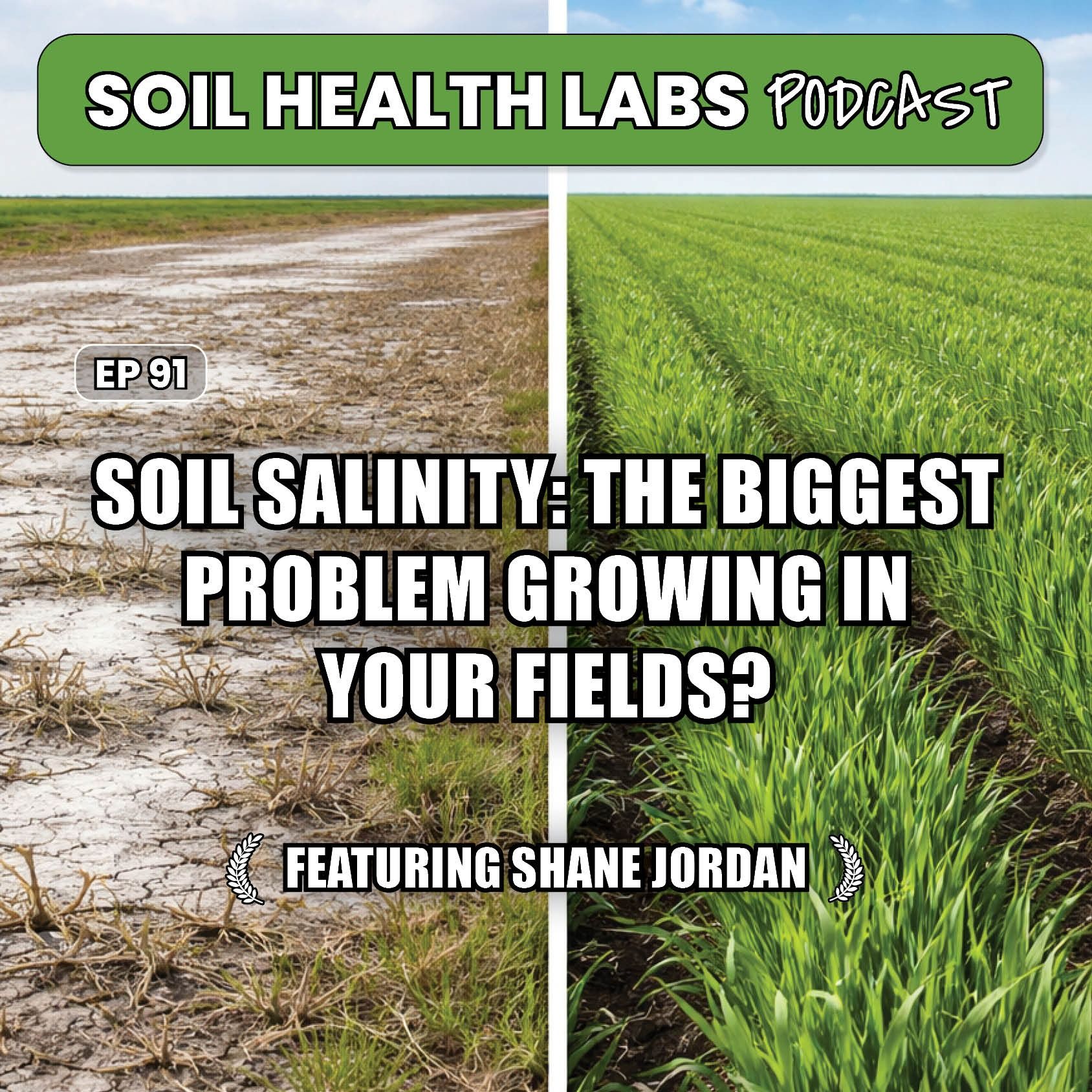
Soil Salinity: The Biggest Problem Growing in Your Fields
from Soil Health Labs · host Soil Health Labs
Salinity hasn’t gone away—and in some parts of South Dakota, it may be setting up for a comeback. In this short, focused episode, Buz Kloot sits down with conservationist Shane Jordan to unpack why conditions are aligning for salinity to re-emerge as a serious issue this year. What looks like a dry start may actually be the trigger for something deeper—literally. This episode sets the stage for understanding the problem before diving into solutions in Part 2. What You’ll Learn Why last year’s wet conditions are still affecting fields today How a rising water table + dry conditions can amplify salinity The role of capillary rise in bringing salts to the soil surface Why bare soil and lack of living roots make the problem worse How management decisions (tillage, crop loss, inputs) contribute to risk Why salinity is ultimately a water cycle problem, not just a soil issue “When we get a really wet year followed by a dry one… we actually see a lot of these salts get enhanced.” Key Insight Salinity is not just a patch problem—it’s a systems problem. What shows up as a white patch in a field is often just the symptom. The cause lies in how water moves (or doesn’t move) across the entire landscape. Why This Year Is Different Extremely wet conditions in parts of the region last year (30+ inches in some areas) Saturated soils leading to elevated water tables Limited plant growth or destroyed crops in affected areas Fields left bare and vulnerable to evaporation Early signs of a potentially dry season Together, these create the perfect conditions for salts to move upward and accumulate at the surface. What to Watch For This Spring Areas with standing water last year Field edges near wetlands, ditches, and drainages Spots where crops were stressed, drowned out, or chemically terminated Expanding patches of white or crusted soil Learn More We’ve compiled practical resources, videos, and producer insights here: 👉https://www.growingresiliencesd.com/soilsalinity Coming Next (Part 2) In the next episode, we move from problem to practice: What you can do right now to slow salinity Short-, medium-, and long-term strategies Why early intervention makes all the difference About Shane Jordan Shane Jordan is a Resource Conservationist with the NRCS Brookings Area Ecological Team, specializing in salinity management, soil health, and whole-farm conservation planning. He grew up on a diversified farm in Iowa and holds a B.S. in Range Management from South Dakota State University. Over a career spanning more than three decades, Shane has worked across the Northern Plains in roles including range conservationist, district conservationist, and watershed project specialist. He served 23 years as District Conservationist in Redfield, South Dakota, working directly with producers to implement conservation systems on working lands. In 2025, Shane was awarded the Hugh Hammond Bennett National Planner Award, one of NRCS’s highest honors. The award recognizes outstanding leadership in conservation planning, long-term commitment to working with landowners, and excellence in applying resource management to real-world agricultural systems. Known for his practical, relationship-based approach, Shane emphasizes whole-system thinking—helping producers move beyond treating symptoms to addressing the underlying causes of resource challenges.
Embed this episode
Ready to play
Soil Salinity: The Biggest Problem Growing in Your Fields
No transcript for this episode yet
Similar Episodes
No similar episodes found.
Similar Podcasts
No similar podcasts found.