
EPISODE · Nov 18, 2024 · 47 MIN
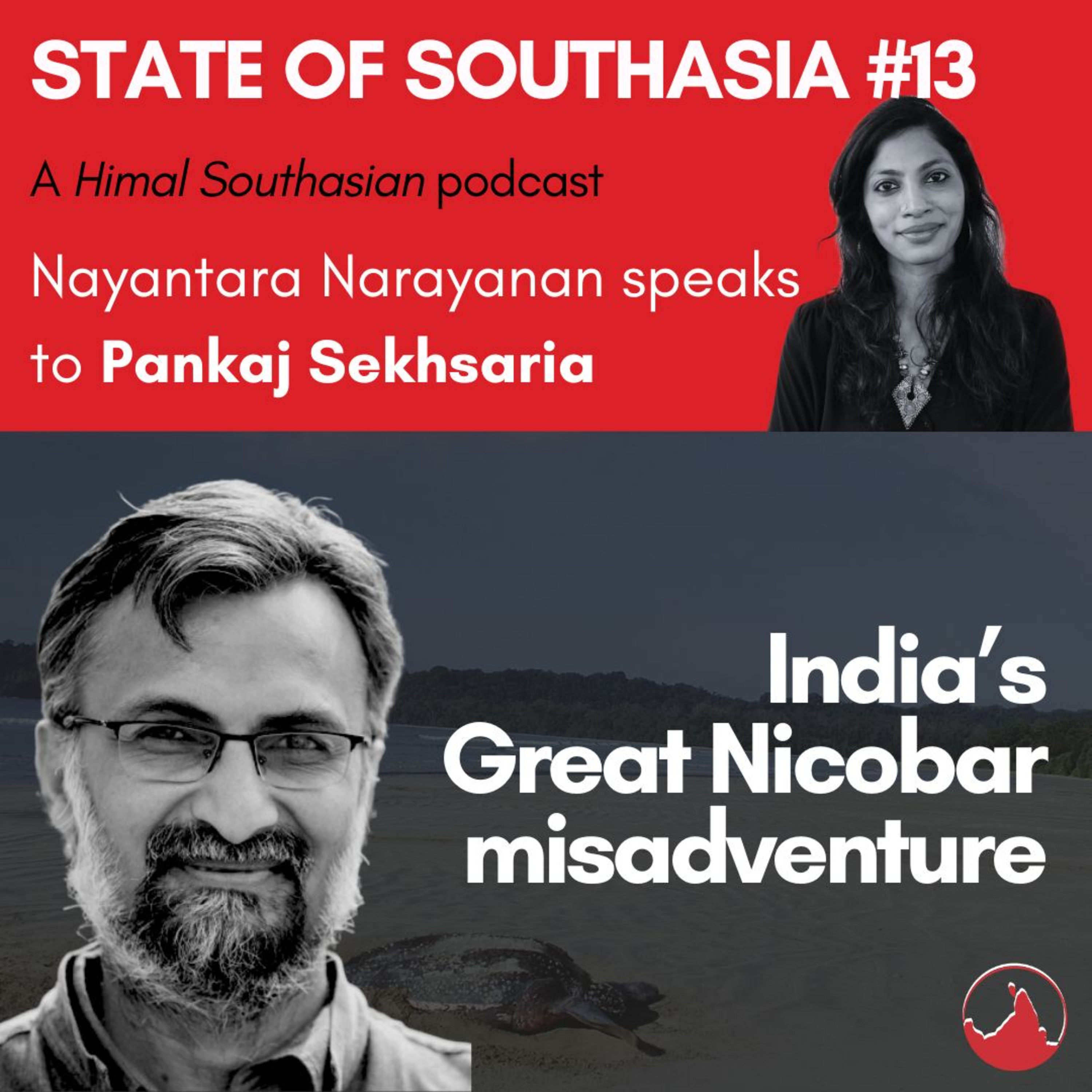
State of Southasia #13: Pankaj Sekhsaria on India’s Great Nicobar misadventure
from Himal Southasian Podcast Channel · host Himal Southasian Podcast Channel
In September, India’s home minister Amit Shah suddenly announced a name change for the capital of the union territory of Andaman and Nicobar Islands – from Port Blair to Sri Vijaya Puram. He said the move was meant to “free the nation from the colonial imprints”. But surprised residents of the islands were not entirely happy with the new name that did not resonate with the history of the islands and because of what it would mean for the brand of tourism that the name Port Blair had come to signify. The government and much of India has often acted as though the islands are a remote outpost meant for tourism and, when opportunity arises, commercial exploitation. In a move far more disruptive than the name change, the government has cleared an infrastructure project on Great Nicobar Island that includes a port, an airport, a power plant and a new township that will increase the island's population from 8,000 to 350,000. The investment in the project will be around INR 72,000 crore or USD 9 billion. Critics have pointed out to the severe ecological damage to the island and the surrounding Andaman sea, disruptions to the local populace including the Nicobarese and Shompen tribes and possible loss of unique species endemic to the islands. Pankaj Sekhsaria, associate professor at the Indian Institute of Technology (Bombay) and member of Kaplavriksh Environmental Action Group, says that it is important to centre the islands’ interests while considering any development there. Sekhsaria, who has researched and written about the islands for 30 years, discusses the project and its many impacts with associate editor Nayantara Narayanan on this episode of State of Southasia. Recalling the destruction caused by the 2004 tsunami, he said that such large-scale disruptions to a geologically sensitive region such as Great Nicobar puts ecology, infrastructure, indigenous people and migrants to the island at significant risk. State of Southasia releases a new interview every two weeks. This podcast is now available on Spotify, Apple podcasts and Youtube.
What this episode covers
In September, India’s home minister Amit Shah suddenly announced a name change for the capital of the union territory of Andaman and Nicobar Islands – from Port Blair to Sri Vijaya Puram. He said the move was meant to “free the nation from the colonial imprints”. But surprised residents of the islands were not entirely happy with the new name that did not resonate with the history of the islands and because of what it would mean for the brand of tourism that the name Port Blair had come to signify. The government and much of India has often acted as though the islands are a remote outpost meant for tourism and, when opportunity arises, commercial exploitation. In a move far more disruptive than the name change, the government has cleared an infrastructure project on Great Nicobar Island that includes a port, an airport, a power plant and a new township that will increase the island's population from 8,000 to 350,000. The investment in the project will be around INR 72,000 crore or USD 9 billion. Critics have pointed out to the severe ecological damage to the island and the surrounding Andaman sea, disruptions to the local populace including the Nicobarese and Shompen tribes and possible loss of unique species endemic to the islands. Pankaj Sekhsaria, associate professor at the Indian Institute of Technology (Bombay) and member of Kaplavriksh Environmental Action Group, says that it is important to centre the islands’ interests while considering any development there. Sekhsaria, who has researched and written about the islands for 30 years, discusses the project and its many impacts with associate editor Nayantara Narayanan on this episode of State of Southasia. Recalling the destruction caused by the 2004 tsunami, he said that such large-scale disruptions to a geologically sensitive region such as Great Nicobar puts ecology, infrastructure, indigenous people and migrants to the island at significant risk. State of Southasia releases a new interview every two weeks. This podcast is now available on Spotify, Apple podcasts and Youtube.
NOW PLAYING
State of Southasia #13: Pankaj Sekhsaria on India’s Great Nicobar misadventure
No transcript for this episode yet
Similar Episodes
No similar episodes found.
Similar Podcasts
No similar podcasts found.