
EPISODE · May 16, 2026 · 44 MIN
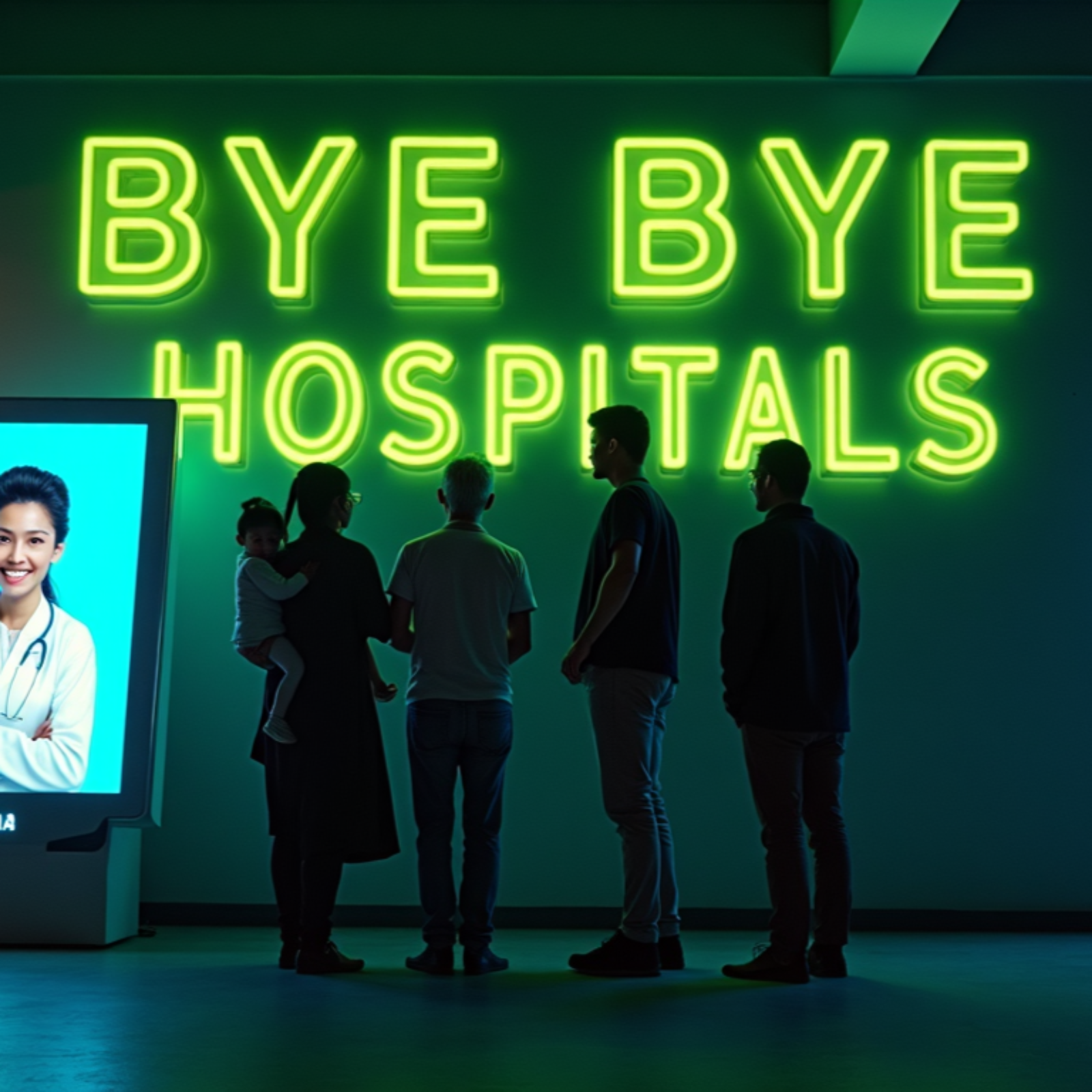
Stopping Superbugs with neighborhood AI kiosks That Initially Identify Infected Individual and Isolate Them to protect Humanity
from Fear Kills more People than Disease and Infections
Just imagine your child develops abdominal pain, and the doctor diagnoses “Appendicitis”. You and the doctor will be in a dilemma, because performing an appendectomy using keyhole surgery is no longer safe - it has become a threat. Exactly. You were terrified because the post-antibiotic era has officially arrived. The surgery itself goes perfectly. I mean, the surgeon is skilled, but the hospital environment—air vents, bed rails, chairs in the waiting room—are teeming with microscopic multi-drug resistant pathogens, creating a nightmare scenario. It really is.The simple act of opening the human body has become a lethal gamble. And in this bleak near future, common surgeries are now a leading cause of death due to antimicrobial resistance, or AMR. It is profoundly chilling. And I think the most unsettling part of reviewing our research today is realising that this scenario is not science fiction. Not at all.It is the exact trajectory we're currently on. We're looking at a mathematical certainty if the global community does not drastically alter its approach to public health and infection control. We are genuinely standing on the edge of a medical regression. It could undo over a century of modern medical progress. Welcome to the deep dive. We have a vast and frankly eye-opening array of sources to get through today.We're pulling from official policy documents from the World Health Organisation, including critical, unfiltered excerpts from the writings of Dr Kadiyali Srivatsa, such as his Pandemic Survival Guide and the Self-Diagnosis manual. We're also reviewing dense academic research on infection control, focusing on pathogen behaviour in confined spaces. Lastly, we have a detailed business and policy plan for a radical hardware and software solution called the Prima Kiosk, powered by Doctor Maya AI. It's an eclectic mix of sources covering public policy, microbiology, and artificial intelligence, all converging on a singular, highly critical perspective. Which brings us to our mission today: to unpack a very uncomfortable argument that doctors, politicians, and global health decision makers have failed us in early detection of infectious diseases and the threat of AMR.It is a heavy claim because these sources do not hold back—they argue that our current testing, diagnosing, and quarantining methods are not just outdated, but actively contribute to the spread of disease. And the proposed escape route from this nightmare isn't a new billion-dollar super hospital with shiny floors. No, it's a decentralised, solar-powered AI kiosk located on street corners and run by local vendors. It’s wild. That represents a massive paradigm shift. We've spent decades—arguably centuries—building large, centralised hubs of medicine.We funnel resources into these centralised institutions. So, suggesting that our survival depends on dismantling that monopoly and distributing diagnostic power locally requires us first to understand the catastrophic missteps that brought us here. The sources suggest that the very institutions meant to protect us, like the WHO and CDC, operate on a kind of idealism, detached from the physical reality of how infectious agents spread through populations.Let's examine that physical reality because the sources highlight a glaring flaw in our standard protocol during outbreaks: the 'travel to test' paradox. This is crucial. When a new virus or resistant bacteria emerges, the first advice from public health officials is for symptomatic individuals to go to a testing centre, their doctor, or hospital for a swab or blood test. The more I read this, the more I picture it like a compromised firewall on a computer network. That’s a great analogy. If one computer in your office has a virus, your IT team doesn't advise walking that infected device through the entire building, plugging it into every server to run diagnostics. Exactly.......
Embed this episode
NOW PLAYING
Stopping Superbugs with neighborhood AI kiosks That Initially Identify Infected Individual and Isolate Them to protect Humanity
No transcript for this episode yet
Similar Episodes
No similar episodes found.
Similar Podcasts
No similar podcasts found.