
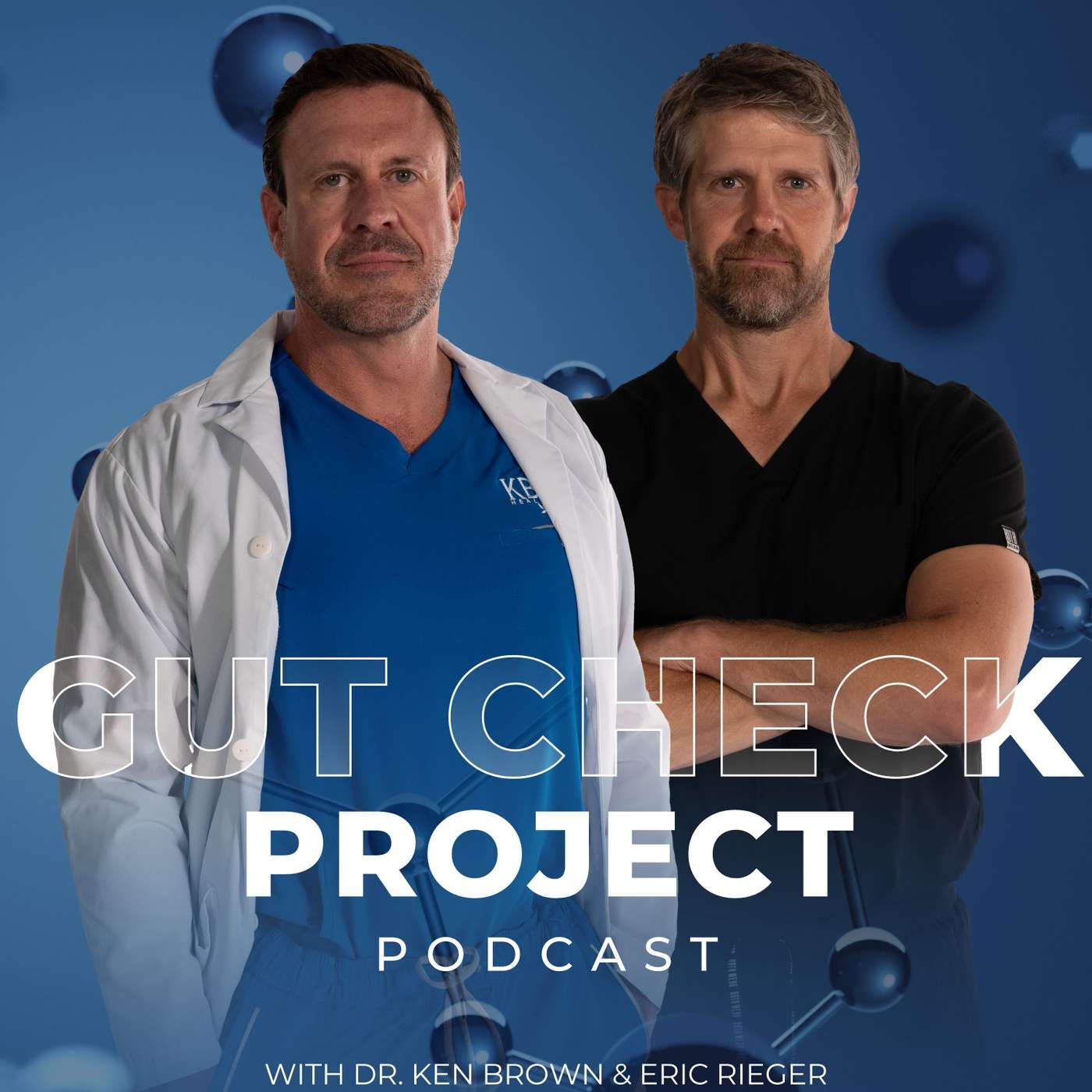
EPISODE · Feb 27, 2020 · 39 MIN
Stroke Prevention and Recovery: The ECS and Your Brain
from Gut Check Project · host KBMD
Eric Rieger Alright, we're going to get down to the gut check project starting on episode 34. It's gonna be a quick one, but you're gonna love it.Ken Brown Yeah, we're gonna try and do this a little bit quicker because what I've gotten some feedback is when you guys get all sciency that sometimes it's it's cool to hear the fun stuff, but the reality is that the science gets a little geeky and it gets almost like a lecture. So I apologize to everyone out there if I've been some weird professor but so my only thing so let's do the personal stuff is your family good? Eric Rieger Family's Great! Awesome. Ken Brown My family's great also awesome. And that's up for the personal stuff. So like I said, I was called by a good friend, Tim, our good friend his father had... Eric Rieger Tim Power been on the show. Ken Brown Yeah, Tim power been on the show. His father had a stroke. And he messaged me and he said, Hey, man, my dad had a stroke, and they don't seem to be talking diet. They don't seem to talking supplements. He's in rehab. He's getting better. I'm doing my own stuff. I'm trying to fix this. But do you have any recommendations? And rather than just knee jerk and go, Oh, I'm going to go ahead and yeah, just do this and this and this. I started thinking about it. I went Holy cow, my hospital. Medical city Plano.Eric Rieger Right. Ken Brown Is a level one trauma center and is designated as a magnet hospital for stroke, acute stroke rehabilitation. Eric Rieger Okay. Ken Brown So they have a whole team that if you show up with a stroke, it's just like a heart attack. They're badass. Yeah, they show up with like this team of interventional neurologists, and they get in there and they do all this stuff. So I'm sitting there. My quick side note, I'm picking up my family from Mexico, because Luke was just playing tennis. You know, that was the the personal part of it that we didn't get into, but just assume it's tennis. Eric Rieger Assume it's basketball.Ken Brown Yeah. So I called. I called the stroke rehab unit. And I spoke with them with the nurse. The manager, nurse and she was so cool. She's like, She's like, hey, yeah, blah blah blah Yeah, we were our rates are this. This is the protocol. I'm like, what's a protocol for diet? We don't have one. What's protocol for supplements? We don't have one i'm like, Oh my goodness, let's look at this. So I called our secret weapon. And I started to get into it and it's a much bigger bite to chew off then we can do in this sort of quick episode. So this quick episode, I want to just focus on the endocannabinoid system and stroke. Because what we do with stroke victims is that we basically do everything wrong. Eric Rieger I believe it. Ken Brown In the hospital. Eric Rieger Yeah. Ken Brown And when I asked him, like, what is the typical diet? She's like low fat. Eric Rieger What's the science behind that? Ken Brown Exactly. And we know that the carbohydrates increase inflammation and this and that. I'm like, Well, what else and she's like you had traditionally everybody gets put on a Staten, which causes some brain inflammation, because we're chasing numbers on cholesterol. Anyways, keep listening, because we're going to end up doing another episode on we're going to develop a protocol that I hope everybody adapts, and the nurse was like, that would be amazing. nobody's talking like that. Because everybody has this hammer. I mean, we bring these people in, they have a stroke. And one of the most important things is sleep and what do we do just disrupt sleep, check vitals blood sugar, and all this other stuff. So basically, we focus up we focus on all this stuff. So I called a couple neurologists, and was like, Hey, man, what's the or Hey, woman? I don't want to be sexist here. I'm like, Hey, what are we doing here? What's going on with the you guys are crushing it. So basically they focus on the awesomeness science of clotbusters like tpas and blood thinners. And then they rush in with this incredible technology that is amazing. Where they get in and they do like cardiac clot, like the same thing that the cardiologists have been doing. That they end up just sort of extracting these clots and they just crazy stuff. It works, but then they don't think about anything else,. So here a gut check project. I feel like we check our egos at the door and we look and go, how can we do things a little bit better? I feel like that this conversation that we're having could be the beginning of something bigger. Sure. I feel like we're missing a ton of stuff. This is not to bash traditional medicine at all. This is just a glorious example of how medicine save lives. But unfortunately, if all you have is a hammer then everything's a nail. So we're going to go ahead and look at that today. Eric Rieger Let's do it. Ken Brown I'm gonna do one brief thing. Because we always do in in the news, we always do our personal lives in the news, mostly because it's a win for me. So I'm just whenever I find news that is pertinent to me, I'll talk about it. And I'll just kind of, like most people just sort of ignore the stuff that bothers you. Bottom line is a study just came out. Looking at coffee. Eric Rieger Oh, I love coffee. Ken Brown So February is Heart Month, right? Eric Rieger It is. Ken Brown So everyone talks about Heart Month, and we're strokes are almost parallel to heart. So the same vessels that can ruin your brain can ruin your heart. You're gonna die either way. Let's start fixing it. Eric Rieger Yeah. Ken Brown So a study came out this last Thursday. So just a few days ago, in a journal called PLOS biology that I follow, which always looks at like new and upcoming research, as it find it. As it turns out, we know that coffee is good in 2017. There was this big meta analysis that show that help with diabetes. And also helped with cardiovascular disease and different things like that. But we really never, we always thought it was the polyphenols. So these guys looked at this and they took mouse models. And what they showed is that the caffeine plays a role. Eric Rieger Nice. Ken Brown Yeah. In case you haven't guessed that I drink just tons of coffee. Eric Rieger I didn't have to guess I see it all the time. Ken Brown Alright, so anyways, they took mouse models, and what they showed is that when you drink four to five cups of coffee equivalent in caffeine, you actually improve the mitochondria in the heart cells. They even show that the mitochondria is that you know, it's the powerhouse of the cell. It's what makes you walk around. It's what drives every single cell they found a protein called p 27, which is stimulated by caffeine. And when they gave heart attacks to mice, and then they gave them coffee, the mice that got the coffee, or the caffeine equivalent, recovered quicker, knockout mice that they took away the P 27 protein or whatever, they all died of heart attacks. So quick little thing in the news, coffee good, helps diabetes helps heart disease. And now we realize that it improves mitochondria. So I got to thinking and I was like, wow, the whole mitochondria is our aging thing. I found an article where they looked at old an aging mice, the more caffeine that they took in during the day, the more that their mitochondria were younger, and it was an anti agin...
What this episode covers
Almost 800,000 people in the US will suffer a stroke this year. Approximately 87% of those will be labeled as ischemic or caused by lack of blood flow leading to lack of oxygen. For many, stroke is somewhat inevitable. But preparing your body to be in the best position to prevent serious damage and even recover quicker leading to better outcome is something that we can all do. The information may be new to us all, but mother nature has had these systems in place for as long as humans have been around. Join us on the GCP and find out what you can do to increase your favorable odds at dealing with stroke.
NOW PLAYING
Stroke Prevention and Recovery: The ECS and Your Brain
No transcript for this episode yet
Similar Episodes
Jun 20, 2026 ·2m
Jun 20, 2026 ·2m
Jun 15, 2026 ·3m
Jun 15, 2026 ·3m
Jun 14, 2026 ·2m
Jun 14, 2026 ·2m