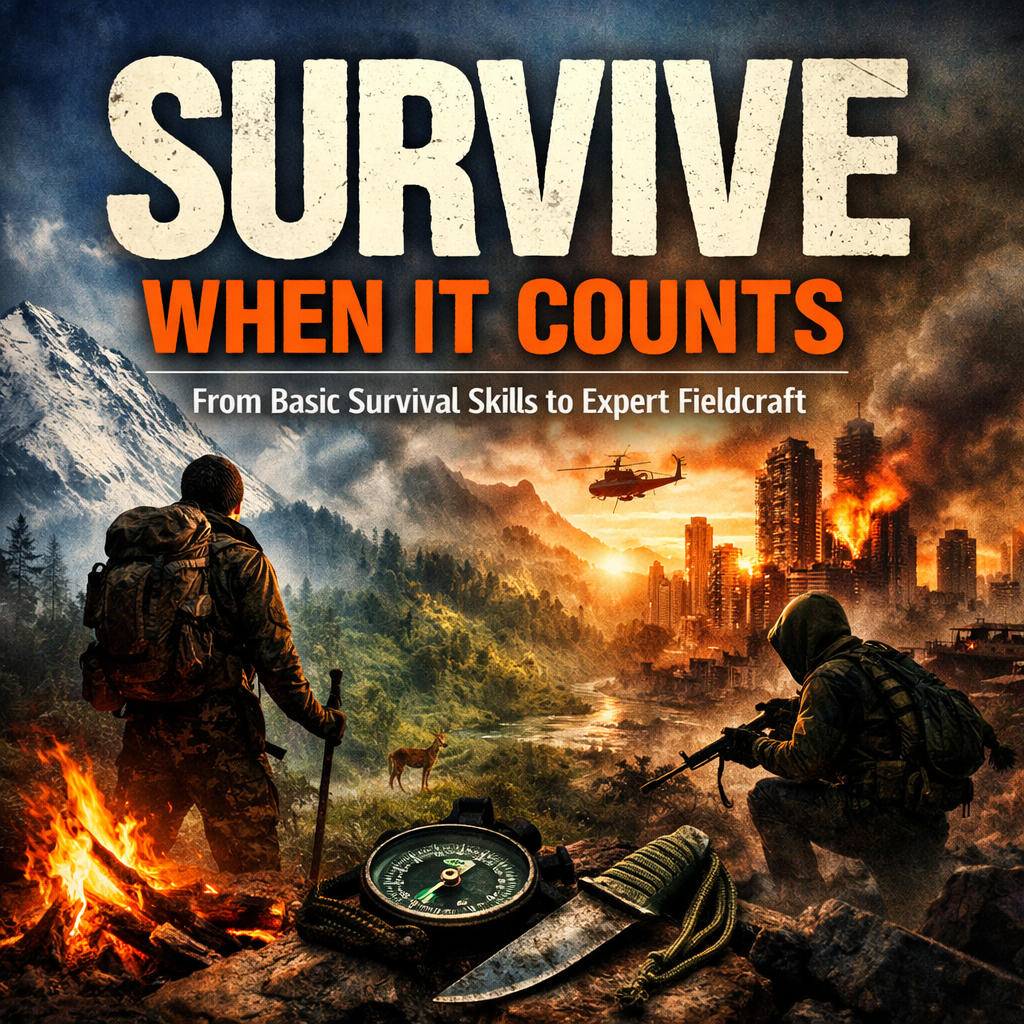
Survival Fire Tips episode artwork

EPISODE · Jun 24, 2026 · 3 MIN

Survival Fire Tips

from Survive When It Counts

Welcome back to the series, where we build real-world survival skills from the ground up. In this episode, we’re focusing on survival fire tips—one of the most important skills you can learn when conditions turn cold, wet, dark, or simply uncomfortable. Fire can warm you, dry your clothes, purify water, boost morale, and even help signal for rescue. But in a survival situation, fire is not just about striking a match and hoping for the best. It’s about preparation, judgment, and knowing how to make every spark count. The first thing to understand is that fire starts before the flame. Good fire-building begins with dry tinder, then kindling, then fuel wood in increasing sizes. If you rush this step, you’ll waste energy and probably lose your fire. Look for the driest material you can find, even in damp conditions. Dead branches hanging off the ground, inner bark, dry grass under shelter, and fine feather sticks can all help. The key is to gather more than you think you need before you ever light anything. In survival, a small fire built with excellent materials is far better than a big pile of wet wood and frustration. Next, think about location and shelter. A fire should be placed where it can be protected from wind and rain, but also where it won’t spread uncontrollably. Clear the ground around it, create a fire lay that suits your conditions, and use natural windbreaks when possible. If the weather is harsh, a reflector wall made from logs or rocks can bounce heat back toward you and improve efficiency. In cold environments, this matters a lot because your fire needs to work harder to keep you warm. A poorly placed fire burns fuel fast and gives little benefit. A well-placed one becomes a survival tool you can actually rely on. Another essential part of survival fire tips is fuel management. Not all wood burns the same, and not all fire needs the same structure. Small tinder flames need tiny, dry material to grow. Once the fire is established, add pencil-sized sticks, then wrist-thick fuel, and only then larger logs. Feed the fire gradually so you don’t smother it. If you’re in a wet environment, split larger logs to expose the dry inner wood. If your fire is struggling, don’t panic and dump everything on it. Step back, breathe, and correct the problem by improving airflow and using better fuel. Calm decisions keep fire alive. Finally, remember that fire is a tool, not a trophy. In a survival setting, the goal is not to make the biggest blaze possible. The goal is to make a fire that serves a purpose. Maybe you need warmth through the night. Maybe you need to dry socks or boil water. Maybe you need smoke for signaling. Each situation changes how you build and maintain it. Know when to conserve fuel, when to keep it small, and when to build it up for a specific task. That kind of judgment is what separates basic fire-starting from true survival competence. Fire is one of the oldest survival skills for a reason. When you understand the materials, the setup, the fuel, and the purpose behind the flame, you gain far more than heat. You gain confidence. And in a real emergency, confidence can be just as important as the fire itself. Keep practicing, stay observant, and remember: the best survival fire tips are the ones you can apply before the situation gets serious. Sponsor: Find the book on Amazon and Books Central Website

Welcome back to the series, where we build real-world survival skills from the ground up. In this episode, we’re focusing on survival fire tips—one of the most important skills you can learn when conditions turn cold, wet, dark, or simply uncomfortable. Fire can warm you, dry your clothes, purify water, boost morale, and even help signal for rescue. But in a survival situation, fire is not just about striking a match and hoping for the best. It’s about preparation, judgment, and knowing how to make every spark count. The first thing to understand is that fire starts before the flame. Good fire-building begins with dry tinder, then kindling, then fuel wood in increasing sizes. If you rush this step, you’ll waste energy and probably lose your fire. Look for the driest material you can find, even in damp conditions. Dead branches hanging off the ground, inner bark, dry grass under shelter, and fine feather sticks can all help. The key is to gather more than you think you need before you ever light anything. In survival, a small fire built with excellent materials is far better than a big pile of wet wood and frustration. Next, think about location and shelter. A fire should be placed where it can be protected from wind and rain, but also where it won’t spread uncontrollably. Clear the ground around it, create a fire lay that suits your conditions, and use natural windbreaks when possible. If the weather is harsh, a reflector wall made from logs or rocks can bounce heat back toward you and improve efficiency. In cold environments, this matters a lot because your fire needs to work harder to keep you warm. A poorly placed fire burns fuel fast and gives little benefit. A well-placed one becomes a survival tool you can actually rely on. Another essential part of survival fire tips is fuel management. Not all wood burns the same, and not all fire needs the same structure. Small tinder flames need tiny, dry material to grow. Once the fire is established, add pencil-sized sticks, then wrist-thick fuel, and only then larger logs. Feed the fire gradually so you don’t smother it. If you’re in a wet environment, split larger logs to expose the dry inner wood. If your fire is struggling, don’t panic and dump everything on it. Step back, breathe, and correct the problem by improving airflow and using better fuel. Calm decisions keep fire alive. Finally, remember that fire is a tool, not a trophy. In a survival setting, the goal is not to make the biggest blaze possible. The goal is to make a fire that serves a purpose. Maybe you need warmth through the night. Maybe you need to dry socks or boil water. Maybe you need smoke for signaling. Each situation changes how you build and maintain it. Know when to conserve fuel, when to keep it small, and when to build it up for a specific task. That kind of judgment is what separates basic fire-starting from true survival competence. Fire is one of the oldest survival skills for a reason. When you understand the materials, the setup, the fuel, and the purpose behind the flame, you gain far more than heat. You gain confidence. And in a real emergency, confidence can be just as important as the fire itself. Keep practicing, stay observant, and remember: the best survival fire tips are the ones you can apply before the situation gets serious. Sponsor: Find the book on Amazon and Books Central Website

NOW PLAYING

Survival Fire Tips

0:00 3:37

No transcript for this episode yet

We transcribe on demand. Request one and we'll notify you when it's ready — usually under 10 minutes.

Breaking News Show | eTurboNews Juergen Thomas Steinmetz News is relevant to the global travel and tourism industry, human rights and global issues.Breaking news when it happens and only from the source. LIGHTS, CAMERA, SMILE! Creatives Club Media Lights, Camera, Smile, is a podcast for anyone with a dream to share something with the world, out of the overflow of themselves - be it their mind, their heart, their personalities, and much more. Each of us are alive in this moment in time, with an innate ability to have ideas and create various things to benefit both ourselves and the people around us for a reason, and here, you will find the encouragement, the inspiration, and the motivation to do just that. Hosted by Cicily, founder of Creatives Club, she dives into various topics surrounding creativity and business. Exploring entrepreneurship for creatives in a corporate reality, sharing tips and tricks in a media centered company, answering questions regarding what a creative actually is are just a few of the things discussed on this podcast. Be encouraged to create for yourself as Cicily gets vulnerable by pivoting the camera to herself for the first time.To submit questions for Cicily to answer, or have her address certain t Solving for Change MOBIA Technology Innovations Solving for Change welcomes business and technology leaders to share stories of bold business transformation within complex organizations. In an era when technology and markets are changing around businesses, the key to staying competitive is to evolve in response to those changes.  MOBIA’s Mike Reeves and Marc LeBlanc investigate business transformation, deconstructing the challenges, ambitions, and market disruptions that drive companies to embark on transformation journeys, and exploring their unique approaches to achieving meaningful outcomes.  What sparks leaders to pursue business transformation? How do they overcome the challenges along the way? What are the keys to creating enduring change?  Through in-depth conversations with business and technology leaders, Mike and Marc answer these questions and explore how businesses evolve by pulling four key transformation levers: people, process, technology, and culture. Invictus by Greyana, A Tomione Podfic M+G Readings Sporadic uploads thanks to gallstones.Voldemort intended the object to be used by his most loyal follower in the event that his horcruxes were destroyed, but it ended up in Hermione’s possession instead.It sent her back to a time when he was much less the monster that she’d always known him to be. Nothing could have prepared her for the intelligence and charm of Tom Riddle.He isn’t who she thought he was.Hermione discovers that it’s a dark descent into the madness of the man she should hate, but can’t… a descent she will never emerge fr

Frequently Asked Questions

How long is this episode of Survive When It Counts?

This episode is 3 minutes long.

When was this Survive When It Counts episode published?

This episode was published on June 24, 2026.

What is this episode about?

Welcome back to the series, where we build real-world survival skills from the ground up. In this episode, we’re focusing on survival fire tips—one of the most important skills you can learn when conditions turn cold, wet, dark, or simply...

Can I download this Survive When It Counts episode?

Yes, you can download this episode by clicking the download button on the episode player, or subscribe to the podcast in your preferred podcast app for automatic downloads.
URL copied to clipboard!