
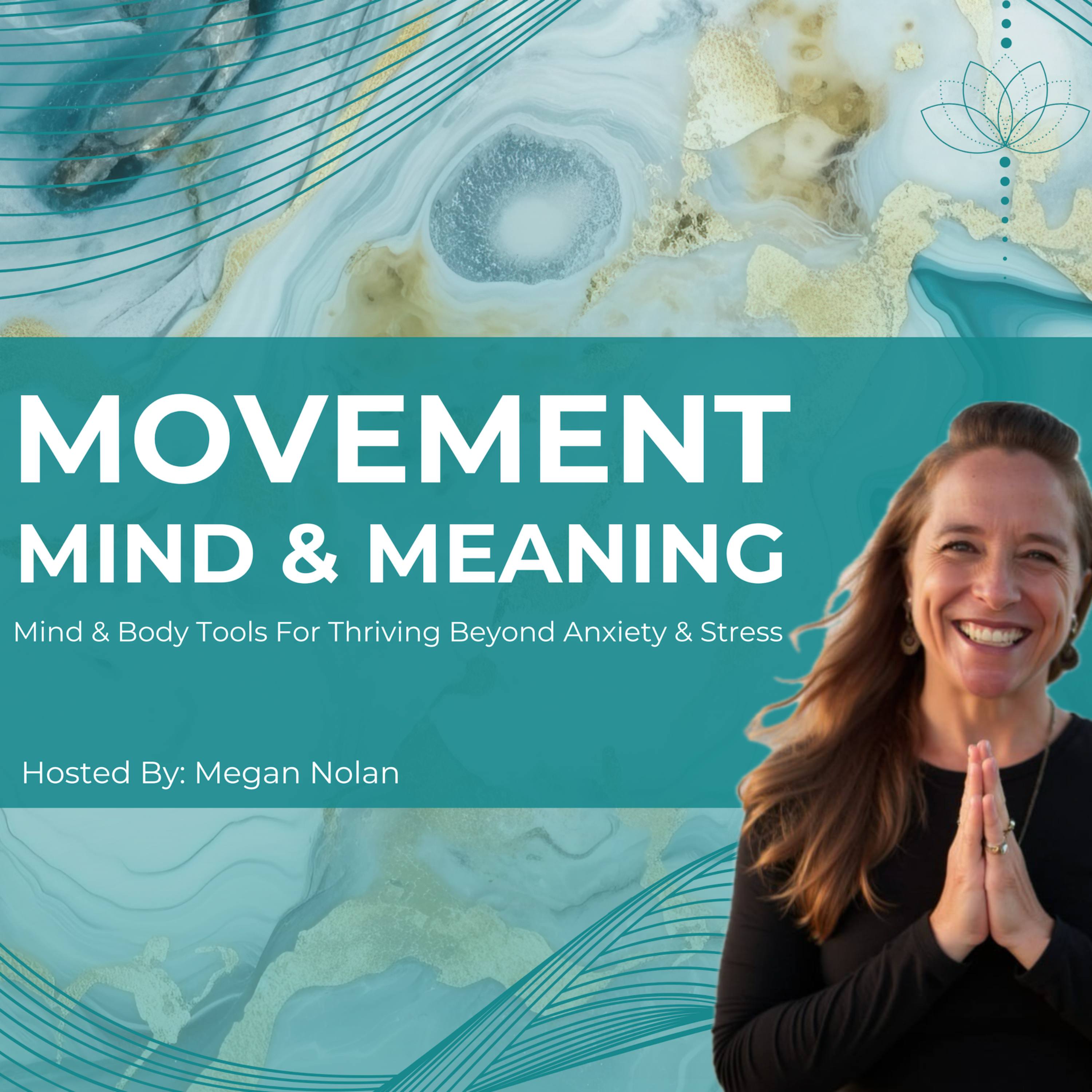
EPISODE · May 21, 2025 · 33 MIN
Survival Mode: The Patterns Behind Your Behavior
from Purposeful Powerhouse Podcast · host Megan Nolan
Part 1 of the 3-Part Series: Fight Mode at Work: Perfectionism, Pressure, & the High-Performer Stress Trap In people-first workplaces, performance and wellbeing should go hand in hand—but what happens when team members are unknowingly stuck in survival mode? In this episode, we explore the "Fight Stress Response" from a polyvagal theory perspective—and how it quietly shows up in modern workplaces as perfectionism, control, urgency culture, and burnout. If you're an HR leader, wellbeing coordinator, or culture-driven founder, this episode gives you insight into how workplace stress responses impact performance, communication, and team dynamics. You’ll learn: -How Fight Mode manifests in professionals as hyper-productivity, micromanaging, and control -Why these behaviors aren’t personality flaws—but nervous system survival strategies -The science behind the adrenaline-cortisol loop that drives high-performer anxiety -Why high standards often mask unprocessed stress and dysregulation -How leaders can spot and shift these patterns in real time -Simple, science-backed tools like Power Pauses™ to support emotional regulation and create psychological safety on the go When teams learn to regulate their stress responses—not suppress them—they unlock more creativity, resilience, and grounded leadership. That’s what people-first culture is all about. Curious if this is playing out for you or your team?Take the free Burnout Risk & Resilience Quiz Get personalized insights into how stress may be quietly impacting your—and what to do instead.👉 https://bit.ly/burnoutriskquiz About Your Host, Megan Nolan: Helps People First, Purpose Driven Companies That Want To Build Emotionally Resilient Teams That Perform At Their Best Without Time Consuming Strategies By Using Practical Science-Based Strategies That Work In Just Minutes A Day With 20+ years as a yoga instructor & personal trainer, she teaches mind-body tools to break free from stress and thrive with impact, freedom, and joy. 📚 Bestselling Author | 🎙 Podcast Host | 🌎 Stress & Resilience Coach Check Out Her Website: https://www.megan-nolan.com/Follow Her On LinkedIn: https://www.linkedin.com/in/iammegannolan/ #WorkplaceStress, #PerfectionismAtWork, #HighAchieverProblems, #FightResponse, #NervousSystemHealth, #BurnoutRecovery, #HighFunctioningAnxiety, #TeamPerformance, #StressPatterns, #WorkplaceWellbeing, #PolyvagalTheory, #TraumaInformedLeadership, #PowerPauses, #LeadershipAndWellness, #MicromanagementStress, #MentalHealthAtWork, #RegulateYourNervousSystem, #SomaticTools, #WorkplaceResilience, #StressInTheWorkplace Please find the show notes below. Since it is a transcription there may be spelling errors and/or weird grammar. Ignore that and enjoy! Survival mode. Understandinghow stress is silentlyrunning your life and400:00:11,560 --> 00:00:13,1000impacting your behavior.Welcome to this three-part seriesinside the Movement, Mind and Meaningpodcast. I'm your host, Megan Nolan. Weare going to be unpacking your stressresponse, IE you remember fight orflight, rest and digest. It's evolvedmore than that and we're going to talkabout that too. But in this first episodewe're talking about fight mode. We'retalking about when stress happens and yougo into go mode and the differentpatterns like perfectionism and controland being a high performer show upas survival strategies tohandle the situation. We're going tounpack all of that. So let's back it upa little bit. Remember back inbiology when you learned about yournervous system, right?We're going to do alittle refresher and perhaps this will bea little bit of a oh wow, this is reallycool because we've come further in ourunderstanding thanks to an incredible mannamed Doctor Steven Porges who2900:01:09,1000 --> 00:01:12,240recognized based on research that he wasdoing with little babies who were in theNICU. Different patterns of the nervoussystem that were not until that pointknown about. You probably remember restand digest, right?Rest and digest is whenwe heal and our body processes food, wemetabolize, we eliminate, we're we'regrounded, we're we're calm. We canheal because healing only happens in therest and digest state versus fight orflight, right?You've probably heard that.Oh, I'm in fight or flight. Not actuallythe same thing, but that's OK. We'll talkabout that too. So basically until1994, we basically thought that we had anon switch, a gas pedal, which is thesympathetic or stimulated fight or flightresponse where we handle stress by eitherrunning towards it, right, which is thefight or running away from it, which isthe flight or freezing, shuttingdown and not being able to handle it. Butwe've subsequently realized that there'sactually more than just that on switchand the off switch being theparasympathetic state, the. Rest anddigest the soothe andground, the stay and play.We're more complicated than we thought.You're more complicated than you thought.But fundamentally, what's happening isyour body is either searching forwell, it's always searching for signs ofsafety or threat,because its main function, the mainfunction of your nervous system, issurvival, keeping you alive. Right. Andso this evolved, incredibly intricatesystem has evolved over millions ofyears, but innately is the same.It's searching for threats and dangersand risks in your environment and your.External environment and internalenvironment. So it's constantly scanning.It's kind of like an antenna. It'sconstantly seeking out information fromthe environment as well as what'shappening inside of you. So not only areyou receiving information, but you'realso emitting information. This isimportant. We'll talk about that morelater because it's your vibe, right?Yourelectromagnetic field or your vibrationalfrequency, however you want to say it,you are emitting a signal by way of yournervous system again. This is so cool.8600:03:27,1000 --> 00:03:29,1000And this is something that, you know,8700:03:29,1000 --> 00:03:31,320inside the yoga practice, they've beentalking about for thousands of years. Andnow neuroscience is like, Yep, you guysare right, you're pretty amazing. Thebreath is important, all of this stuff.We're going to get to it. But, you know,plug for yoga because it's amazing. Solet's talk about this. So if your nervoussystem perceives a potential threat inthe environment, it goes from beingin this nice, regulated,centered, steady state.Of this level of connection. So thisfirst state of the nervous system iscalled the ventral vagal state. And thisis where you're engaged with people inthe environment. You have a nice peacefulexpression on your face. You're able tohandle challenges and then settle backdown. You can relax without collapsing.So this is the baseline state, right?And10800:04:15,280 --> 00:04:17,1000we operate here and this is where we we10900:04:17,1000 --> 00:04:20,920tend to. Hopefully spend mostof our time, however, due to chronicstress, not all of us do, but you know,we'll get to that as well. So we want tobe able to be in this state, rise to thechallenge and come back and regulate,right?So this is our our window oftolerance or what we can handle that, youknow, doesn't fully trigger us and causeus to get dysregulated. But what happenswhen our brain perceives a threat, eitherinternal or external, either real orimagined?Is we get activated.So we go from being regulated to a12300:04:51,1000 --> 00:04:54,800very activated, dysregulated state. Wego into go mode, right?This is where weswitch on the gas pedal goesbasically where what is controlling usand relaxing us and grounding us getslifted. Think of the the brakes on abicycle, right?So when you squeeze thebrakes, everything slows down. So the13100:05:11,1000 --> 00:05:13,640ventral vagal part of your nervoussystem, right, because. There's more thanjust the the on off switch. That's whythis is called the polyvagal theory,because there's poly meaning more thanone, meaning many. So what happens is thethe ventrovagal part of our nervoussystem is like a brake and it slowseverything down. OK, so we're just ridingon our bike and we got the brakes on.We're going at a nice easy pace and herewe go. And then all of a sudden it'slike, whoa, threat. Say there's a big acar in front of you. So the brake comesoff, right?So the the nervous systemstate shifts. And then all of a suddenwe're in go mode. Your heart rate getselevated, your digestion slows down,your brain activity shifts frombeing, you know, happy, present,creative, in flow, whatever, to survivalmode, right?So a different part of your15300:06:00,240 --> 00:06:01,1000brain called the amygdala gets activated15400:06:01,1000 --> 00:06:04,240because it's sensing the threat in yourenvironment and it kicks us into go mode.So it sends a signal to your adrenalglands. It's like, go, we needadrenaline, we got to take action. Yourheart rate starts pounding, your musclesget activated, you start. to just getready to handle the situation.So you are now activated in thesympathetic state. So this is anotherstate of the nervous system, right?Sowhat's happening here is we go intofight or flight. In our next episode,we will talk about flight, where we runfrom the situation, i.e. get the hell outof there because it's dangerous, whateverit is, right?Today we're talking aboutfight, so being mobilized,going into action. And going righttowards the situation, right. Sowhen the situation was, say, abear, we and if you were going to fightit, I don't know why you would, butwhatever, we would go towardsthe predator and prepare for action and17900:07:00,1000 --> 00:07:03,880engage in whatever fight mechanism. Maybewe had to, you know, I don't know. I'mnot. I don't want to be aggressivetowards the bear, but it's a survivalsituation. OK, so the body would need torespond to the situation. So what'shappening here is that you would diffusethis stress energy by fighting back,right?We would diffuse it by, you know,either, I don't know, maybe you poke thebear in the stomach, you punch, I don'tknow, whatever, whatever you'd have to dowith the bear. We we would go into gomode. We prepare for action with thepredator. But because in our modern lifethere's not a predator perSE, this survival strategyof fight mode is still activated,but we internalize it. So ratherthan this outward expression ofI got to fight back, I got to deal withthe situation, we default to these20100:07:51,600 --> 00:07:53,1000survival strategies that are still using20200:07:53,1000 --> 00:07:56,480this same stress response as amechanism. We default to thesestrategies. Such as the highperformer pressure trap, such asperfectionism, control issues, anxiety,overdrive. We're gonna talk about theseindividually, but basicallythis is your body's way of handling thestress. But instead of externallyexpressing it, we bring it inwards.21200:08:19,1000 --> 00:08:22,720We pressurize ourself and we pushourself to be able to fight back againstthe stressor, right?Again, it can be realor imagined, internal, external.Basically, this is your way of handlingthe stressful situation. Well,how do I know that this is happening?Well, as I go through these differentsurvival strategies, you might recognizeyourself in them. Well, how?22200:08:43,1000 --> 00:08:45,920How does this get decided?Which one we goto?You might be wondering to yourself.Well, your nervous system was patterned22500:08:50,120 --> 00:08:51,1000when you were a child before the age of22600:08:51,1000 --> 00:08:54,9607. Based on your environment,your upbringing, the environment that you22800:08:58,040 --> 00:08:59,1000were raised in, the way that your22900:08:59,1000 --> 00:09:02,320caregivers behaved and handled stress,it's dependent on your constitution, yourattachment styles, yourpersonality, the actualsituation. All of these factors willimpact how you respond in a stresssituation. And again, I should say that23600:09:17,120 --> 00:09:19,1000you know, of course. There23700:09:19,1000 --> 00:09:22,880is a caveat here. There are very real23800:09:22,880 --> 00:09:24,1000survival situations in our modern life. I23900:09:24,1000 --> 00:09:27,360am not negating that, but I'm just sayingthat for the most part, our life,thankfully, is not the levelof survival requirements that ourancestors had when they were running fromthe tigers and such. So of course therewill be real survival situations where we24600:09:41,1000 --> 00:09:44,080we do go into fight mode. We have tohandle the situation like you have to.You know, like break down the door orwhatever it is and we go into action. Butin this modern reality that we live in,this fight mode here tends toshift us into this sort of gaspedal go mode where we are runningtowards the situation and taking action,right. And so because we couldn't, wecan't discharge the stress energy, theadrenaline, the cortisol by. You know,fighting back in this situation, all ofthis chronic stress gets internalized.Chronic stress is a major contributing26100:10:19,280 --> 00:10:21,1000factor in every major chronic disease.And so the more we can become awareof stress in our life and how it'sshowing up, and the more we can have realtime practices like power pauses toregulate in real time and bring ourstress levels down, the better. Right.Because your nervous system is veryresponsive and so it wants to come backto homeostasis, it wants to come back toregulation. But if we are just operatingin these protective patterns and thesesurvival strategies and we're not evenaware of it, we're just feeding thestress cycle in our body, right. The27600:10:53,1000 --> 00:10:55,680adrenaline continues, the cortisolcontinues, which causes inflammation and27800:10:57,960 --> 00:10:59,1000heart issues and joint issues and and all27900:10:59,1000 --> 00:11:01,840sorts of things. And so it's reallyimportant that we recognize that the thethreat is typically. No longer physicaland it's tends to be more emotional,mental, chemical sometimes.But we want to look at how this pressurethat we experience in these stressfulsituations, it's really triggering thesame stress response, but we don't havethis outlet, we don't have this, youknow, diffusion. And So what we dois instead we go into.High performing pressure trap as as thefirst mechanism of fight mode. So let'stalk about this one. And you may not gothrough all of these. I think that we allhave these different patterns and weengage them based on the situation. We29700:11:43,600 --> 00:11:45,1000engage them based on our personality. You29800:11:45,1000 --> 00:11:47,680may do some more than others. You may notdo any of, you may not do one or two ofthem at all, but it's just something foryou to be aware of because the more youcan be aware of these patterns as anindicator of what's happening internal.As a a cue that your nervous systemis in a dysregulated state, IE you'vegone into fight mode, then themore self-awareness that you have, right?Because that's what this really is, ishelping you develop self-awareness ofthese patterns. And because they arelearned behaviors, good news, theyare changeable, much like you update the31300:12:21,360 --> 00:12:23,1000operating system on your phone. These are31400:12:23,1000 --> 00:12:26,720changeable because your brain is plastic,right?Neuroplasticity. It's not actuallyplastic. Neuroplasticity, meaning it'schangeable, it's malleable. Sowhat happens when we identify asa go person, an action-oriented, a32000:12:39,520 --> 00:12:41,1000go-getter, a doer, a high achiever, a32100:12:41,1000 --> 00:12:44,320high performer, the the person thatreally pushes yourself to the Max?Then we have the high pressuretrap. Right. And so this, this,I got to make it happen. I I'm going todo it. I want more, I want better, I wantfaster. And it's thisdrive that is pushingus forward and we're going to handle thesituation through action,right. And so this actually feeds onitself because when we accomplish a goal.Then we have a release of dopamine, andthe brain loves dopamine. So it sayswhatever we just did, let's do it again.And so we get into this cycle where we'reconstantly feeding and we're running onthese stress hormones as well asdopamine, and we feel this internalizedpressure based on the stress of whateversituation we have going on. And sowe want to look at this and recognizethat this is an adaptivemechanism, right?This is the mind's wayof handling stress. It's not innatelygood and it's not innately bad. But if weare constantly running this way and we'rerunning on the on stress and we're inthis very dysregulated, sympatheticstate, we run. We burn out the system alot faster, the system being your body,35200:13:57,520 --> 00:13:58,1000right?And we just talked about the effect35300:13:58,1000 --> 00:14:01,760of stress. So if you notice yourself inthat pattern, recognize it and label it,call it out. Oh, this is my mind. This ismy mind in this pattern. I do this. I dothis sometimes. And you might have doneit so much that you identify it and youjust have it be as part of yourpersonality, right?Some people justidentify as being high performers andit's like a badge of honor in manycommunities. And and that's goodas long as it's used from that place ofpurpose and power and presenceand intentionality, I.e., it's used froma place of regulation in the nervoussystem. OK, so that's one ofthe first fight.Reactions when we have stress. Again,this isn't necessarily sequential, likeyou weren't necessarily go into this oneand that one and this one. These. I justwant to show you these different waysthat fight energy shows up, OK, in thesebehavioral patterns. The second one is37700:14:55,1000 --> 00:14:58,400perfectionism. So perfectionism is anattempt at controlling the situation.Right. If we think that we make it acertain way and we have that level ofcontrol, it's a safety mechanism.And when we think that we are controllingit, it's a way of this creatingperceived safety because that's reallywhat your brain and your body want issafety. So how can we give it safety?Wecan power pause and we can regulate, butwe'll talk about that in a second. Soperfectionism, again, it's not inherentlygood or bad and and it has, it has reallygreat things to it because we want to beattentive to detail. We want to make surethat things are presented in a reallyhigh quality, but we also don't want tobe obsessive, right. And so that's reallyinteresting because again, we want tolook at how these behaviors areplaying out and and were these modeledfor you as as a child, like is thissomething that your mom or dad did and oris this something you learned from ateacher or whatever?So again, you may ormay not engage in these behaviors. I justwant you to bring some shed a littlelight on it. The third one that is afight response is control,having difficulty, havingother people help you, trying to be incharge of the situation, trying to. Youknow, manage every little detail, beinga bit of a control freak, right, as we wecall it. And so again, this is a way ofthe body attempting to balance thesituation. But usually it'scounterproductive because this control isreally an illusion, like we really don't41700:16:27,920 --> 00:16:29,1000have control in every situation. And so41800:16:29,1000 --> 00:16:31,920it can again cause us to be more and morestressed out. And so again, just lookingat this from the lens of non-judgmentalself-awareness, like if you noticeyourself, if you notice that you havecontrol issues. Then again, this is justsomething for you to be aware of. It's away that you've been handling stress,right?And so again, this is might besomething that has been sowoven into the fabric of who you arebecause of experiences you had in in thepast that some people suggest that thesebehaviors are even trauma responsesbecause of how you learn to handle asituation before. And then we default tothis because it's been patterned so muchinto your nervous system. So again, theseare just things to look at through thislens of curiosity, right?Through thislens of compassionate curiosity. So the43900:17:15,520 --> 00:17:17,1000the 4th mechanism for fight modeisanxiety OverDrive.So anxiety OverDrive is thatvery activated state, very44400:17:29,200 --> 00:17:31,1000stressed state, right?And so this isbasically. Running on thefumes of stress andit's over functioning, overdoing, overgiving, attempting to control thesituation or be the leader in thesituation, but doing it from this placeof being offkilter. It may appear like that you'recoming across with that level ofconfidence and authority and being fullyengaged. But The thing is, is that ifit's this more dysregulated way of doingthat, it can come across veryperformative. It's like we're trying toprove something to ourself, provesomething to other people, and it reallyis. You know, underneath it all, we havethis level of exhaustion or overwhelm ormaybe even dread or maybe evenresentment. But we we're poweringthrough, we're pushing through, we'refighting through to get things resolvedor get things handled, right. Soagain, this is interesting becausethis is both a a very activatedstate in the sympathetic state,but there's there's elementsof. Connectivity47300:18:41,200 --> 00:18:43,1000and attempting to engage with others in47400:18:43,1000 --> 00:18:45,840the situation because we're attempting tonavigate it by handling it, by,you know, presenting really well, by bytaking action, by showing up. And so it's47800:18:54,240 --> 00:18:55,1000a really interesting state. So this is47900:18:55,1000 --> 00:18:57,520more of a blended state. So we haveaspects of the sympathetic and we haveaspects of the parasympathetic becausewe're attempting to be social and engagewith other people. But it's from thisvery like, you know, frantic and frazzledand on the verge of a freak out.48600:19:09,920 --> 00:19:11,1000State of being. Sowhat's happening here is that stress,right?Stress is is prevalent in thesesituations. The body is perceiving athreat. It's realizing that we need tohandle the situation and and this is areality, right?This is a stress response.This is the way that we are handling it.It's not necessarily. Beneficial.It's probably a little bit maladaptive,but it's an adaptive behavior that you'velearned. This is, this is something thatyou've practiced for a while and you'rejust dealing with it, right?And so theinteresting thing is that, you know,women are more likely than mento internalize stress,and we are more likely to engage inthese behaviors because we areconsidered the. Caregivers, weare shown to be and we want to be ableto balance all these things. I can handleit, I can do it. And so when wehave this stress in our life and wedefault to one of these modes, this cancause us to be in that chronic stresscycle more and more and more.And 75% of adults, according to theAmerican Psychological Association,experience stress or have experiencedeither physical signs of stress or51700:20:26,080 --> 00:20:27,1000psychological. Signs of stress in the51800:20:27,1000 --> 00:20:30,160last year. And it's really common, right?It's very common. And you know, somestress is good, but when we have chronic,52100:20:34,240 --> 00:20:35,1000exhaustive levels of stress and if we52200:20:35,1000 --> 00:20:38,880stay in these survival strategies and westay running on stress, then it'sexhausting to us. And it's notnecessarily making use of all ofthe incredible gifts and talents andamazing parts of your being that youhave. And So what we want toremember is when we're observing thesepatterns, these strategies that wedefault to, you know, just becausethey are wired into your neurology,into your nervous system, because theywere, again, learned when you were a53500:21:08,200 --> 00:21:09,1000little child, they're operating at the53600:21:09,1000 --> 00:21:11,760level that you may not even be aware ofuntil now. And so we want to53800:21:15,120 --> 00:21:17,1000witness these parts of yourself becausewhat they are are parts of you,right?It's. It's a part of your journeywhere you learned how to do things thisway, and you default back to that becausemaybe it worked in the past. And sorather than trying to, you know,eradicate this behavioror make it wrong in any sort of way, wewant to turn towards that part ofyourself. Because think about it. This isa survival strategy. This is aself-protective mechanism. It'sattempting to do what it's supposed todo. So it's not negative, it's notbad. But whatcan happen because of it is if weare listening to it and we'refollowing through and we're just doingthese behaviors because they are wired inand we don't even realize we're justfeeding that cycle and we're fortifyingthat pattern, right?It's like. You are.You're training yourself to do it thisway because it worked OK in the past, andmaybe you haven't been moreeffective ways of reducing your stress56500:22:21,640 --> 00:22:23,1000and being able to operate at the level of56600:22:23,1000 --> 00:22:26,480regulation just yet, which is what powerpauses do. So you just default to thisas your stress reaction. And so sometimeswe do it so much we think it's part ofwho we are and we think it's part of ourpersonality. But what we want torecognize is that this is. It's apattern. It's a way ofliving that you have practiced for awhile, and that's OK. And we want to lookat it and we want to turn towards it witha sense of appreciation.What?Why?It's doing something that'sexhausting me and it's causing me to burnmyself out or whatever. Well, it's doingwhat it's supposed to do. It's protectingyou. It's helping you handle thissituation. So we want to look at it witha sense of acceptance and love, becausewhat it's showing you is that you are ina contracted state. You are in aprotective, contractive state. So it'sshowing you that you're dysregulated, and58900:23:15,280 --> 00:23:16,1000you may not recognize it because you've59000:23:16,1000 --> 00:23:18,440been doing it for so long that you thinkthat's just the way that this is. Butwhat we want to do is recognize that thispattern, this way of doing things, wayof handling stress. It's notnecessarily conducive toevolving and expanding and getting to theplace where you are achieving your goalswith ease, where you have sustainablesuccess, where you have that level ofcontinued energy and clarity andfocus, because that's what comes whenwe're in a regulated state. We can restwithout collapsing, but we can rise tothe challenge without overexertingourselves or going into that spiral.That's where we want to come back to, andthat is that state of regulation in the60800:23:57,680 --> 00:23:59,1000nervous system. So when we notice that60900:23:59,1000 --> 00:24:01,600we're engaging in this old, outdatedpattern, we label it the mind.Oh, there's my mind again, trying toprotect me. You know, some people like tomake up funny names for their mind andjust call it like whatever the thesquawking seagull collective or theshitty committee in your head. Or, youknow, some people call these patterns ofself-sabotage. I don't necessarily agreebecause I think it's a pattern ofself-protection. So, you know, somepeople name these different characters,62200:24:24,480 --> 00:24:26,1000whatever. You can do that, right?You can62300:24:26,1000 --> 00:24:29,280do that. Just label it. Oh, there's my62400:24:29,280 --> 00:24:31,1000mind. Oh, there's my mind. And that's62500:24:31,1000 --> 00:24:33,840what it is, is your mind is attempting toprotect you. So we label it. Andthen when we recognize that, and when youare bringing that level of consciousnessto it, is that you're shifting from thestate of the fear center in the brain,your amygdala, and it's automaticallybringing back online your prefrontalcortex, which is your higher mind. Thecreativity, the CEO of the brain, wherewe can process emotions moreconsistently and more effectively. Sowe want to label it, right?And you cannow that you know, oh, I'm in fight mode,I'm in fight mode, I'm in go mode here.So we're in go mode, right?We want tocome back to flow mode. We're going toget to know mode later, but we're talkingabout go mode now. So I'm in go moderight now, but it's you don't have thefuel to sustain that pace. Andit's not the effective use of yourtalents and gifts and skills. It's justnot, right?Despite what your mind says,and we get so conditioned to running andoperating this way, is that we forgetthat within you is an innate wisdomthat will guide you towards your nextstep. And this is the wisdom of theprefrontal cortex or your intuition, yoursoul, however you want to say it. Butwhat we're doing here is bringing youback into that regulated state where youhave the availability of more informationbecause you can perceive it. When you'rein a survival state, you're under stress.You don't even see all of these otheropportunities that are around you. Wedon't see these other options becauseyou're just about survival. So first wewant to label it. There's my mind doingits thing again. And then I want you todrop into your body. So this is the powerpause method. So we want to label it andwe want to feel the feels. So I want youto label the feeling that you're67100:26:08,440 --> 00:26:09,1000experiencing. Oh, I'm feeling very67200:26:09,1000 --> 00:26:11,520overwhelmed right now. I'm feeling verypressurized. I'm feeling tight. And so welabel it and we give it that sense ofacknowledgement. Because what we're doinghere is, remember, this stress energy hasbeen very active in your system and yourbody's just trying to handle it andtrying to fight back from the situation.So we want to be able to give anopportunity to express some of thatstress energy out of your body. Andmetabolize the stress, meaning processit or move it through, right. Sofirst thing we want to feel the feels, wewant to label it, right. So then we'realready shifting gears. You've broughteverything back into that level ofawareness and consciousness and presence.69000:26:51,1000 --> 00:26:54,720So we feel the feels. And thenwe take a power pause. So we want to give69200:26:57,480 --> 00:26:59,1000an opportunity to ground into your body.We want to give an opportunity to supportyour body so that you can come into astate of regulation. So you can use atool, you can use a resource. Sousually we use something in the body.Maybe, you know, you could use yourbreath. Since you're in fight modeand you tend to have a little bit more ofthat very activatedgo forward momentum, you may needsomething that's a little bit moreactive. I do find that when you're inthat that fight mode, you need somethingthat's a little more active todown regulate you. So for example, youcould do some sort of like running on thespot or stamping your feet on the groundand pounding your feet into the ground.If you feel that you know you can do thatin the situation that you're in, youmight use your breathin a really intentionallyletting it out, expressive sort of way.So that's how you can take the powerpause and then so we feel thefeel as we take the power pause and thenwhen you feel the shift right, when we gofrom go mode to flow mode, you'll feelyourself. Everythingis settling, grounding, becoming a little72300:28:12,080 --> 00:28:14,1000bit more present. Then from that72400:28:14,1000 --> 00:28:17,600place of power, from that place of centerwithin yourself, you get to decidehow you're going to go back into thesituation. And that is yourplace of power. That is being able toshow up on purpose. And that73000:28:31,040 --> 00:28:33,1000is really the true magic of the73100:28:33,1000 --> 00:28:36,440power pause is reminding you that you area purposeful powerhouse. You get todecide. You get to live and move andbreathe and show up on purpose. And thatis so powerful. So youdecide how you're going to go back intothe day. Do you want to be centered?Doyou want to be focused?Do you want to behappy?Whatever it is, right?Some peoplestruggle to decide on that in the moment.So sometimes we. Not sometimes in thepower pause movement, we go deeper intothis. So you know who you are, right?Youknow who you are at the deepest level ofhow you want to show up and how you wantto feel. So you know that you alreadyhave that information. You're like youfinish your power pause and then you sayto yourself from that activated,grounded, centered state, I'm apurposeful powerhouse. I can do this. And75200:29:17,280 --> 00:29:19,1000so you are activating, you're anchoring,you're deciding, you're intentionallycalibrating to that. And now you're backin the flow state. OK,so this is part one of theseries. This was flight mode.75800:29:33,1000 --> 00:29:36,560So Part 2, we're gonna go into flightmode, flight like airplanes go intoflight. And when we are activated, we'remobilized, but we go away from thesituation. OK, so make sure to tune in.This episode will be dropping next week.And I really hope that this wasinsightful for you because when you knowabout your nervous system, when you knowabout. How your body is attempting tojust deal with, you know, the challengesof life, the stressors of life, and youhave this level of awareness of the waythat you're showing up and these patternsthat maybe were operating at the belowthe level of your awareness before. Sosubconsciously, when you can just shed alittle light on it, it gives you thatsense of, wow, this is really amazing.This is, this is who you are, right?Your77800:30:16,720 --> 00:30:18,1000body's just trying to. Make it through is77900:30:18,1000 --> 00:30:21,040just trying to survive. And so looking atthese survival strategies from adifferent perspective, I think hopefullywill give you some more clarity becauseit's really, it's really quitefascinating how we've evolved, right. And78500:30:30,640 --> 00:30:32,1000so the the most evolved part of our78600:30:32,1000 --> 00:30:34,880nervous system is that ventrovagalstate. And so that we want to go frombeing able to recognize these patterns tocoming back into that regulated state soyou can be present. You can engagein the situation. You can handle thesituation, right, which is that thatfight energy is handling the situation,but from a much more79500:30:55,1000 --> 00:30:58,320controlled and intentionalstate. And that's really what we'relooking for, right?That's really whatwe're looking for. And that's trulyliving from your leadership energy andstaying in that very, you know,staying in your lane, if you will, likestaying in that place of ofPresence and power and purpose. So I hopethat this was really helpful for you. Iwould love to connect with you further onthis. And so if you are a leader who isleading teams and you're seeing thesesigns of stress in your team members andyou're noticing maybe some of thesebehaviors in them or in yourself, I would81100:31:32,120 --> 00:31:33,1000love to connect further. So I have a free81200:31:33,1000 --> 00:31:36,040burnout, risk and resilience quiz thatyou can take. It's going to be linked upin the show notes and you can take thatand give you some insight onto where youor your team are and be able. Tohelp you to foster more resilience, right?Be able to be in the flow zone and beable to go into the go zone and then comeback, right. And that's really whatresilience is, is your ability to havethis flexible adaptability to life'schallenges. So I hope this wasinsightful. Make sure to tune in forepisode 2. Next week we're talking aboutflight mode and I bet you canguess what those are. Maybe you canguess, maybe you can't, but I'm not goingto tell you anymore. I hope you have anamazing day and take good care. Bye bye.
NOW PLAYING
Survival Mode: The Patterns Behind Your Behavior
No transcript for this episode yet
Similar Episodes
No similar episodes found.
Similar Podcasts
No similar podcasts found.