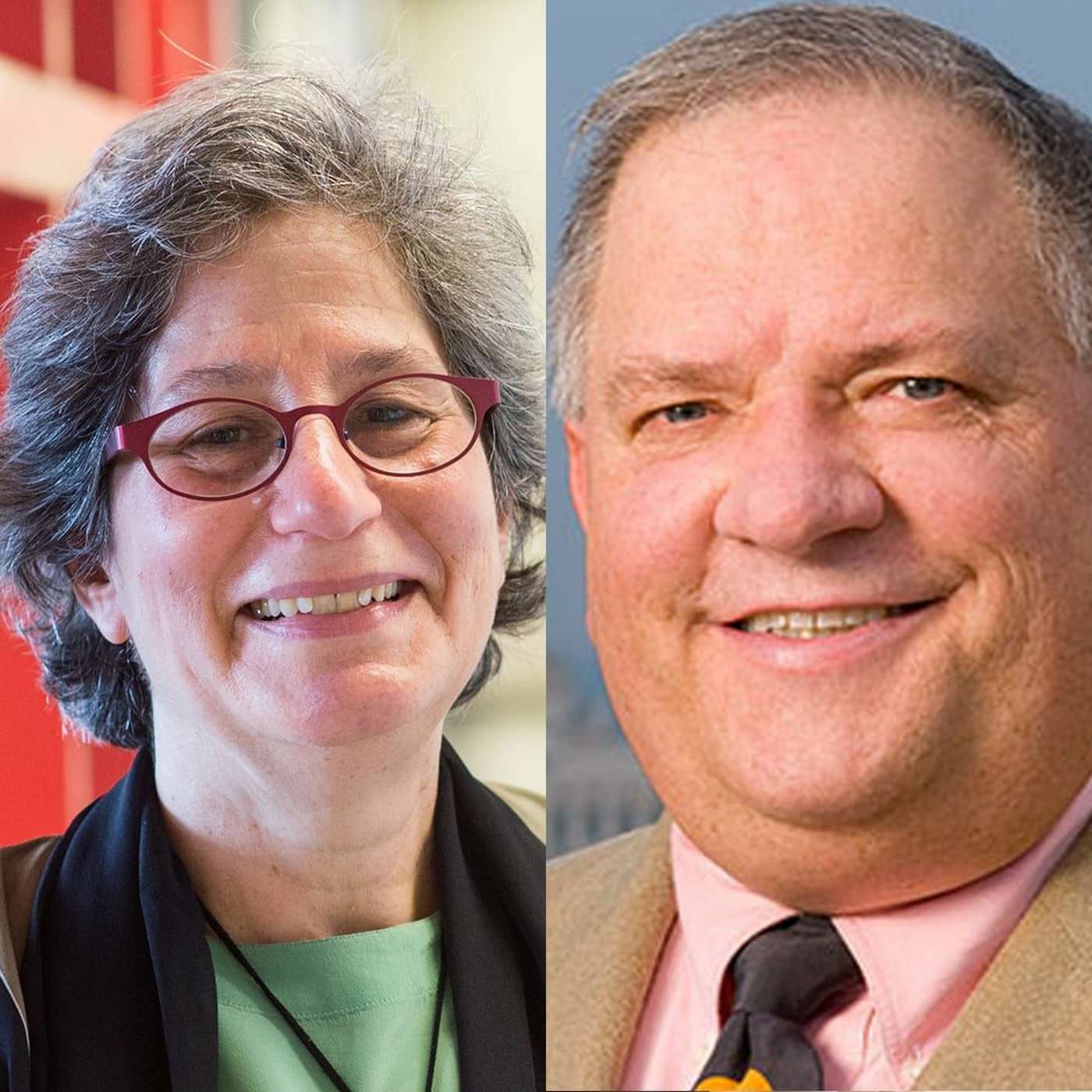
Susan Solomon and Stephen Andersen on Saving the Ozone Layer

EPISODE · Sep 16, 2021 · 1H 44M

Susan Solomon and Stephen Andersen on Saving the Ozone Layer

from Future of Life Institute Podcast · host Gus Docker

Susan Solomon, internationally recognized atmospheric chemist, and Stephen Andersen, leader of the Montreal Protocol, join us to tell the story of the ozone hole and their roles in helping to bring us back from the brink of disaster.  Topics discussed in this episode include: -The industrial and commercial uses of chlorofluorocarbons (CFCs) -How we discovered the atmospheric effects of CFCs -The Montreal Protocol and its significance -Dr. Solomon's, Dr. Farman's, and Dr. Andersen's crucial roles in helping to solve the ozone hole crisis -Lessons we can take away for climate change and other global catastrophic risks You can find the page for this podcast here: https://futureoflife.org/2021/09/16/susan-solomon-and-stephen-andersen-on-saving-the-ozone-layer/ Check out the video version of the episode here: https://www.youtube.com/watch?v=7hwh-uDo-6A&ab_channel=FutureofLifeInstitute Check out the story of the ozone hole crisis here: https://undsci.berkeley.edu/article/0_0_0/ozone_depletion_01 Have any feedback about the podcast? You can share your thoughts here: www.surveymonkey.com/r/DRBFZCT Timestamps:  0:00 Intro 3:13 What are CFCs and what was their role in society? 7:09 James Lovelock discovering an abundance of CFCs in the lower atmosphere 12:43 F. Sherwood Rowland's and Mario Molina's research on the atmospheric science of CFCs 19:52 How a single chlorine atom from a CFC molecule can destroy a large amount of ozone 23:12 Moving from models of ozone depletion to empirical evidence of the ozone depleting mechanism 24:41 Joseph Farman and discovering the ozone hole 30:36 Susan Solomon's discovery of the surfaces of high altitude Arctic clouds being crucial for ozone depletion 47:22 The Montreal Protocol 1:00:00 Who were the key stake holders in the Montreal Protocol? 1:03:46 Stephen Andersen's efforts to phase out CFCs as the co-chair of the Montreal Protocol Technology and Economic Assessment Panel 1:13:28 The Montreal Protocol helping to prevent 11 billion metric tons of CO2 emissions per year 1:18:30 Susan and Stephen's key takeaways from their experience with the ozone hole crisis 1:24:24 What world did we avoid through our efforts to save the ozone layer? 1:28:37 The lessons Stephen and Susan take away from their experience working to phase out CFCs from industry 1:34:30 Is action on climate change practical? 1:40:34 Does the Paris Agreement have something like the Montreal Protocol Technology and Economic Assessment Panel? 1:43:23 Final words from Susan and Stephen This podcast is possible because of the support of listeners like you. If you found this conversation to be meaningful or valuable, consider supporting it directly by donating at futureoflife.org/donate. Contributions like yours make these conversations possible.

NOW PLAYING

Susan Solomon and Stephen Andersen on Saving the Ozone Layer

0:00 1:44:55

No transcript for this episode yet

We transcribe on demand. Request one and we'll notify you when it's ready — usually under 10 minutes.

No similar episodes found.

Photo Breakdown Scott Wyden Kivowitz Photo Breakdown is a podcast in which we explore the world of photography with a trusted guide, host Scott Wyden Kivowitz. His expertise and passion bring the industry to life as we explore the stories, trends, and ideas shaping it today. Join us as we dissect everything from incredible photographs and creative techniques to the latest gear releases and hot topics in the photography community.In each episode, we break down what’s happening behind the scenes - whether it’s making a powerful image, a candid discussion on industry trends, or a reflection on the tools and technology changing how we make photographs. You’ll get insights, expert opinions, and a fresh perspective on what’s top of mind for photographers right now.Anticipate short, engaging episodes brimming with ideas and inspiration. Be part of the conversation by sharing your thoughts, voice notes, and comments. Your participation is what makes our community vibrant and dynamic.It’s more than just photography - everyth The Last Outlaws Impact Studios at UTS In a History Lab season like no other, we're pulling on the threads of one of Australia's great misunderstood histories, moving beyond the myths to learn what the Aboriginal brothers Jimmy and Joe Governor faced in both life and death.Australia's budding Federation is the background setting to this remarkable story, that sees the Governor brothers tied to the inauguration of a 'new' nation and Australia's dark history of frontier violence, racial injustice and the global trade and defilement of Aboriginal ancestral remains. This Impact Studios production is a collaboration with the Governor family, UTS Faculty of Law and Jumbunna Institute for Indigenous Education and Research.The Last Outlaws teamKatherine Biber - UTS Law Professor and Chief InvestigatorAunty Loretta Parsley - Great-granddaughter of Jimmy Governor and the Governor Family Historian Leroy Parsons - Governor descendant, Narrator and Co-WriterKaitlyn Sawrey - Host, Writer and Senior ProducerFrank Lopez - Writer, Managing Next Generation Energy Systems Cambridge University Background Stakeholders working with energy systems have to make complex decisions formulated from risk-based assessments about the future. The move towards more renewables in our energy systems complicates matters even further, requiring the development of an integrated power grid and continuous and steady transformation of the UK power system. Network flows must be managed reliably under uncertain demands, uncertain supply, emerging network technologies and possible failures and, further, prices in related markets can be highly volatile. Mathematicians working with engineers and economists, can make significant contributions to address such issues, by helping to develop fit-for-purpose models for next generation energy systems. These interdisciplinary approaches are looking to address a range of associated problems, including modelling, prediction, simulation, control, market and mechanism design and optimisation. This knowledge exchange workshop was part of the four months Res Not All At Once Kendall Weihe Two guys talking shop once a week. Mostly about the intersection of technology and money.
URL copied to clipboard!